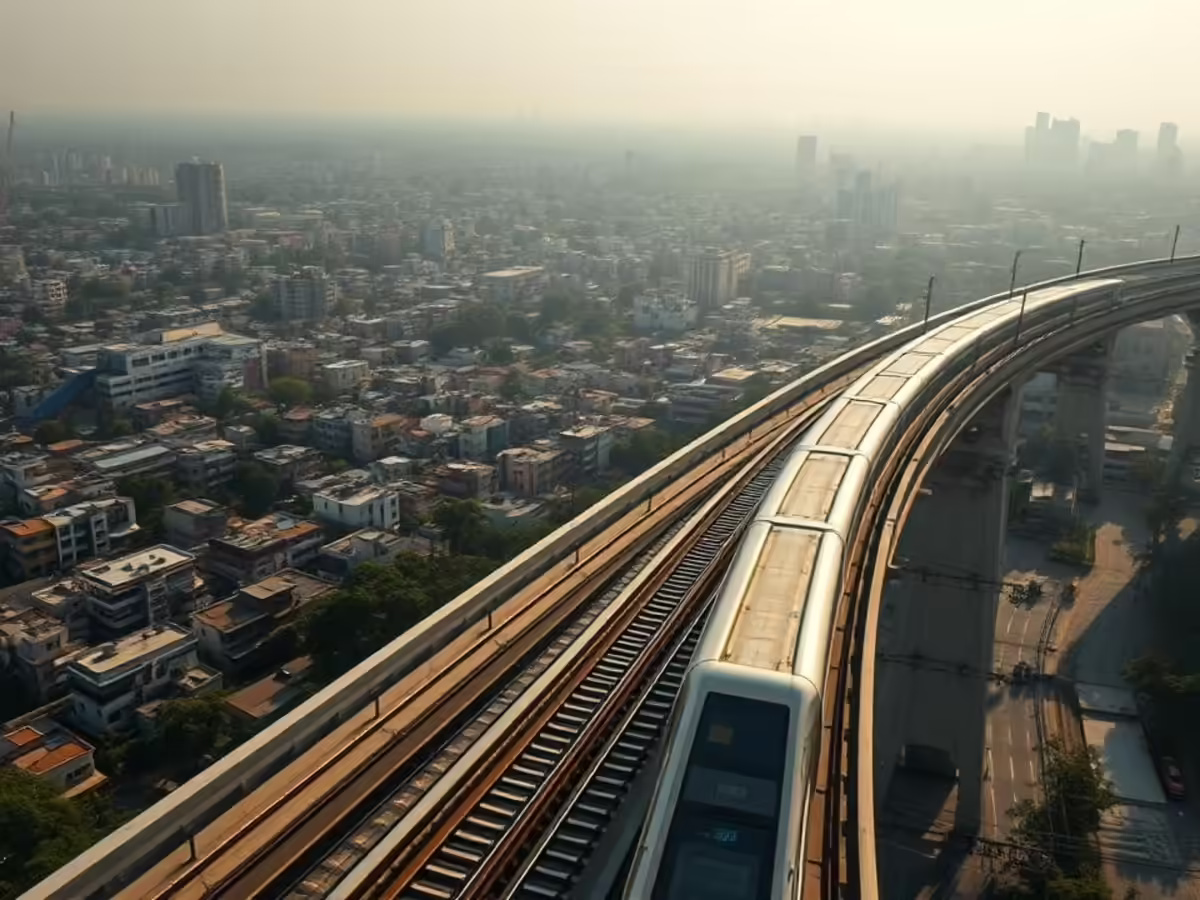
KPIL has strengthened its position in India’s fast-expanding urban infrastructure market after securing new engineering and construction contracts valued at approximately ₹719 crore, including a significant elevated metro rail project in Thane. The latest order win underscores sustained public investment in mass transit systems across the Mumbai Metropolitan Region (MMR), as authorities seek to address congestion, emissions, and uneven access to mobility.
According to industry sources, the metro rail package has been awarded to KPIL and its joint venture partner as part of a broader urban transport expansion underway in Maharashtra. Thane, one of the region’s fastest-growing cities, has emerged as a focal point for transit-led development due to rising population density, expanding residential clusters, and heavy dependence on overcrowded road corridors. Urban transport planners say elevated metro infrastructure is increasingly being prioritised in dense urban environments where land acquisition is constrained. By running above existing roads, such projects aim to deliver high-capacity transit while limiting displacement and reducing construction-related disruption. The Thane corridor is expected to play a critical role in improving east–west and intra-city connectivity, easing pressure on suburban rail lines and arterial roads.
The new contracts add to KPIL’s diversified order book, which spans power transmission, water, buildings, and transportation infrastructure. Analysts tracking the sector note that companies with multi-sector exposure and urban execution experience are better positioned to navigate fluctuations in public spending cycles and regulatory timelines. From a regional planning perspective, the Thane metro project aligns with long-term efforts to decentralise employment and housing away from South Mumbai and traditional business districts. Improved mass transit connectivity is seen as a prerequisite for creating self-sustaining urban nodes that reduce daily commute distances and lower per-capita carbon emissions.
Infrastructure economists point out that metro investments generate spillover benefits beyond mobility. Construction activity supports local employment, while completed corridors often trigger more compact, mixed-use development patterns around stations. However, they caution that these benefits materialise fully only when transit projects are integrated with affordable housing, pedestrian infrastructure, and last-mile connectivity. The timing of the order is also notable. Several metro lines across the MMR are scheduled for phased commissioning over the next two years, increasing demand for experienced engineering and procurement firms capable of executing complex urban projects within tight timelines. Elevated sections, in particular, require precision engineering to meet safety, durability, and noise-control standards.
Looking ahead, the focus for KPIL will be on timely execution amid challenges such as traffic management, coordination with civic agencies, and climate-related construction risks. For cities like Thane, the project represents more than a transport upgrade—it is part of a broader transition toward lower-emission, people-first urban mobility. As metro networks extend deeper into the metropolitan region, the success of such projects will increasingly be judged not just by kilometres built, but by how effectively they reshape travel behaviour, improve access to opportunity, and support a more resilient urban future.
KPIL Secures Major Thane Metro Infrastructure Contract