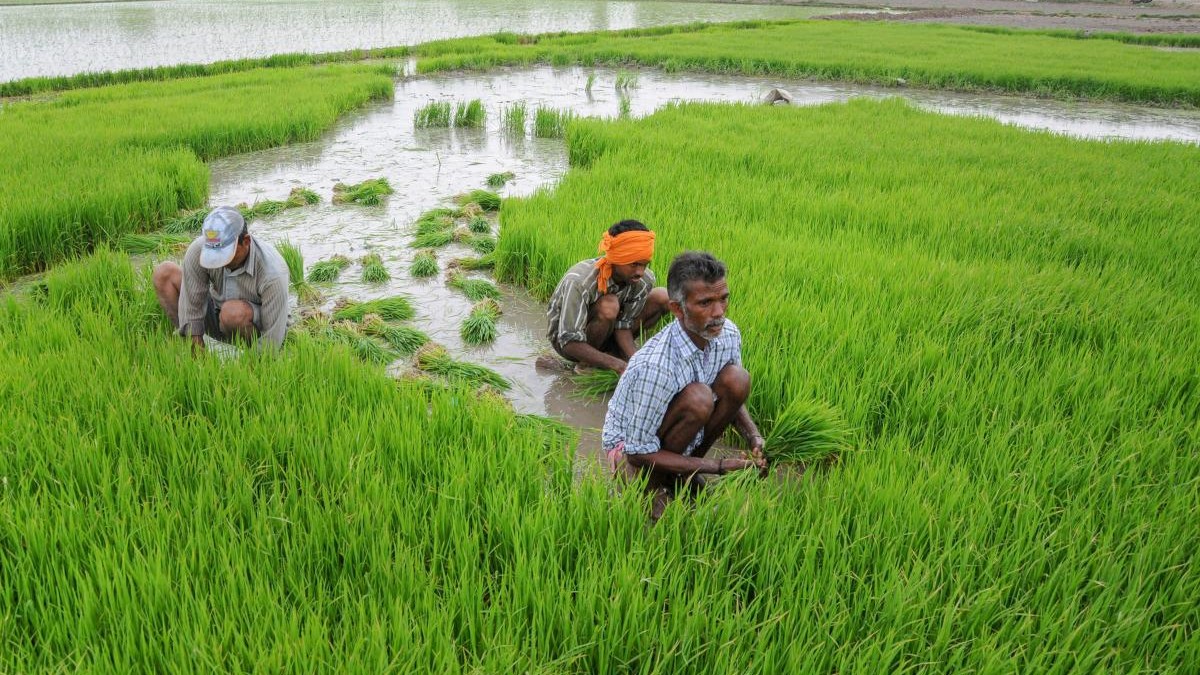
Kozhikode Farmers Face ₹44 Crore Crop Loss After Heavy Monsoon Rains
Unseasonal and intense monsoon spells have left over 17,000 farmers across Kozhikode reeling under a cumulative crop loss estimated at ₹44 crore, severely impacting joint farming ventures and neighbourhood agricultural collectives. Field-level data compiled by local officials reveals that around 2,000 hectares of farmland have been affected, with the worst damage recorded in Thodannur block, where losses alone are pegged at ₹18.7 crore. Most affected cultivators are either struggling to claim crop insurance or have no coverage at all, prompting serious concerns about the future of small-scale cooperative farming in the region.
Across farming pockets in Mukkom, Perambra, and Koyilandy, thousands of plantain and paddy cultivators have been forced to take fresh loans to service earlier debts, while many others who ventured into self-funded, non-insured farming now face complete financial collapse. Local officials report that plantain plantations have taken the biggest hit, with more than 6.5 lakh trees destroyed in less than three months, amounting to nearly ₹35 crore in estimated damages. Paddy fields spanning about 175 hectares have reportedly suffered an additional loss of ₹2.6 crore, exacerbating the economic strain on smallholder farmers already grappling with rising input costs and erratic climate behaviour. With damage assessments incomplete in several affected sectors, disbursal of crop insurance remains uncertain and uneven. Many Joint Liability Groups (JLGs), composed primarily of youth and first-generation farmers, now fear irreversible debt cycles as they resort to pledging gold or seeking short-term loans.
In villages like Ulliyeri, Thikkodi, and Vadakara, officials have recorded significant dropout rates among recent farming collectives. The situation, they warn, risks disillusioning a whole generation of young cultivators who joined group farming to reduce dependence on intermediaries and promote sustainable rural livelihoods. Agricultural experts say that despite state-sponsored schemes encouraging cluster farming and self-reliance, extreme weather events like these expose critical gaps in disaster insurance and recovery systems. The reliance on local audits, which often get delayed or face disputes, has further widened the trust deficit between farmers and institutional mechanisms. Officials agree that more robust, climate-resilient farming policies — including automatic relief transfers and decentralised disaster assessment — are essential if states like Kerala wish to safeguard food security and prevent migration from agricultural livelihoods.
Local governance representatives from blocks such as Kakkur and Kunnummal argue that the crisis should serve as a wake-up call to streamline insurance access and climate adaptation for rural communities. They have urged the state to immediately release interim relief to cover input losses, and to consider subsidised rehabilitation programmes for damaged plantations. The crisis also renews attention on integrating local weather forecasting, cooperative marketing, and sustainable water practices to reduce farm-level vulnerabilities.
While the scale of the devastation in Kozhikode highlights the fragility of smallholder agriculture under changing climate conditions, it also underscores the resilience of rural communities striving to modernise their farming practices. If given timely support and fair compensation, officials believe these Joint Liability Groups can still sustain the district’s move towards cooperative, low-input, and ecologically balanced farming. However, without swift institutional response, the current crisis risks undoing years of progress in community-led agriculture and will deepen economic uncertainty in Kerala’s rain-fed districts.