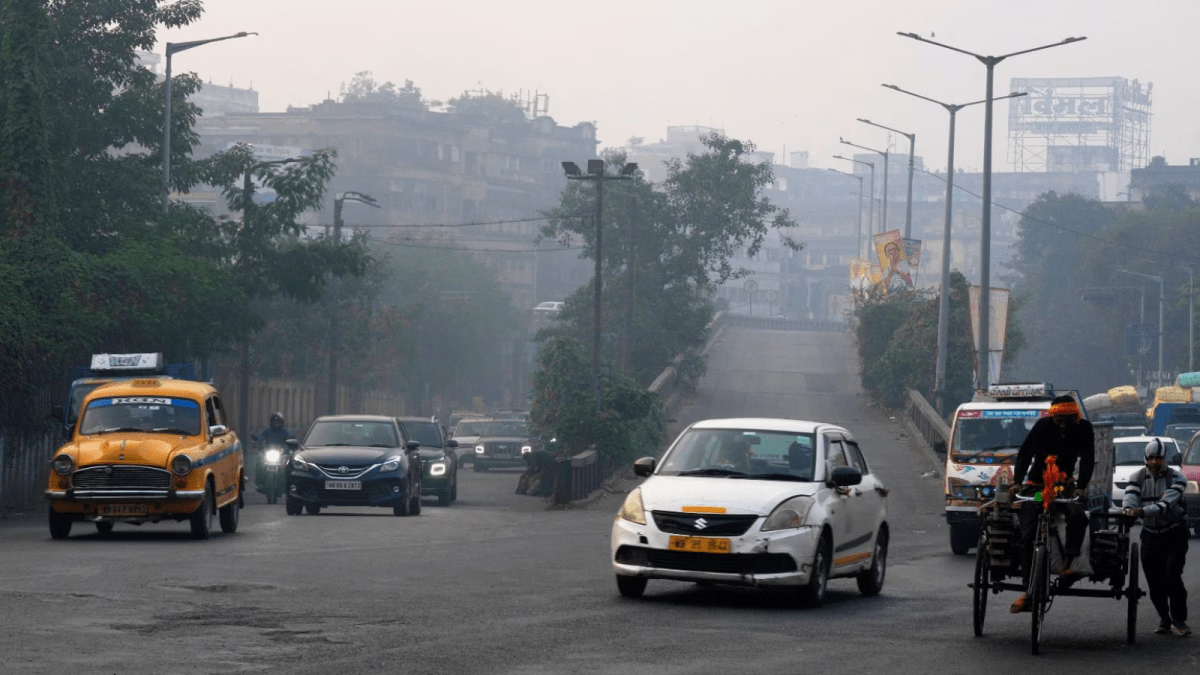
A sharp winter breeze sweeping across eastern India has kept Kolkata and large parts of West Bengal firmly in cold conditions, even as minimum temperatures in the city edged slightly upward. Early Thursday readings showed Kolkata’s night temperature remaining below seasonal averages, with winds amplifying the cold and extending discomfort across urban and semi-rural areas. For residents and city managers alike, the episode underscores how winter variability continues to shape daily life, public health, and infrastructure use in eastern metropolitan regions.
Meteorological data indicates that while fog briefly lifted during the morning hours, dry north-westerly winds reintroduced a pronounced chill across the Kolkata metropolitan area. Weather officials describe these winds as typical for the season, yet their persistence has prolonged cold stress, particularly during early mornings and evenings. Forecasts suggest that this pattern may hold for at least another week, with only marginal day-to-day variation in minimum temperatures.
Beyond the city, colder conditions are more intense in the hills and interior districts. Hill towns in north Bengal remain under cold wave-like conditions, with near-freezing temperatures reported at higher elevations. In contrast, parts of south Bengal experienced their coldest nights of the season, reflecting the uneven distribution of winter severity across the state. Climate observers note that such contrasts are becoming more frequent as regional weather systems interact with local geography.
Fog continues to play a critical role in shaping daily routines and mobility. Moderate to dense fog has been reported across several districts, affecting early morning visibility on highways and rail corridors. Urban planners point out that recurring winter fog episodes highlight the need for improved lighting, signage, and traffic management systems, particularly along peri-urban routes that link Kolkata with its surrounding economic zones. The extended dry spell accompanying the cold has broader implications for water management and air quality. While lower humidity reduces the likelihood of rainfall-related disruption, it can exacerbate respiratory discomfort, especially among vulnerable populations. Public health experts stress that winter preparedness must go beyond heat-wave planning and include strategies for cold exposure, indoor air quality, and access to healthcare for informal and outdoor workers.
Meanwhile, weather systems developing over the Bay of Bengal are being closely monitored by authorities. Current projections indicate that these systems are unlikely to influence Bengal’s weather in the immediate term, offering some stability to short-term forecasts. However, climate specialists caution that rapid intensification of offshore systems serves as a reminder of the region’s exposure to shifting weather dynamics. As Kolkata winter weather continues to challenge residents, the episode reinforces the importance of climate-responsive urban planning. From housing insulation and public transport scheduling to pedestrian safety during foggy mornings, cold spells demand coordinated civic responses. With Kolkata winter weather expected to remain unsettled for several days, the focus now turns to how cities adapt everyday systems to seasonal extremes without disrupting economic activity or daily life.
Kolkata winter winds deepen chill across region