


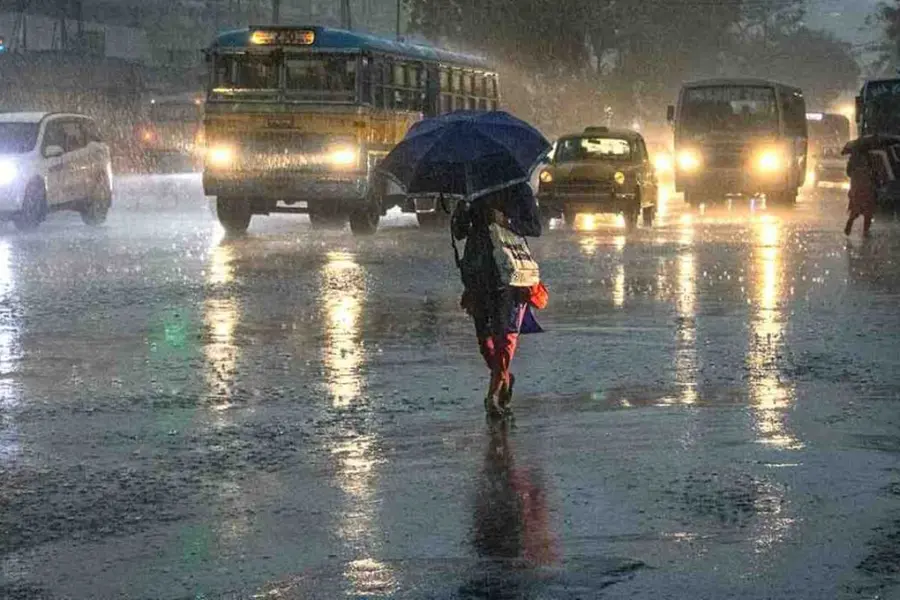
Kolkata has been placed under a high-intensity weather alert as authorities warn of severe thunderstorms, strong winds, and heavy rainfall across the city and surrounding districts.
The alert underscores growing concerns around extreme weather patterns and their impact on urban resilience.Issued by the India Meteorological Department, the warning highlights the likelihood of intense thundersqualls, lightning, and gusty winds driven by unstable atmospheric conditions over southern West Bengal. The situation, central to the Kolkata weather red alert, is linked to moisture inflow from the Bay of Bengal combined with cyclonic circulation over eastern India.Recent weather activity suggests that such events are becoming more frequent and intense. The city has already experienced multiple thunderstorms over consecutive days, with wind speeds reaching up to 50–80 kmph in some areas, disrupting flights, traffic, and daily routines. Meteorologists attribute the pattern to pre-monsoon systems, commonly known as nor’westers or “Kalbaisakhi” storms, which are characteristic of the region but are now showing signs of increased variability. The Kolkata weather red alert reflects this shift, with forecasts indicating continued instability before conditions stabilise later in the week.For urban systems, the implications are significant. Sudden storms can lead to waterlogging, tree falls, power outages, and transport disruptions, particularly in densely built areas with ageing infrastructure.
Airports and rail services are especially vulnerable to high wind speeds and reduced visibility, affecting connectivity and economic activity.From a public safety perspective, authorities have urged caution, especially during peak storm hours in the afternoon and evening.Lightning strikes, falling debris, and flooding remain key risks, particularly in low-lying neighbourhoods and informal settlements.There is also a broader climate dimension.Experts note that rising sea surface temperatures in the Bay of Bengal are contributing to higher moisture levels and increased atmospheric instability. This is leading to more erratic and intense weather events during transitional seasons like pre-monsoon.Urban planners emphasise the need for climate-adaptive infrastructure. Strengthening drainage systems, improving early warning mechanisms, and enhancing emergency response capacity are critical to managing such events. Integrating green infrastructure—such as urban wetlands and permeable surfaces—can also help mitigate flooding risks.The economic impact of such alerts is multifaceted. While rainfall provides relief from heat, disruptions to transport, construction, and daily commerce can affect productivity. Informal workers and small businesses are particularly vulnerable to sudden weather interruptions.As Kolkata continues to expand, the frequency of such alerts highlights the urgency of building resilience into urban planning frameworks. The current Kolkata weather red alert serves as a reminder that cities must adapt to increasingly unpredictable climate conditions.
In the coming days, the focus will remain on monitoring weather developments and ensuring that response systems are in place.For Kolkata, the challenge lies not only in managing immediate risks but also in preparing for a future where extreme weather events become a more regular feature of urban life.
Also Read :Kolkata Women Education Initiative Empowers Communities And Learners
