


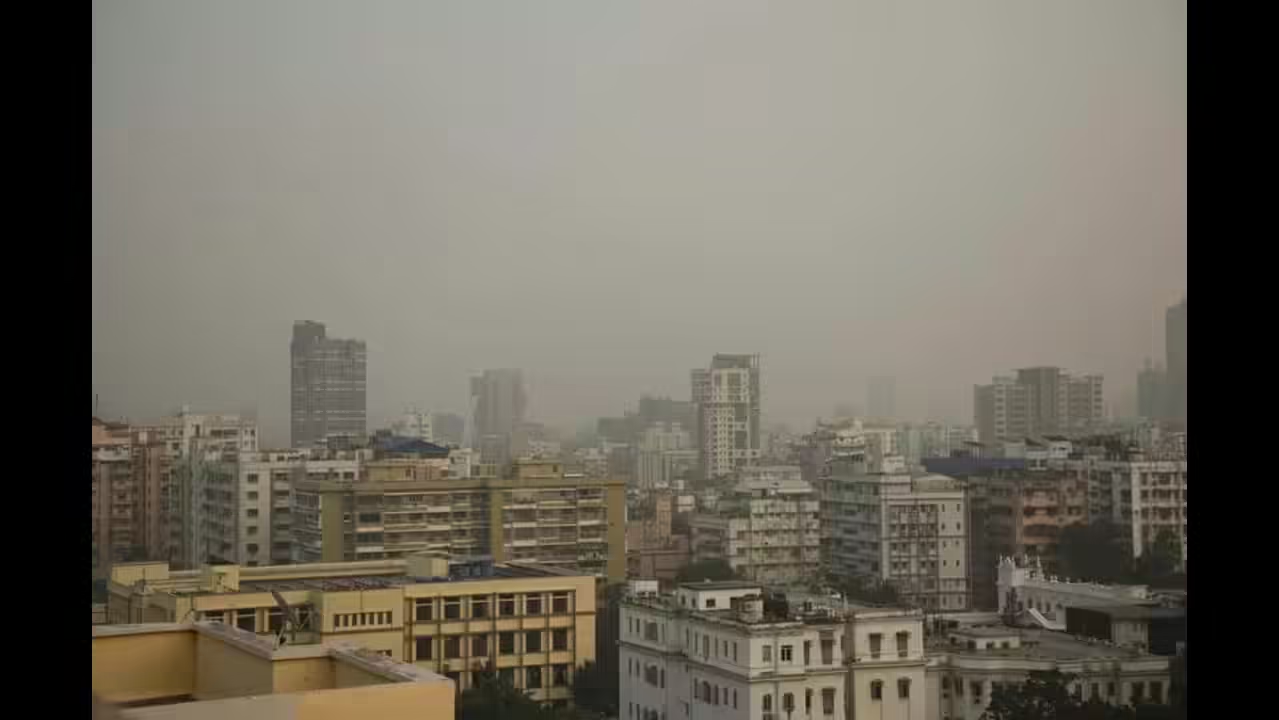
Kolkata’s roadways register among the least congested in India’s major metropolitan regions, yet residents face some of the highest exposure to vehicular air pollution — a contradictory outcome that reveals deeper systemic challenges in the city’s sustainable urban development. A recent environmental mobility analysis shows this paradox carries significant implications for air quality management, urban mobility planning, and economic productivity in one of India’s oldest metros.
Transport data indicates that Kolkata’s overall road congestion — measured by the reduction in vehicle speeds during peak hours compared to off-peak periods — is comparatively lower than in other large metros. This outcome is attributed to relatively consistent traffic flows throughout the day, supported by a still-functional public transport network and a high share of shorter trips that keep average travel speeds modest. However, despite these seemingly benign congestion metrics, Kolkata’s urban air quality continues to deteriorate in ways that merit urgent attention from planners and policymakers. Urban mobility specialists point out that conventional congestion metrics can obscure how vehicles interact with the built environment. “Lower measured congestion doesn’t necessarily translate into healthier air,” notes a senior urban planner. In Kolkata’s compact cityscape, limited road width, frequent junction delays, and pervasive on-street parking compress vehicle flows — leading to extended idling, stop-start driving, and elevated emissions per kilometre travelled. These conditions, coupled with rapid increases in vehicle ownership over the past decade, have amplified particulate and nitrogen oxide concentrations near street level, intensifying exposure even when average speeds appear moderate. Environmental data reinforces these concerns: air quality monitoring in the city frequently reports particulate matter (PM2.5) levels that exceed national health thresholds during cooler months, contributing to public health risks such as respiratory and cardiovascular conditions. Independent assessments have on occasion ranked Kolkata among cities with concerning pollution levels, underscoring that vehicular emissions remain a dominant source of urban air degradation.
Economists and climate analysts warn that unchecked urban emissions have broader economic costs. Poor air quality can increase healthcare burdens, reduce labour productivity, and deter investment in office and residential real estate ecosystems that prioritise quality of life. “Sustainable cities must balance mobility with livability,” says an infrastructure economist. Without integrating people-centred transport planning with air quality goals, the city risks undermining its appeal for talent and capital in competitive urban markets. The study’s authors advise that Kolkata revisit its historic public transit assets, such as the tram network, strengthen electric and low-emission bus services, and expand infrastructure for walking and cycling. These shifts, alongside demand-management tools like pricing mechanisms and parking reforms, could reduce emissions without sacrificing mobility. A coordinated approach that aligns urban growth with climate and health objectives will be crucial as Kolkata expands its economic footprint in the coming decade.
Also Read: Chennai Neighbourhood Faces Disruption During Drain Renewal
Kolkata Urban Mobility Reveals Hidden Pollution Risk
