


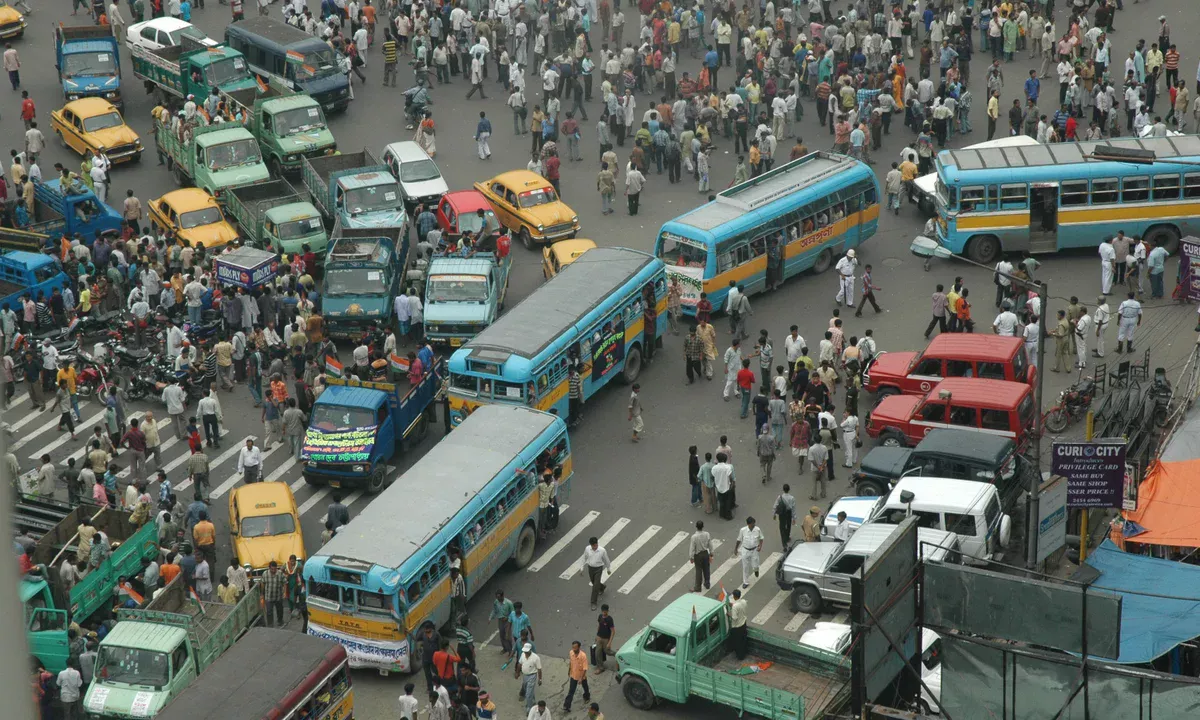
Kolkata’s transport ecosystem is witnessing a temporary but significant shift as a large number of vehicles are being mobilised to support election operations in neighbouring Assam.
The diversion, driven by rising election vehicle demand, is beginning to ripple through the city’s mobility network, affecting fleet availability, operational costs, and service patterns across both public and private transport segments.Transport operators and fleet owners in and around Kolkata have been approached to supply buses, utility vehicles, and other transport assets required for election duties. These vehicles are typically deployed for moving polling personnel, security forces, and equipment across constituencies. While such mobilisation is a routine administrative exercise, the scale involved this time has drawn attention to how urban transport systems respond under sudden, large-scale demand shifts.For Kolkata, a city already navigating congestion and high commuter dependency on shared mobility, the reallocation of vehicles presents short-term challenges. Industry participants suggest that even a modest reduction in available fleets can disrupt last-mile connectivity and increase wait times, particularly in peripheral areas where transport options are limited.The current surge in election vehicle demand also highlights structural gaps in urban mobility planning. Experts argue that cities often lack dedicated contingency frameworks for handling non-routine but predictable events such as elections, festivals, or emergency responses. Instead, authorities rely on temporary reallocations, which can create friction between civic needs and administrative priorities.
From an economic perspective, the mobilisation offers additional income streams for private fleet operators. However, it also introduces uncertainties related to fuel costs, vehicle wear and tear, and compliance with inter-state regulations. Smaller operators, in particular, may face operational strain if vehicles are tied up for extended periods without adequate compensation mechanisms.Urban planners point out that such episodes underline the need for more resilient and flexible transport systems. Integrated fleet management, digital tracking, and pre-contracted logistics pools could enable cities like Kolkata to respond more efficiently to spikes in demand without compromising daily mobility needs.Environmental considerations are also part of the conversation. The large-scale deployment of conventional fuel-based vehicles to meet election vehicle demand contributes to increased emissions over the short term. As cities pursue cleaner mobility pathways, including electrification and energy-efficient transport solutions, incorporating sustainability into public logistics planning is becoming increasingly relevant.Looking ahead, policymakers may need to explore how election logistics can align with broader urban development goals. This could include pilot use of electric fleets, better scheduling coordination, and incentives for low-emission transport providers.
For now, Kolkata’s experience serves as a case study in how interconnected regional systems can place pressure on urban infrastructure. As demand cycles intensify with growing populations and administrative requirements, building adaptive, low-carbon, and people-centric mobility frameworks will be critical to ensuring cities remain both functional and future-ready.
Also Read:Kolkata Land Allotment Cancellation Raises Concerns
