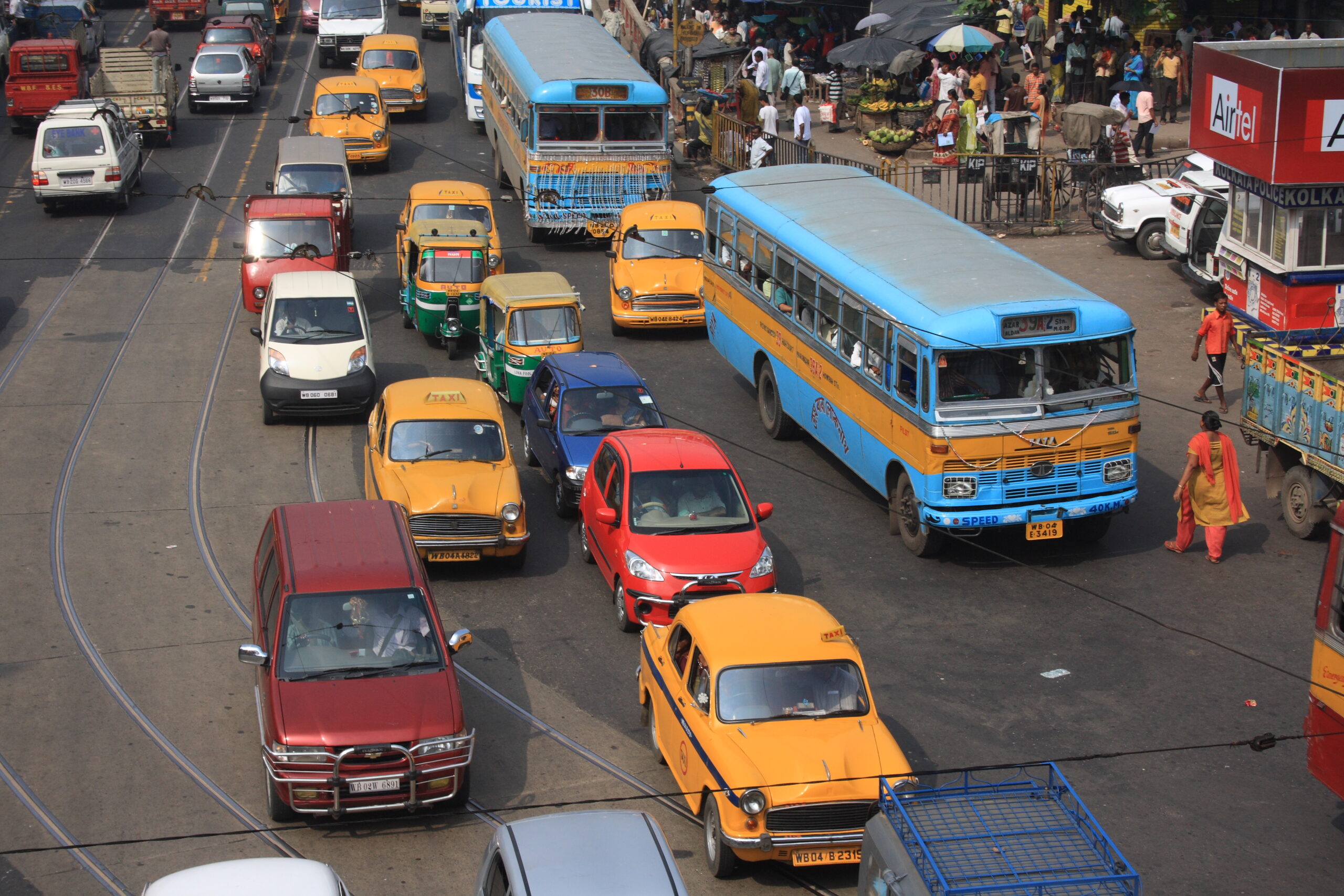
Kolkata Traffic Slows as Rally Crowds Disrupt Public Transport and Road Flow
Commuters across Kolkata faced significant travel disruptions on Monday as the annual political gathering in Dharmatala brought large crowds and triggered long traffic snarls, despite judicial restrictions on morning processions. Road congestion and a severe shortage of public transport services hampered mobility from early hours, with key junctions around Howrah and Sealdah witnessing unusually high footfall. Daily passengers reported delays, rerouted plans, and overburdened Metro services, as thousands of supporters from across West Bengal arrived on foot and in private vehicles, stretching the city’s transport system beyond capacity.
Massive crowds moving in from Kolkata’s outskirts led to early morning gridlocks at crucial points, including Howrah Bridge and Red Road, as rallies began converging towards central Kolkata. Despite a court directive limiting movement timings, traffic flow was heavily affected, with long queues of vehicles inching forward from 5 am onward. Commuters from both north and south Kolkata found their usual routes obstructed or slowed by processions occupying entire lanes. Many daily travellers opted to work remotely, anticipating poor travel conditions throughout the day. The city’s Metro services saw an unusually high influx of passengers, especially during peak hours, as buses and autorickshaws remained unavailable or rerouted to ferry rally participants. Residents from areas like Mudiali and Shyambazar reported extended waiting times for cabs and limited visibility of buses in their localities.
While Metro stations remained operational, crowd surges prompted many to return home after failed attempts to board trains. App-based taxi services also struggled to match demand, with estimated pick-up times tripling during the early rush. Cab drivers navigating through central Kolkata confirmed they were avoiding the affected areas altogether, focusing instead on bookings in the city’s southern sectors. Some reported that even early morning travel windows were compromised due to incoming convoys and diversions. The rally’s central stage at Dharmatala further blocked key junctions, cutting off seamless movement between northern and southern parts of the city. Traffic officials urged residents to plan travel after late evening, when crowds were expected to disperse gradually.
While political events are a part of the city’s democratic expression, the scale and execution of large-scale gatherings continue to strain Kolkata’s already delicate transport infrastructure. Monday’s experience once again highlighted the urgent need for crowd management planning and coordination between civic bodies and transport agencies, especially when events intersect with working days. For everyday commuters, such disruptions offer little flexibility, raising the call for fairer urban mobility frameworks in megacities like Kolkata.