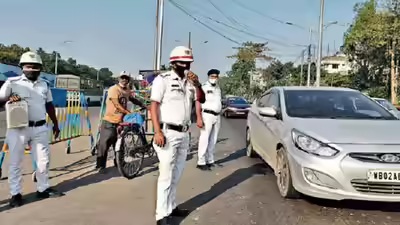
Kolkata is preparing a redesign of 26 of its most crowded intersections, as the city’s traffic department moves to improve vehicle flow while reducing pedestrian risk across high-footfall corridors. The intervention spans major junctions in Behala, south Kolkata and the eastern bypass belt, reflecting growing pressure on civic agencies to balance mobility with safety in a dense urban environment.
Officials confirmed that the identified stretches record some of the highest pedestrian-to-vehicle ratios in the city. These include arterial corridors in Behala, Rashbehari, Gariahat, Ruby and Chingrighata, where congestion, informal parking and inadequate crossings have created daily friction between commuters and walkers. Select changes have already begun at a few priority intersections, signalling a phased approach to the broader Kolkata traffic management plan. According to senior officers overseeing the exercise, assistant commissioners in charge of the 26 stretches have been tasked with preparing area-specific strategies. The solutions vary by location. In some cases, traffic signals may be switched from automated cycles to manual regulation during peak hours. In others, small speed-calming measures, additional lighting and pedestrian barriers are under consideration. Authorities are also reviewing the placement of bus stops near crossings, which often constrict carriageways and reduce sightlines.
The review extends beyond traffic signalling. An infrastructure audit will examine pavement conditions and accessibility gaps that force pedestrians to spill onto carriageways. Along high-speed corridors such as the EM Bypass and parts of APC Road, unsafe footpaths and poorly demarcated crossings have been linked to recent accident clusters. Officials believe that investing in basic pedestrian infrastructure continuous footpaths, safe waiting zones and visible crosswalks could reduce jaywalking and illegal parking simultaneously. Urban planners note that Kolkata’s built form with dense commercial strips, informal settlements near intersections and mixed land use intensifies road conflict. High approach speeds, limited police presence at off-peak hours and inadequate lighting further elevate crash risk. Addressing these factors through structured Kolkata traffic management is critical not just for safety, but for economic efficiency. Slower corridors increase logistics costs, disrupt bus schedules and affect productivity across neighbourhood markets.
Transport economists argue that well-managed intersections can raise average corridor speeds without expanding road width, making such interventions cost-effective compared to large-scale flyovers. Moreover, pedestrian-first design aligns with broader goals of climate-resilient urban mobility. Encouraging safe walking reduces short vehicle trips, lowers emissions and improves last-mile connectivity to public transport. The current exercise suggests a shift from reactive enforcement to data-led planning. If executed consistently, the reforms could become a template for recalibrating mobility in older Indian metros where space is limited but footfall is high. The next phase will hinge on coordination between traffic authorities, civic engineers and local communities to ensure that design changes translate into sustained behavioural shifts on the ground.