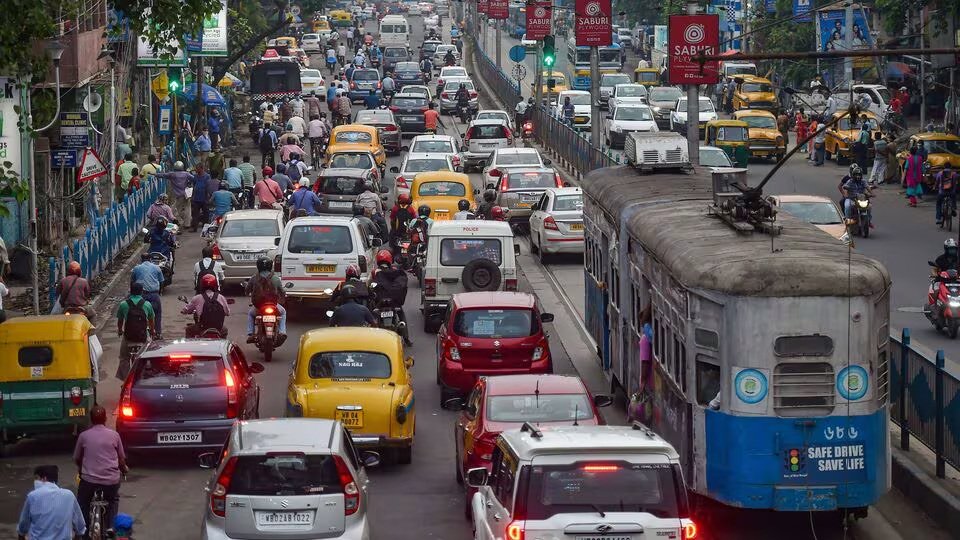
Kolkata has approved two new autorickshaw corridors connecting Babu Bazar with Mominpore and Rajabazar with Topsia, in a move aimed at formalising short-distance mobility across some of the city’s most densely populated zones. The decision, cleared by the city’s traffic authorities this week, seeks to improve regulated last-mile connectivity while easing pressure on overstretched bus and metro networks.
The newly sanctioned Kolkata autorickshaw routes are designed to link commercial, residential and institutional clusters that currently depend heavily on informal para-transit and private vehicles. Transport planners say structured feeder services are increasingly critical in neighbourhoods where narrow roadways and fragmented bus coverage limit mobility options. Babu Bazar, located near the Hooghly riverfront trading districts, generates steady commuter and goods-related footfall. Mominpore, further south-west, houses mixed residential communities and educational institutions. Officials indicate that a direct, authorised autorickshaw link between the two will reduce travel uncertainty and cut down multiple transfers that currently lengthen short journeys. Similarly, the Rajabazar–Topsia corridor runs through an east-central belt marked by dense housing, wholesale markets and small manufacturing units. Despite high passenger demand, formal public transport routes remain uneven. By introducing designated stands, defined halts and fare norms, the administration hopes to reduce roadside congestion and minimise disputes among operators.
Urban mobility experts note that intermediate public transport including autorickshaws remains indispensable in Indian metros, particularly where metro rail does not penetrate inner neighbourhood grids. However, unregulated route overlaps have historically contributed to traffic snarls and safety risks. Structured oversight of Kolkata autorickshaw routes, they argue, can improve commuter confidence while supporting a more accountable operating ecosystem. For the city’s broader transport strategy, the development signals a shift toward integrating small-capacity vehicles within multimodal planning rather than treating them as peripheral services. Senior officials suggest that route performance will be reviewed periodically to assess ridership levels, traffic impact and alignment with sustainability goals. The move also carries environmental implications.
Short, predictable feeder services can discourage the use of private two-wheelers and cars for intra-neighbourhood trips, reducing emissions in high-density corridors. In a city grappling with air quality concerns and limited road expansion capacity, improving shared mobility options is emerging as a pragmatic climate-aligned solution. Transport economists say that clearer route authorisation may also stabilise earnings for drivers by reducing competition on overlapping stretches. If implemented effectively, the model could be extended to other underserved pockets, particularly in peripheral growth zones witnessing rapid real estate expansion. As Kolkata continues to balance heritage precincts, compact urban form and rising commuter demand, structured intermediate transport services are likely to play a pivotal role in shaping safer, more inclusive and efficient mobility networks.