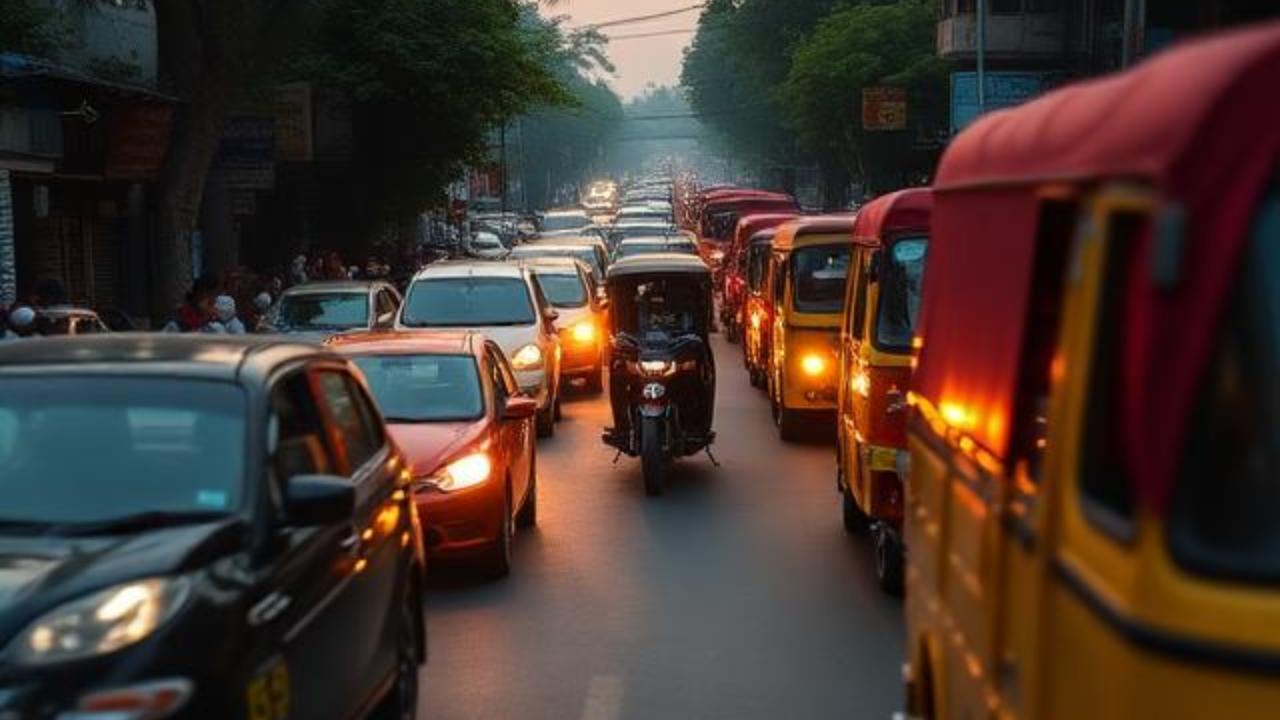
Kolkata Traffic Management Plan To Ease Congestion
Kolkata authorities have announced significant traffic adjustments in the central business district as a planned sit-in demonstration at the Metro Channel is expected to disrupt vehicle flow. The measure, scheduled for Friday afternoon, will reduce vehicular movement to a single lane for northbound traffic, reflecting the city’s ongoing challenge of managing civic engagement alongside urban mobility.
The demonstration addresses concerns over recent electoral roll revisions, drawing attention to how civic protests intersect with essential urban infrastructure. Officials have highlighted that lanes leading towards Shyambazar and Park Street will be divided, with one lane dedicated to Shyambazar-bound vehicles and the other for southbound traffic, while lanes moving towards Central Avenue will remain closed to ensure the safety of participants. The adjustments are expected to impact commuter patterns in one of Kolkata’s busiest corridors.
Urban planners and traffic analysts note that such lane restrictions in a dense city centre can have ripple effects across commercial activity, public transport, and emergency services. A senior traffic official indicated that dynamic diversion plans are in place, allowing vehicles to reroute via adjacent streets such as BB Ganguly Street, Old Court House Street, and Mayo Road, depending on congestion levels. These interventions demonstrate the city’s reliance on flexible, responsive traffic management to maintain accessibility while accommodating public demonstrations. Beyond immediate mobility concerns, the event underscores the broader challenge of integrating citizen participation with urban resilience. Kolkata, like many fast-growing Indian cities, must balance public engagement with transport efficiency, highlighting gaps in real-time traffic monitoring, public transit alternatives, and street-level safety. Industry experts suggest that pre-emptive urban design, including dedicated protest zones and multi-modal corridors, could reduce disruption while upholding civic rights.
From a business perspective, local commercial establishments may experience temporary footfall reductions or logistical delays, particularly in retail and delivery-dependent sectors. However, the deployment of structured diversion protocols and police coordination aims to minimise economic impact. Urban affairs commentators emphasise that improved digital signage, mobile traffic alerts, and integrated city planning can help cities like Kolkata maintain both economic vibrancy and civic participation. As city authorities implement these measures, the focus remains on maintaining public safety, reducing congestion, and ensuring that critical services operate smoothly. Future planning may involve assessing high-traffic nodes for periodic civic events, developing predictive traffic models, and encouraging non-motorised and public transport use during peak hours to enhance urban sustainability and resilience.