


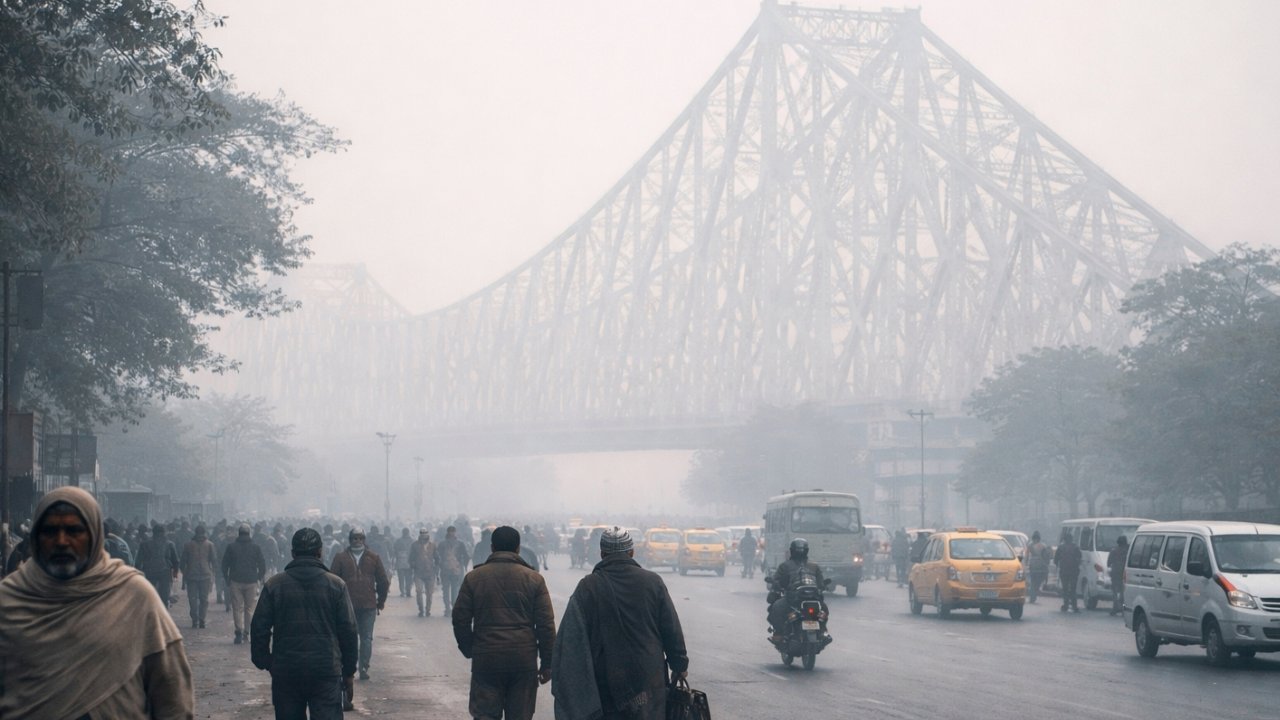
Kolkata has recorded a noticeable dip in temperatures following two consecutive days of rainfall, an unusual development for this time of year that has drawn attention to shifting urban weather patterns.
The sudden cooling, linked to cloud cover and sustained precipitation, offers short-term relief from rising heat but also highlights the growing variability associated with climate-sensitive cities.Meteorological observers indicate that the drop in temperature was driven by moisture-laden winds and reduced solar radiation, which together moderated daytime heat levels. While such fluctuations are not unprecedented, their timing and intensity are increasingly being viewed through the lens of climate variability and changing seasonal behaviour in eastern India.The recent Kolkata temperature drop has had immediate effects on daily life, easing heat stress for residents and reducing energy demand linked to cooling appliances. However, experts caution that these temporary shifts do not necessarily indicate long-term climatic relief. Instead, they point to more erratic weather cycles, where short bursts of rain and cooling are interspersed with periods of intense heat.Urban planners emphasise that such variability has implications for infrastructure resilience. Cities like Kolkata, with dense built environments and ageing drainage systems, are particularly vulnerable to sudden rainfall events. Even moderate precipitation can strain stormwater networks, leading to waterlogging and disruptions in mobility. This underscores the need for adaptive urban planning that accounts for both heat and rainfall extremes.The Kolkata temperature drop also intersects with public health and economic activity.
Cooler conditions may temporarily reduce heat-related illnesses, but fluctuating weather can impact productivity, especially in outdoor sectors such as construction and informal labour. Retail and service industries may also experience shifts in consumer behaviour depending on weather conditions.From an environmental perspective, episodic rainfall can improve air quality by reducing particulate matter levels, albeit briefly. However, experts note that sustained improvements require structural interventions, including cleaner transport systems, green cover expansion, and better urban design.Climate specialists argue that cities must move beyond reactive responses and invest in predictive and resilient systems. This includes real-time weather monitoring, early warning mechanisms, and infrastructure upgrades that can handle both excess rainfall and prolonged dry spells. Integrating blue-green infrastructure—such as urban wetlands and permeable surfaces—can help manage water flows while enhancing ecological balance.Kolkata’s recent weather pattern serves as a reminder of the complex interplay between climate and urban systems. As cities across India face increasing uncertainty in seasonal cycles, the focus is gradually shifting towards building environments that can absorb shocks while maintaining functionality.
In the coming weeks, authorities and residents alike will be watching whether this cooling trend persists or gives way to renewed heat. Either way, the episode reinforces the urgency of aligning urban development with climate resilience strategies that are both forward-looking and locally responsive.
Also Read:Bengaluru Air Pollution Decline Signals Slow Improvement
