


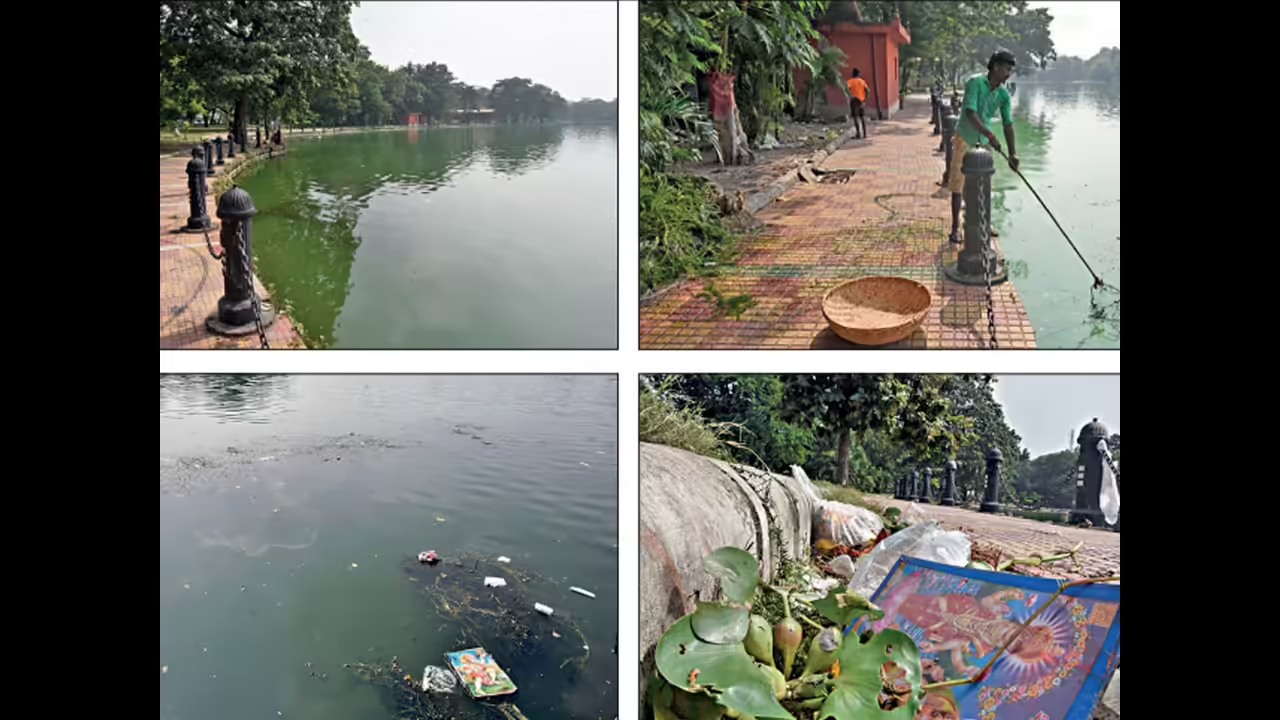
Kolkata’s Subhas Sarobar witnessed a focused community cleanup this week as school-aged students joined an organised effort to remove plastic waste from one of the city’s lesser-maintained urban waterbodies, a sign of growing civic engagement in metropolitan wetland conservation. The action underlines broader challenges cities face in managing plastic pollution in public spaces, with implications for ecological health, urban livability and long-term stewardship.
In a coordinated field activity on Friday, about 30 middle-school students equipped with gloves and collection tools combed the periphery of Subhas Sarobar for discarded plastic and other debris, working alongside environmental regulators and civic development planners. The drive, combining physical clean-up with public awareness aims, highlights rising concern about microplastics and litter in urban ecosystems that are often overlooked in mainstream infrastructure planning. Urban wetlands like Subhas Sarobar perform critical environmental functions in dense cities. They provide stormwater retention, microclimate regulation and habitat for biodiversity, while offering recreational spaces for residents. Yet, in practice, these functions are undermined when litter and single-use plastics accumulate on shorelines and in soils — a trend increasingly documented in Indian cities. According to environmental scientists, plastic fragments can linger in soil and water, breaking down into microplastics that enter food webs and potentially affect human health. Officials from the state pollution control authority and the metropolitan development agency, which have custodial roles for the site, described the activity as a pilot for broader community-led stewardship. Plans under consideration include engaging local residents as ongoing volunteers — a model of “wetland ambassadors” — and investing in basic infrastructure upgrades such as defined walkways and waste stations around the lake’s perimeter. A capital allocation of about Rs 1.1 crore has been earmarked as part of the initial rejuvenation strategy.
From an urban policy perspective, such efforts intersect with larger debates on decentralised waste management. While municipal services consolidate sanitation and garbage removal from streets, scattered debris in parks and recreation zones often persists due to behavioural patterns and gaps in enforcement. Plogging — a blend of jogging and picking up litter — as observed in this initiative, represents an emergent civic practice that combines physical activity with environmental stewardship, potentially inspiring similar actions across Indian metros. For residents, the visible reduction of plastic debris reinforces the idea that clean public spaces affect daily quality of life and property values. Observers suggest that sustained engagement — supported by clear rules on use of waterbody space, effective waste collection systems and educational outreach — will be essential to convert one-off clean-ups into long-term city improvements.
As Kolkata balances rapid urbanisation with climate resilience needs, the Subhas Sarobar initiative serves both as a diagnostic signal and a modest prototype: revitalising urban wetlands will require combined efforts from planners, regulators and citizens to tackle entrenched plastic pollution and to safeguard green infrastructure that matters to city ecosystems.
Also Read: NCR Cities Dominate India Pollution Rankings
Kolkata Students Drive Plastic Cleanup At Subhas Sarobar
