


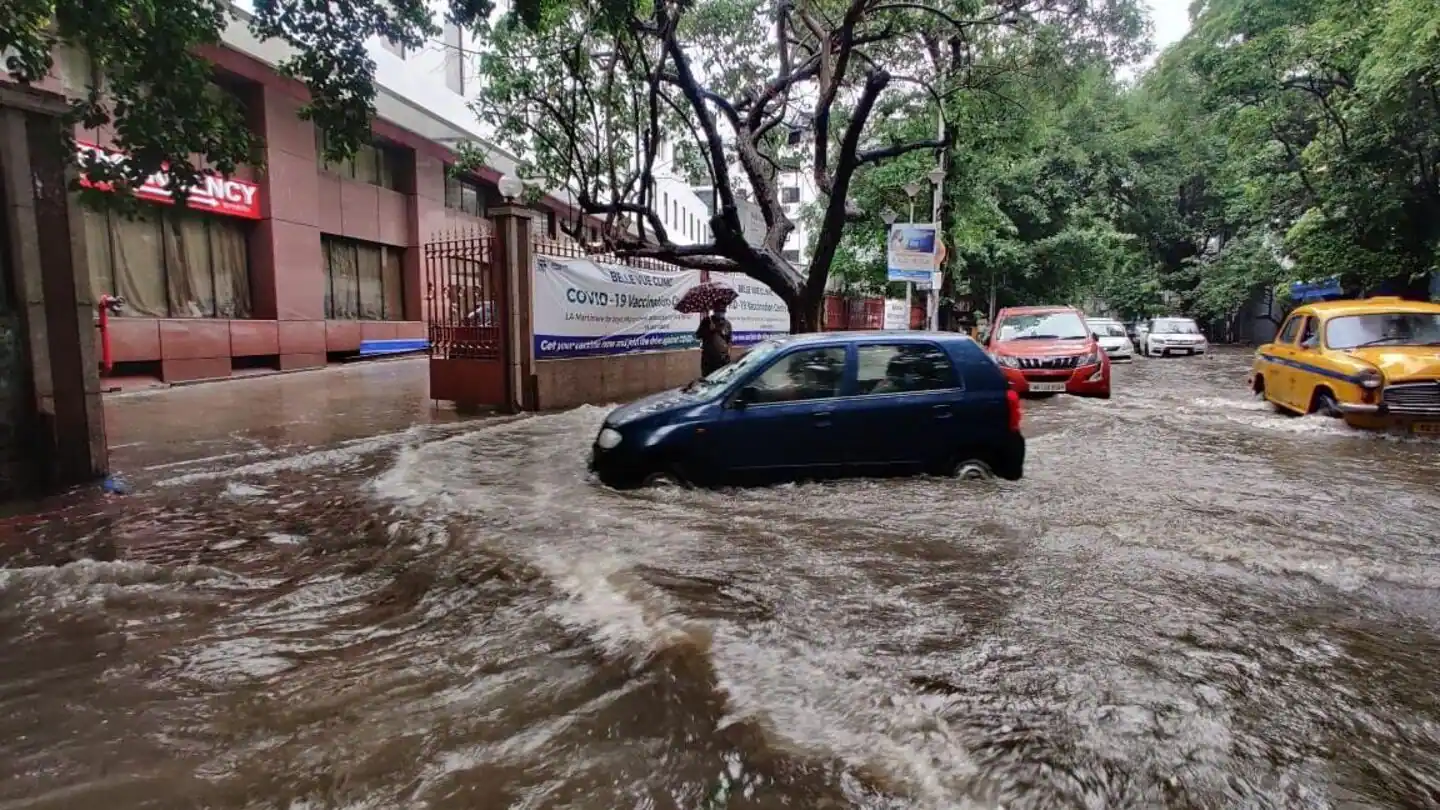
Kolkata and its surrounding areas experienced severe disruption on Tuesday as overnight torrential rains led to widespread waterlogging, inundating streets and residential areas while paralyzing traffic. Knee-deep water in several parts of the city forced authorities to suspend operations on key stretches of the Kolkata Metro’s Blue Line, highlighting vulnerabilities in urban drainage and public transport infrastructure. Officials warned that more heavy rainfall is expected over the coming days.
According to the Kolkata Municipal Corporation (KMC), the southern and eastern sections of the city were hardest hit. Garia Kamdahari recorded 332 mm of rain in just a few hours, followed by Jodhpur Park at 285 mm. Other areas, including Kalighat (280 mm), Topsia (275 mm), and Ballygunge (264 mm), also faced significant water accumulation, while northern parts like Thantania received 195 mm. City authorities said low-lying roads were entirely submerged, affecting both private and public transport. The India Meteorological Department (IMD) stated that a low-pressure area over the northeast Bay of Bengal is moving northwestwards, expected to bring widespread light to moderate rain, with isolated heavy to very heavy downpours in south Bengal districts. The IMD also indicated that districts such as Purba Medinipur, Paschim Medinipur, South 24 Parganas, Jhargram, and Bankura are likely to experience sustained rainfall until Wednesday. A fresh low-pressure area is forecast to develop over the east-central Bay of Bengal around September 25, potentially prolonging wet conditions.
In response to the flooding, Metro Railway Kolkata suspended services on the mid-section of the Blue Line between Mahanayak Uttam Kumar and Rabindra Sarobar stations. Officials confirmed that truncated operations are being conducted between Dakshineswar and Maidan stations to prioritise passenger safety. “The temporary halt in services ensures secure travel for commuters while mitigating risks from waterlogging,” a Metro spokesperson said. Normal operations are expected to resume once water levels recede. Urban planners and disaster management experts observed that such extreme rainfall events highlight the urgent need for sustainable drainage solutions and climate-resilient urban planning. Prolonged waterlogging not only disrupts mobility but also increases the risk of property damage, health hazards, and economic losses. Authorities emphasised the importance of public adherence to safety advisories while city engineers work to clear waterlogged areas.
Commuters reported major disruptions across road networks and residential localities, prompting city officials to deploy emergency response teams and ensure essential services remain operational. Experts argue that combining sustainable urban infrastructure with real-time weather monitoring can significantly improve city resilience against such climate-induced events.
Also Read: Bihar Set to Welcome 11th Amrit Bharat Express Connecting Rajasthan
