


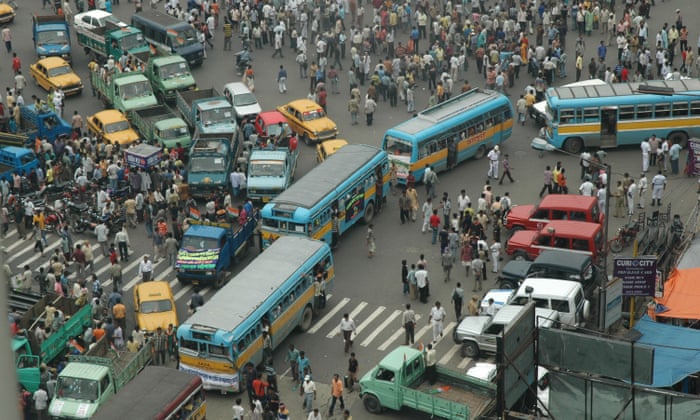
A sudden reconfiguration of shuttle bus routes across Kolkata has left tens of thousands of daily commuters navigating longer, costlier journeys, exposing the fragility of the city’s last-mile transport ecosystem.
The disruption, triggered by operational and traffic management adjustments, is already reshaping commuter behaviour and placing additional strain on alternative transit modes.At the centre of the disruption is the shuttle bus route changes, which have altered connectivity between key residential clusters and commercial hubs. For many office-goers and informal sector workers, these services have long functioned as an affordable and flexible link bridging gaps in the city’s formal public transport network. With routes either curtailed or diverted, commuters are now relying more heavily on autos, app-based cabs, and overcrowded buses.Urban mobility experts note that such abrupt shifts highlight the absence of integrated planning across transport systems. Kolkata’s reliance on a fragmented mix of buses, suburban rail, metro corridors, and para-transit services means that even minor adjustments can have cascading effects. Without synchronised route planning or real-time commuter information systems, passengers are left to adapt individually, often at higher financial and time costs.A senior transport official indicated that the changes were introduced to address congestion bottlenecks and improve operational efficiency on key corridors. However, early feedback from commuters suggests that the burden has shifted rather than reduced.
Peak-hour travel times have reportedly increased, while the availability of affordable alternatives remains inconsistent across neighbourhoods.The economic implications are equally significant.Daily-wage earners and lower-income groups—who form a substantial share of shuttle bus users—are disproportionately affected by fare hikes from alternative modes.Increased commuting costs can erode already thin margins, potentially influencing workforce mobility and productivity across sectors dependent on timely labour movement.From a planning perspective, the shuttle bus route changes also raise questions about Kolkata’s preparedness for a more sustainable and inclusive mobility future. Experts argue that while route rationalisation is necessary in growing cities, it must be accompanied by data-driven assessments, stakeholder consultations, and transitional support measures. Without these, short-term efficiency gains risk undermining long-term accessibility.There is also a climate dimension to consider. As commuters shift towards smaller, less efficient vehicles, overall emissions could rise—counteracting efforts to promote low-carbon urban transport. Strengthening high-capacity, shared mobility systems remains critical if the city is to align with broader sustainability goals.Looking ahead, urban planners suggest that authorities may need to revisit the current approach, incorporating commuter feedback and leveraging digital tools for route optimisation. Ensuring seamless interchange between transport modes and protecting affordability will be key to restoring trust in the system.
For Kolkata, the episode serves as a reminder that mobility is not merely about moving vehicles efficiently, but about enabling equitable, reliable access for the people who depend on it every day.
Also Read:
