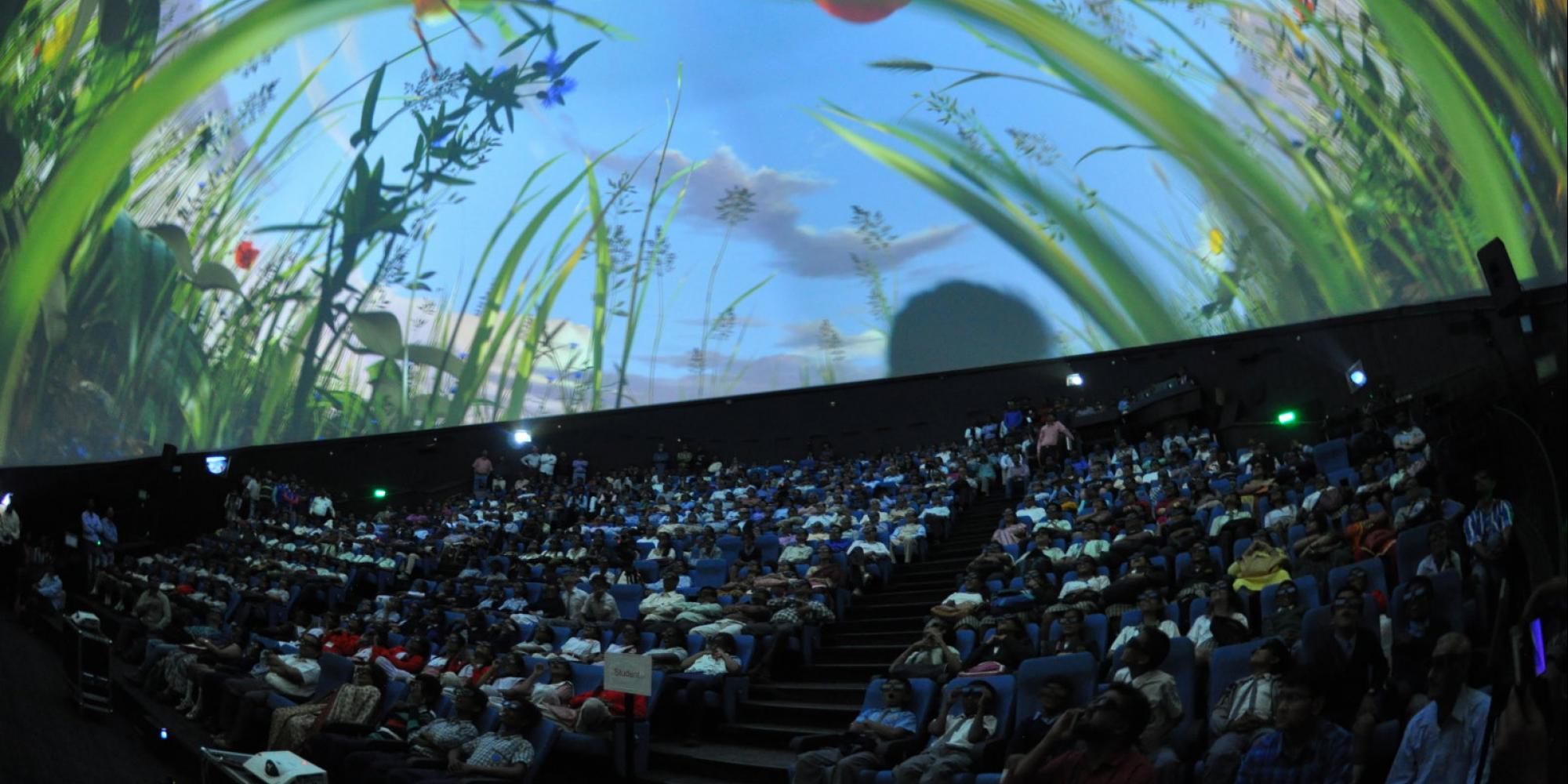
Kolkata’s flagship science education complex has modernised its immersive cinema infrastructure with the installation of a high-precision laser projection system at its full-dome theatre, marking a significant investment in public science learning spaces within Indian cities.
The ₹6.5-crore upgrade replaces earlier lamp-based projection equipment with a laser projection system designed to improve brightness, colour accuracy and operational reliability. Officials overseeing the facility say the new technology is expected to significantly enhance the quality of dome-based educational films while reducing maintenance demands and energy consumption.Large science centres such as the one in Kolkata serve as vital urban learning environments where students, families and researchers interact with science outside formal classrooms. Urban planners and education experts increasingly view these spaces as critical infrastructure for cities seeking to build knowledge-driven economies and cultivate future innovation talent.According to officials responsible for the centre’s operations, the laser projection system allows the theatre to produce ultra-high-resolution visuals across its hemispherical screen. Dome theatres require specialised projection equipment capable of distributing light evenly across curved surfaces while maintaining image clarity from every viewing angle. Laser-based technology, compared with older lamp projectors, delivers higher brightness levels, longer operational life and more consistent performance.The theatre itself had undergone a major transformation earlier when it transitioned from traditional film projection to a digital three-dimensional system, positioning it among the country’s most advanced immersive science cinemas. The latest technology upgrade builds on that transition and aims to ensure the facility remains technologically relevant as global standards for immersive visualisation evolve.
Science education officials say the enhanced projection capabilities will support a new generation of full-dome films focused on astronomy, planetary science and space exploration. Such visual storytelling formats are widely used by museums and planetariums worldwide to explain complex scientific concepts in accessible ways.The first programme showcased using the upgraded laser projection system focuses on interplanetary exploration and the technological challenges involved in long-distance space missions. The film explores the engineering systems, navigation strategies and scientific goals associated with missions targeting Mars and deep-space environments.Urban education specialists note that public science centres play an important role in expanding STEM exposure in rapidly growing cities. As metropolitan regions compete for investment in high-technology sectors, access to high-quality science communication platforms can influence how younger generations engage with research, engineering and innovation.Infrastructure upgrades at civic science institutions also contribute to the broader cultural and knowledge landscape of cities. Facilities that combine advanced technology with public accessibility help create inclusive learning spaces where curiosity, scientific literacy and technological awareness can grow across different social groups.
With the new system operational, administrators say the focus will now shift towards expanding the catalogue of immersive educational films and strengthening collaborations with global science institutions to bring cutting-edge research narratives to urban audiences.
Kolkata Science City Installs Laser Projection System.