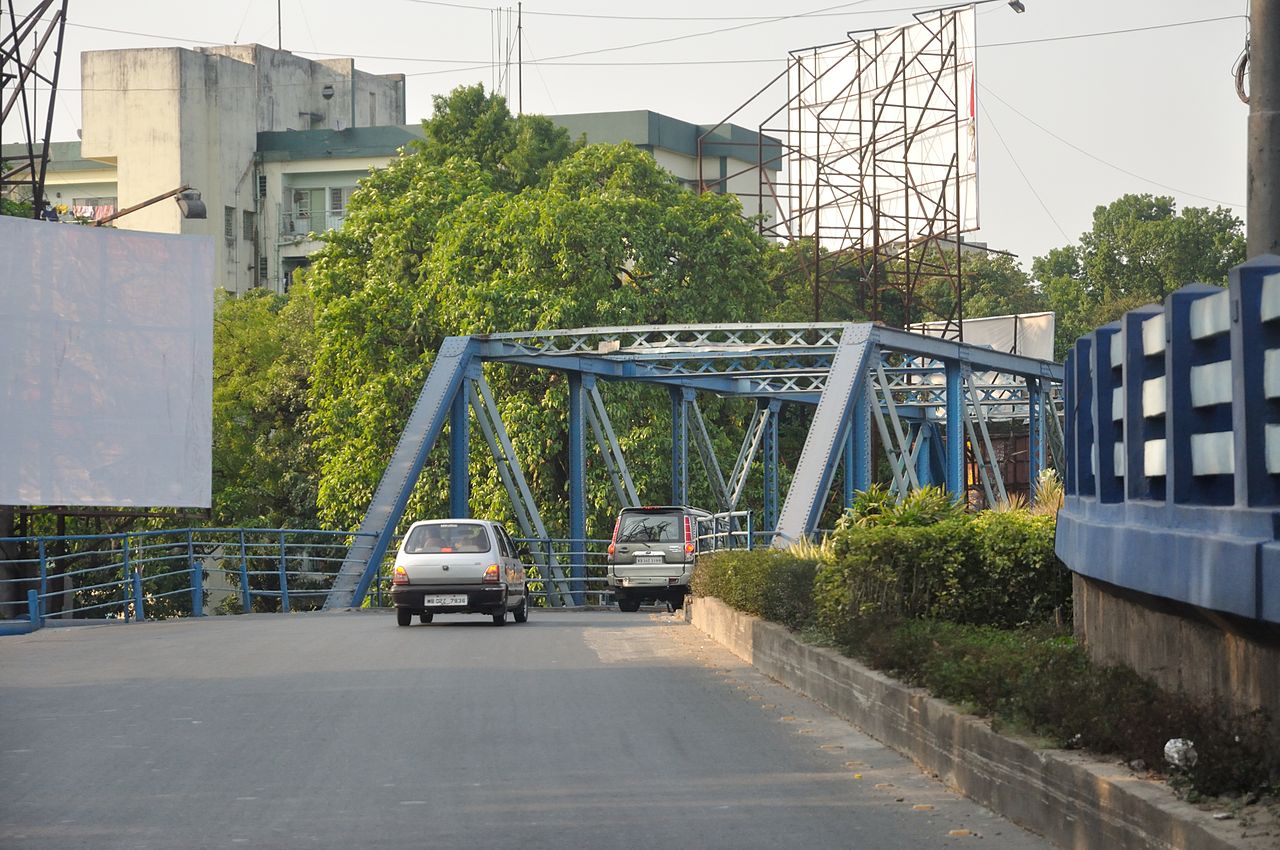
Kolkata’s traffic authorities have formally urged the state government to undertake immediate structural intervention on the nearly 100-year-old Zeerut bridge, citing rising safety risks and mounting vehicular pressure. The move brings renewed scrutiny to a critical link between Alipore and the Maidan, an area that anchors cultural landmarks, tourism, and daily commuter flows.The Zeerut bridge, spanning Tolly’s Nullah, has served as a key connector since the late 1920s. However, officials indicate that its steel superstructure is showing visible signs of fatigue. Internal assessments in previous years concluded that the bridge had exceeded its intended service life, with stress points observed in load-bearing members supporting the carriageway.
Authorities have recently introduced height restrictions to prevent heavy vehicles from using the corridor. While this reduces stress on the structure, traffic planners acknowledge that such measures offer only temporary relief. The bridge continues to carry a high volume of smaller vehicles, including daily commuters and visitors accessing major public institutions in Alipore. The concern is not merely structural but systemic. Following earlier bridge failures in the city, the state commissioned technical audits of ageing infrastructure. A central engineering consultancy reportedly recommended that constructing a new parallel bridge may be more viable than extensive retrofitting. Yet, progress has been slow, reflecting the complexity of land acquisition, funding approvals and inter-departmental coordination.
Urban planners note that the Zeerut bridge issue underscores a broader infrastructure challenge facing historic cities: ageing assets operating beyond design capacity amid expanding mobility demands. Kolkata’s vehicle population has grown steadily over the past decade, intensifying pressure on legacy bridges built for a different era of traffic density. Officials in the irrigation department, which oversees the structure, are currently evaluating cost estimates for strengthening works. However, technical experts suggest that incremental repairs may only extend functionality marginally if the core steel framework has deteriorated significantly.
A replacement structure, while capital-intensive, could incorporate modern load standards, pedestrian safety provisions and climate-resilient design features to withstand increased rainfall variability and urban heat exposure. There is also a spatial constraint. Building a new bridge may require adjacent land controlled by defence authorities, adding another layer of negotiation. Traffic management during any reconstruction phase would require careful planning to prevent severe disruption in one of south Kolkata’s busiest corridors. For a city seeking to modernise its transport backbone while preserving heritage, the Zeerut bridge has become a test case. Decisions taken now will determine whether Kolkata moves towards preventive infrastructure governance or continues to react to risk signals after crises emerge.