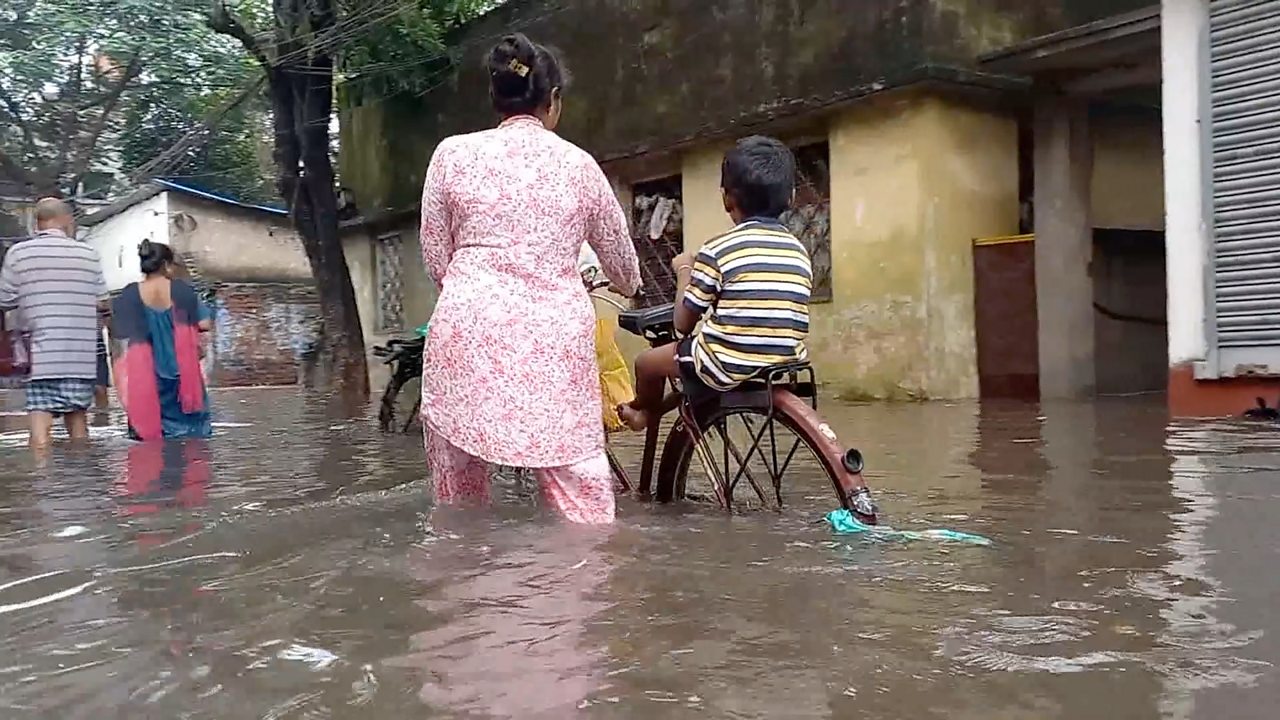
Kolkata recorded measurable precipitation early Tuesday, breaking a prolonged dry stretch that had defined much of its winter season. The rainfall, though modest, is being closely watched by urban planners and civic agencies as the city transitions toward pre-summer conditions marked by rising heat and humidity. Meteorologists have also cautioned that thunderstorms and gusty winds could follow across several south Bengal districts. According to data released by the India Meteorological Department, 5.9 mm of rain was logged over a 24-hour observation window ending Tuesday morning. The change was attributed to moisture streaming in from the Bay of Bengal, supported by favourable upper-air circulation over Gangetic West Bengal. Together, these factors created conditions conducive to cloud formation and scattered showers.
For a metropolis that had seen limited winter precipitation this year, the Kolkata winter rainfall is significant beyond meteorological records. Civic officials say prolonged dry spells strain urban greenery, increase airborne dust levels and elevate fire risks in peri-urban zones. Construction sites and transport corridors also experience higher particulate dispersion when soil moisture remains low for extended periods. Urban climate researchers note that winter rainfall in eastern India has shown variability in recent years, influenced by weaker western disturbances and shifting moisture pathways. While this episode does not rank among historic extremes, it underscores how seasonal transitions are becoming less predictable, complicating water management, stormwater planning and public health preparedness.
The Regional Meteorological Centre has issued a nowcast alert for several districts, including Kolkata and neighbouring urban clusters. Forecasts indicate the likelihood of thunderstorms accompanied by lightning and wind speeds reaching 30–40 kmph. Such conditions can disrupt local transport networks, informal housing settlements and under-construction real estate projects, particularly where drainage and safety compliance remain uneven. Maximum temperatures are projected to hover near 29°C, with minimums around 19°C, signalling the gradual retreat of winter. High humidity levels following rainfall may intensify discomfort in dense neighbourhoods with limited ventilation and tree cover, a recurring challenge in compact urban layouts.
For real estate and infrastructure stakeholders, episodic rainfall during transitional months offers a reminder of the need for climate-responsive design. Adequate stormwater channels, permeable surfaces and wind-resilient construction standards are increasingly critical in a city balancing vertical growth with environmental stress. As Kolkata winter rainfall gives way to a potentially unstable weather pattern, municipal authorities are expected to monitor drainage systems, electrical networks and emergency response readiness. The episode may be brief, but it highlights the growing importance of integrating weather variability into everyday urban governance not only during monsoon peaks, but throughout the year.