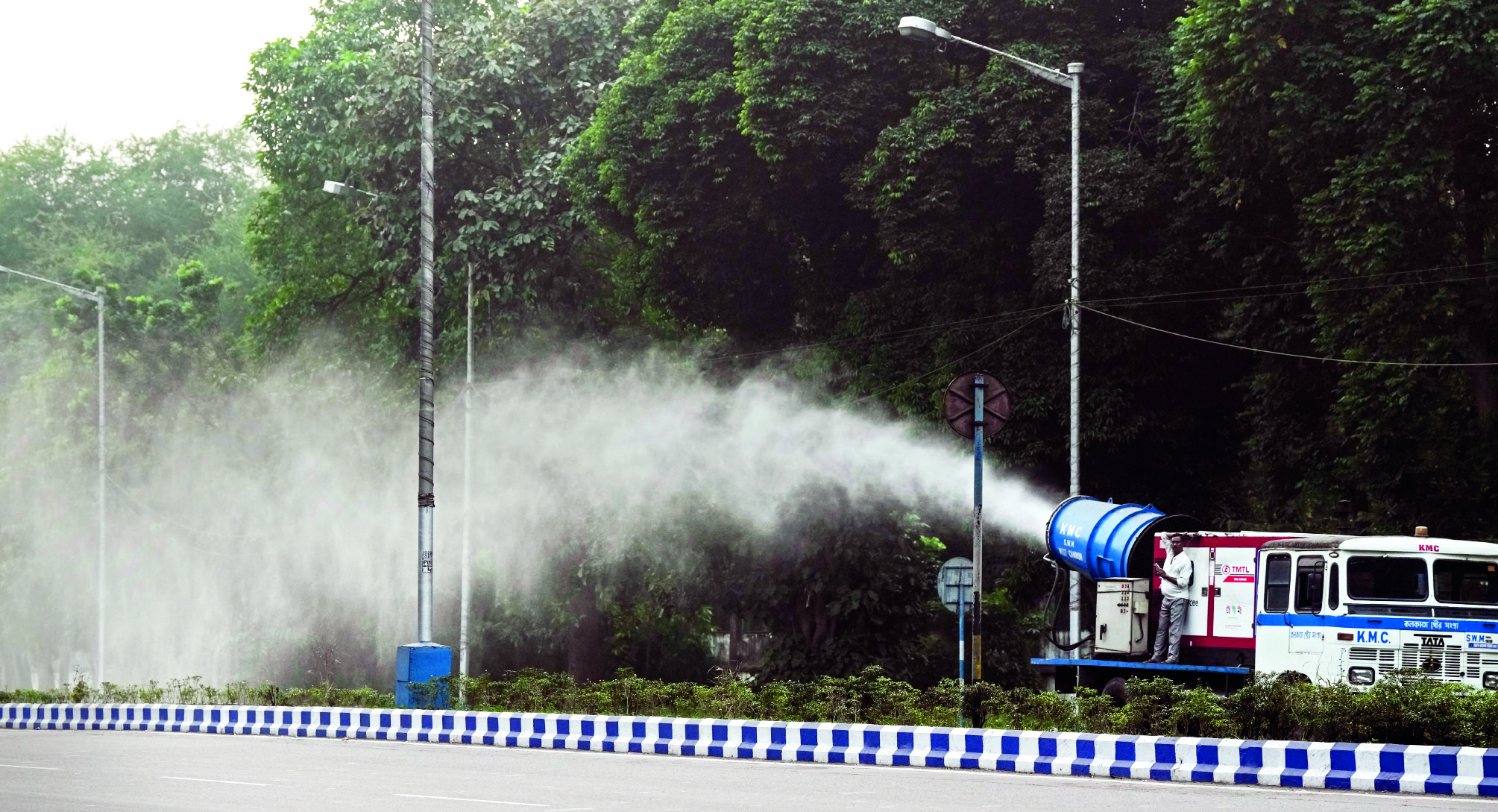
Kolkata recorded one of its worst winter pollution episodes this week, briefly overtaking Delhi in terms of toxic air levels and raising concern among environmental specialists monitoring urban emissions in eastern India. Air quality in the central Maidan belt touched the ‘very poor’ to ‘hazardous’ range late on Tuesday, underscoring how rapidly winter pollution patterns are shifting across major Indian cities.
Real-time data from monitoring stations in the Victoria Memorial precinct showed the Air Quality Index (AQI) climbing to 342, significantly higher than Delhi’s reading of 299 during the same period. While Delhi typically dominates national conversations on deteriorating air, Kolkata’s spike highlights the growing vulnerability of coastal and riverine cities that once enjoyed a climatic buffer.
According to environmental analysts, the sharp deterioration reflects a mix of chronic and seasonal issues converging in one of the city’s most critical public spaces. A researcher familiar with long-term pollution trends in the Maidan said the area continues to absorb emissions from multiple sources, including ongoing infrastructure work, ageing vehicles and open burning. “The pollution events are no longer isolated. They are now part of a larger pattern linked to construction, fuel use and inadequate enforcement,” the analyst noted.
At the centre of the current episode is the extensive underground metro construction taking place around the Victoria Memorial. While the project aims to strengthen sustainable mobility in the long term, experts argue that daily pollution controls at the site remain inadequate. Regular water-sprinkling, dust barriers and covered movement of materials are still inconsistent, they said, allowing fine particles to disperse across the Maidan.Vehicular emissions continue to compound the problem. A senior transport expert pointed out that older diesel vehicles travelling along the adjacent Maa flyover emit high levels of particulate matter, which often settles over the open green expanse. “Restricting high-emitting vehicles is essential for protecting the Maidan ecosystem, especially during winter when dispersion is naturally low,” the expert said.
Adding to these structural sources is the continued use of coal and firewood by street food stalls operating near major transit hubs. Environmental health specialists warn that such practices release dense smoke that travels easily through the low-lying Maidan, exposing both commuters and hospital-bound patients to harmful pollutants. The nearby SSKM Hospital, they stressed, requires an additional protective approach given the vulnerability of patients and staff to acute air-quality fluctuations.Activists and urban planners argue that Kolkata’s experience should serve as a signal for state agencies to intensify year-round enforcement.
They emphasise that heritage zones like the Victoria Memorial require special protection frameworks that balance urban activity with environmental responsibility.
While authorities have yet to announce a citywide action plan in response to the spike, experts say immediate steps such as expanding clean-energy cooking solutions for street vendors, mechanised cleaning around construction zones and strict curbs on old vehicles can help reduce exposure. With winter pollution increasingly affecting multiple metros, strengthening local air-quality management will be essential to building healthier, more resilient and equitable urban environments.
Kolkata Records Hazardous AQI As Metro Construction And Winter Emissions Intensify Rapidly