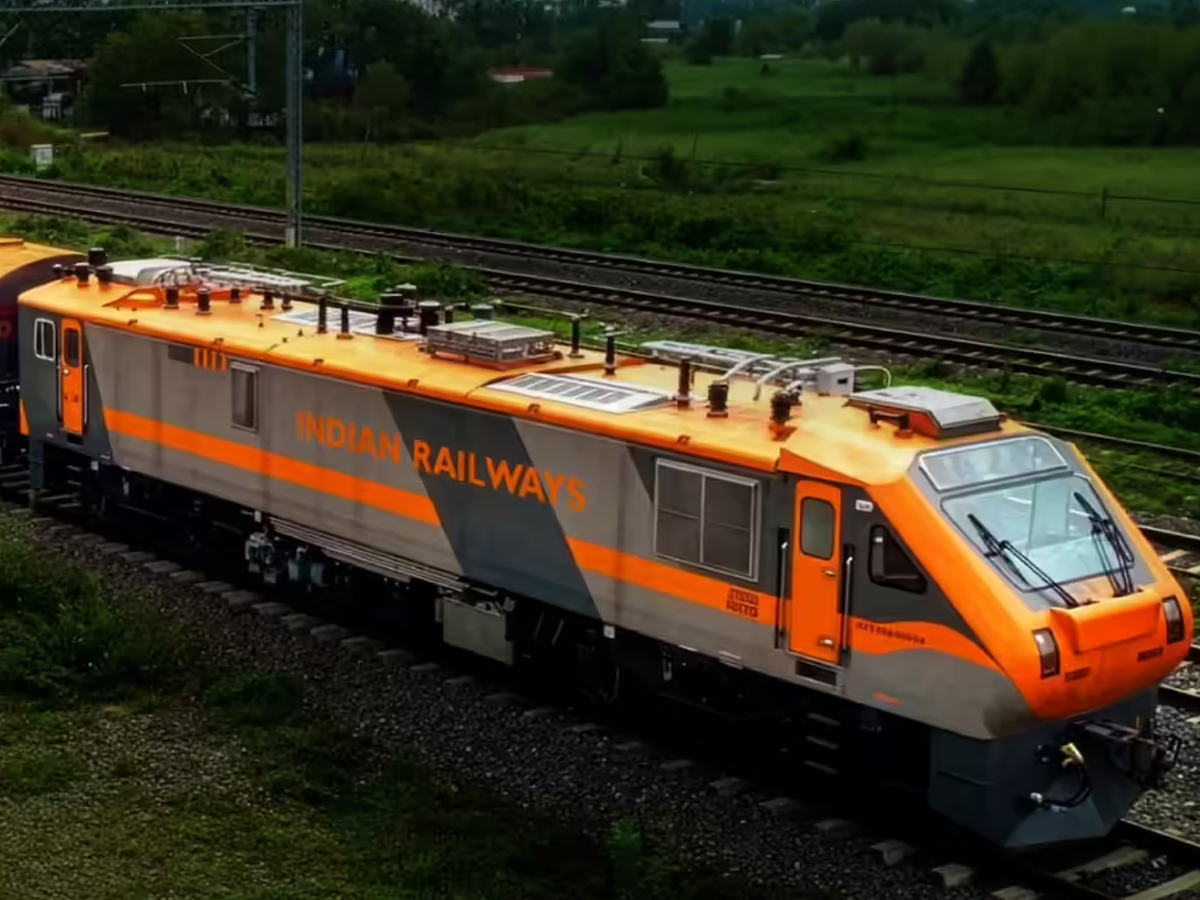
Kolkata’s position as eastern India’s rail anchor has been reinforced with the introduction of three new long-distance passenger services under the Amrit Bharat programme, alongside the opening of a new regional rail corridor in West Bengal. The combined move signals a strategic recalibration of railway investment towards both inter-regional mobility and local accessibility, with implications for labour markets, tourism flows and low-carbon transport adoption across eastern India.
The newly launched services link the Kolkata metropolitan region to key urban and economic centres in northern and southern India, extending the city’s rail reach far beyond its traditional hinterland. Transport planners view this as a shift from corridor-specific upgrades to a network-first approach, where capacity is built simultaneously across multiple geographies rather than concentrated on a few premium routes. The Amrit Bharat Express category is designed to modernise non-premium long-distance travel, offering higher speeds, upgraded coaches and operational efficiency without the cost barriers associated with high-end trains. For eastern India, where rail remains the primary mode for inter-state movement of workers, students and small traders, this model addresses a long-standing gap between affordability and comfort.
Among the new links, services connecting Kolkata with the National Capital Region and southern India are expected to play a pivotal role in redistributing passenger demand away from saturated corridors. Industry experts note that this could ease pressure on existing trunk routes while improving time reliability for cross-regional journeys that underpin commercial, educational and cultural exchange.Equally significant is the commissioning of a new 15-kilometre rail section in Bankura district, which integrates rural and semi-urban settlements into the broader rail grid. Unlike large inter-city projects, such local links often deliver higher social returns by enabling access to healthcare, education and employment markets for smaller towns and villages. Urban economists argue that such connectivity can slow distress migration by strengthening local economies rather than merely facilitating exit.
The dual emphasis on long-haul and local rail also aligns with India’s climate commitments. Railways remain among the most energy-efficient mass transport systems, and incremental shifts from road to rail reduce per-capita carbon emissions while lowering urban congestion. In metropolitan Kolkata, where air quality and traffic density are persistent challenges, strengthening rail-led mobility is increasingly seen as an environmental necessity rather than a transport choice.
From a real estate and urban development perspective, expanded rail access often reshapes land values and development patterns around stations and junctions. Analysts expect emerging nodes along these new routes to attract warehousing, affordable housing and small-scale commercial activity, particularly in districts previously peripheral to the state’s growth narrative.
However, specialists caution that infrastructure alone will not deliver equitable outcomes. Station-area planning, last-mile connectivity and integration with local transit systems will determine whether the benefits of the Amrit Bharat services translate into inclusive urban growth or remain confined to inter-city travel statistics. As eastern India witnesses renewed railway investment, the real measure of success will lie in how effectively these services are woven into everyday mobility, regional economies and sustainable urban planning. For Kolkata, the latest additions are less about ceremonial launches and more about redefining its role in a rail-first, low-carbon transport future.
Kolkata rail network gains Amrit Bharat connectivity