


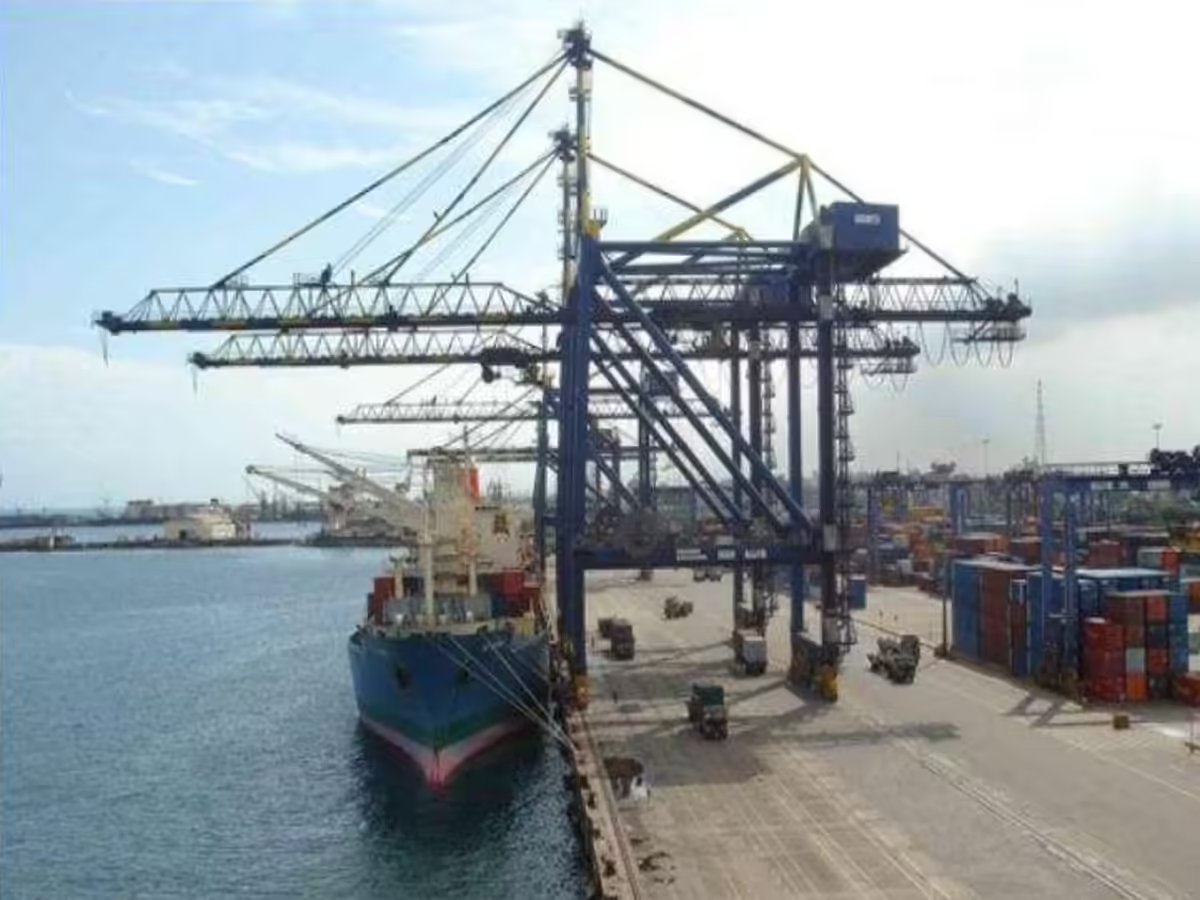
The Syama Prasad Mookerjee Port is moving ahead with plans to develop a shipbuilding and ship-repair facility at Balagarh in West Bengal, signalling a strategic expansion of river-based industrial infrastructure along the Hooghly. The proposed Balagarh shipyard project is expected to strengthen inland water transport capacity while creating a new maritime-linked industrial cluster in the region.
Port officials indicate that preparatory work, including technical assessments and stakeholder consultations, is under way to structure the project for phased development. The Balagarh shipyard project is being positioned as a long-term asset that can serve both commercial and inland vessels, aligning with India’s push to expand coastal and riverine shipping. Balagarh, located upstream of Kolkata, offers access to navigable stretches of the Hooghly river, making it suitable for smaller and medium-sized vessel construction and maintenance. Infrastructure analysts say decentralised ship-repair ecosystems can reduce turnaround time for inland vessels, lower logistics costs and improve operational efficiency for cargo movement across eastern India.
The project is also seen as a diversification move for the port authority. While Kolkata’s historic docks handle significant cargo volumes, spatial and draft constraints have long shaped operational capacity. Developing complementary facilities outside the congested urban core may help distribute maritime activity more evenly and unlock new revenue streams. Industry experts point out that shipbuilding and repair clusters generate direct and indirect employment, from fabrication and engineering services to supply-chain linkages in steel, electrical systems and marine equipment. If structured with skill development components, the Balagarh shipyard project could support local workforce participation, including technical training for youth in surrounding districts.
Environmental safeguards are expected to form a critical component of project planning. River-based infrastructure in ecologically sensitive zones requires careful dredging management, wastewater treatment systems and shoreline protection measures. Urban planners argue that integrating green building standards and energy-efficient yard operations at the design stage can reduce the long-term carbon footprint of maritime facilities. The initiative aligns with national efforts to shift freight from road to waterways, a transition that can lower emissions per tonne-kilometre. Expanding inland vessel capacity through projects such as the Balagarh shipyard project may therefore support both economic competitiveness and climate objectives.
Financing models and implementation timelines are still being firmed up, according to officials familiar with the process. Public-private partnership structures are being examined to attract private investment while retaining regulatory oversight. For West Bengal, the development presents an opportunity to reimagine riverfront industrial land as a productive, employment-generating asset rather than a peripheral zone. As feasibility studies progress, attention will turn to land readiness, environmental clearances and integration with regional logistics networks — factors that will determine whether the Balagarh site evolves into a durable maritime growth engine.
Also Read: Shriram Properties Unlocks Kolkata Land Dispute
Kolkata Port Advances Balagarh Shipyard Project
