


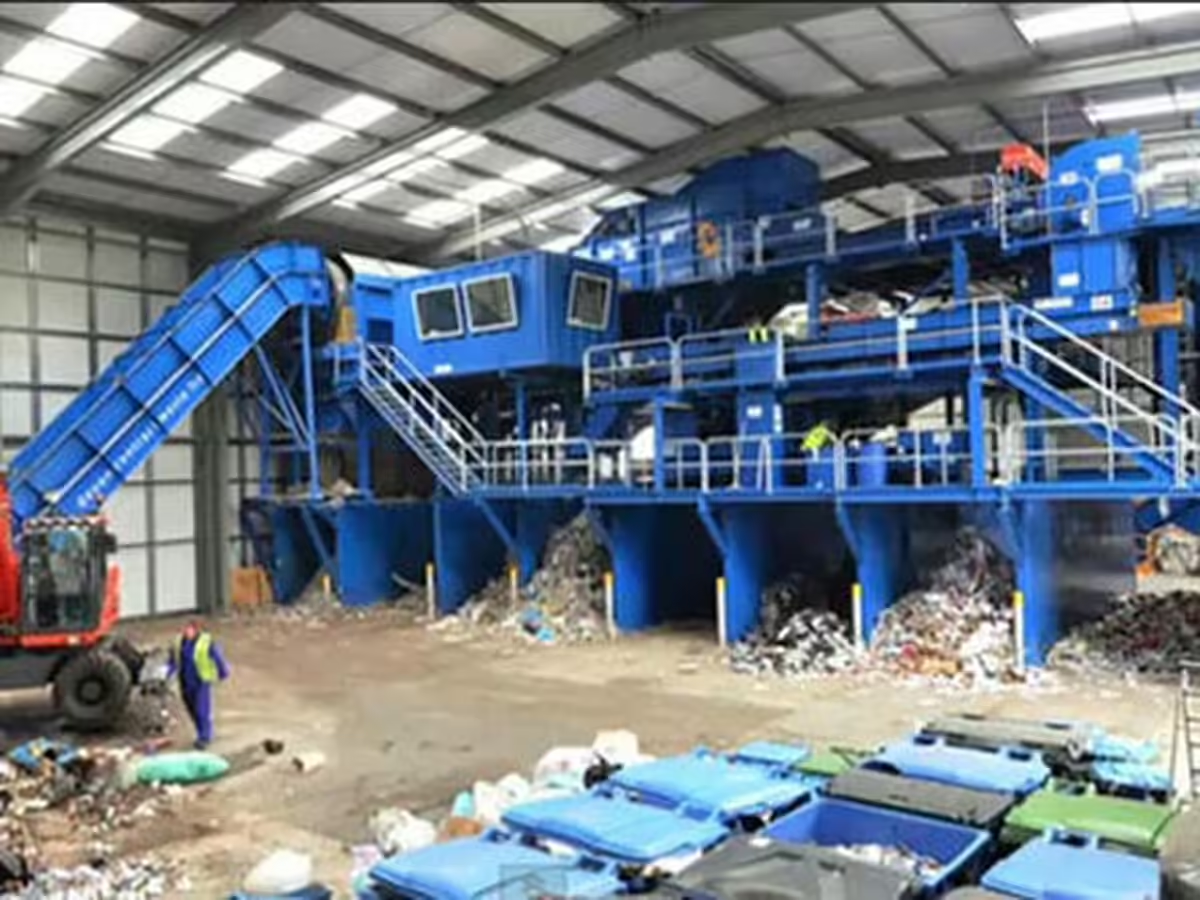
The Kolkata Municipal Corporation has identified land for a new waste processing plant in Kolkata, marking a significant step in the city’s effort to modernise its solid waste management system. The move is expected to ease pressure on existing dumping grounds and accelerate a shift toward more scientific treatment of municipal waste in one of eastern India’s most densely populated urban regions.
According to senior civic officials, the proposed facility will handle a substantial share of the city’s daily municipal solid waste, much of which currently ends up at overburdened landfill sites. By creating additional processing capacity, the corporation aims to reduce landfill dependency and improve segregation, composting and recovery rates. Kolkata generates several thousand tonnes of solid waste each day, driven by rising population density, commercial activity and changing consumption patterns. Urban planners note that without parallel investments in decentralised processing and waste-to-resource technologies, landfill sites risk becoming long-term environmental and public health liabilities. The new waste processing plant is expected to adopt mechanised segregation systems and scientific treatment methods, including composting of organic waste and potential recovery of recyclables. Officials indicate that environmental clearances and technical feasibility studies are underway to ensure compliance with national solid waste management rules.
Infrastructure analysts say such projects are not only environmental interventions but also urban economic enablers. Efficient waste management improves land utilisation, reduces methane emissions from unmanaged dumps and can generate secondary revenue streams through compost and recyclable materials. For real estate markets, modern waste systems also enhance liveability metrics, a growing concern among investors and homebuyers. The initiative comes amid increasing scrutiny of legacy dumping sites across metropolitan India. In several cities, remediation of old landfills has required significant public expenditure and long timelines. Experts argue that proactive expansion of waste processing capacity is more cost-effective than retrospective clean-up operations. Civic engineers emphasise that the success of the new waste processing plant will depend on household-level segregation and reliable door-to-door collection systems. Behavioural change campaigns, integration of informal waste pickers and monitoring mechanisms will be critical to achieving projected outcomes.
For Kolkata, the decision signals a broader recalibration of urban infrastructure planning — one that recognises waste as a resource stream rather than a residual burden. As climate resilience and circular economy models gain traction in policy circles, investments in scientific processing facilities are increasingly seen as foundational to building low-carbon, inclusive cities. The timeline for commissioning the facility will depend on statutory approvals and procurement processes. However, municipal officials indicate that groundwork is progressing, with the project positioned as a key component of the city’s medium-term urban infrastructure roadmap.
Also Read: Noida Experiences Persistent Air Quality and Health Risks
Kolkata Plans New Waste Processing Plant
