


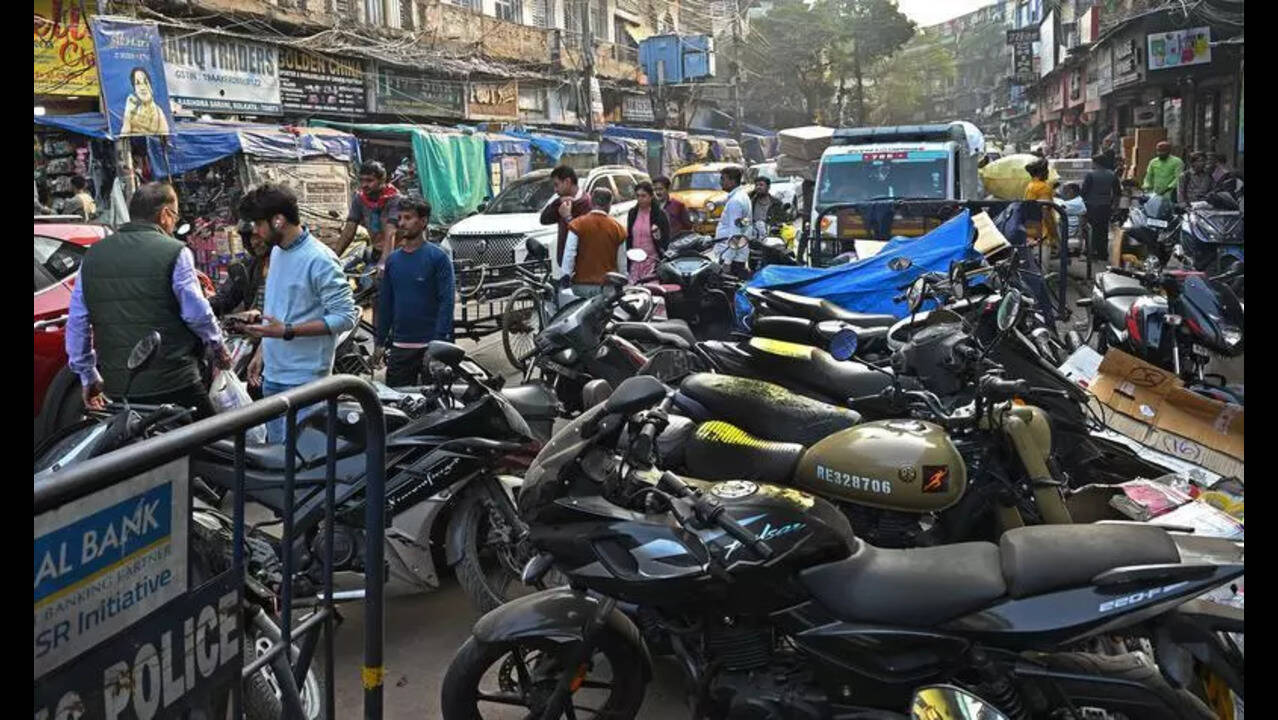
Rising Kolkata pedestrian encroachment in the central business district around the Grand Hotel zone is intensifying concerns over urban mobility, safety, and the management of public space.
Footpaths and designated pedestrian corridors in the area are increasingly occupied by informal street vendors, forcing walkers onto busy carriageways and heightening risks in one of the city’s most congested commercial hubs.Urban mobility experts warn that Kolkata pedestrian encroachment is not merely a law-and-order issue but a structural challenge tied to the city’s informal economy and limited availability of designated vending zones. The area, which attracts high footfall due to retail, hospitality, and office activity, has become a focal point where competing demands for space are colliding.The encroachment has direct implications for pedestrian safety. With walkways obstructed, elderly citizens, children, and persons with disabilities face significant barriers to movement. Road safety specialists note that such conditions increase the likelihood of accidents, particularly during peak hours when both vehicular and foot traffic are at their highest.At the same time, street vending remains a critical source of livelihood for thousands of urban workers. Informal vendors provide affordable goods and services while contributing to the vibrancy of city life. Experts argue that any intervention addressing Kolkata pedestrian encroachment must balance enforcement with inclusive planning, recognising the economic role of street vendors within the urban ecosystem.The issue also highlights gaps in spatial planning.
Despite the presence of regulatory frameworks for street vending, implementation remains uneven. Urban planners suggest that the lack of clearly demarcated, well-designed vending zones in high-demand areas often leads to spillover into pedestrian corridors. This points to the need for more responsive planning that aligns with actual patterns of demand and footfall.From an infrastructure perspective, the situation underscores the importance of designing pedestrian-first streets. Wider footpaths, clear zoning, and integrated street management systems can help accommodate multiple uses without compromising safety.Additionally, the use of smart monitoring and periodic audits could improve compliance and ensure that public spaces remain accessible.Environmental considerations are also relevant. Congested streets and disrupted pedestrian movement contribute to higher vehicular emissions as traffic flow becomes inefficient. Encouraging walkability is a key component of low-carbon urban strategies, making the management of Kolkata pedestrian encroachment essential for broader sustainability goals.Real estate stakeholders note that persistent encroachment can affect the commercial appeal of high-value districts. Accessibility and ease of movement are critical factors influencing both consumer behaviour and business operations.
Addressing these challenges is therefore not only a civic priority but also an economic imperative.Going forward, urban governance in Kolkata will need to adopt a more integrated approach — combining enforcement, infrastructure redesign, and inclusive policies — to ensure that pedestrian spaces are protected while livelihoods are sustained. The resolution of Kolkata pedestrian encroachment will be central to building safer, more accessible, and economically vibrant city streets.
Also Read:Kolkata Home Nurseries Drive Sustainable Urban Living
