


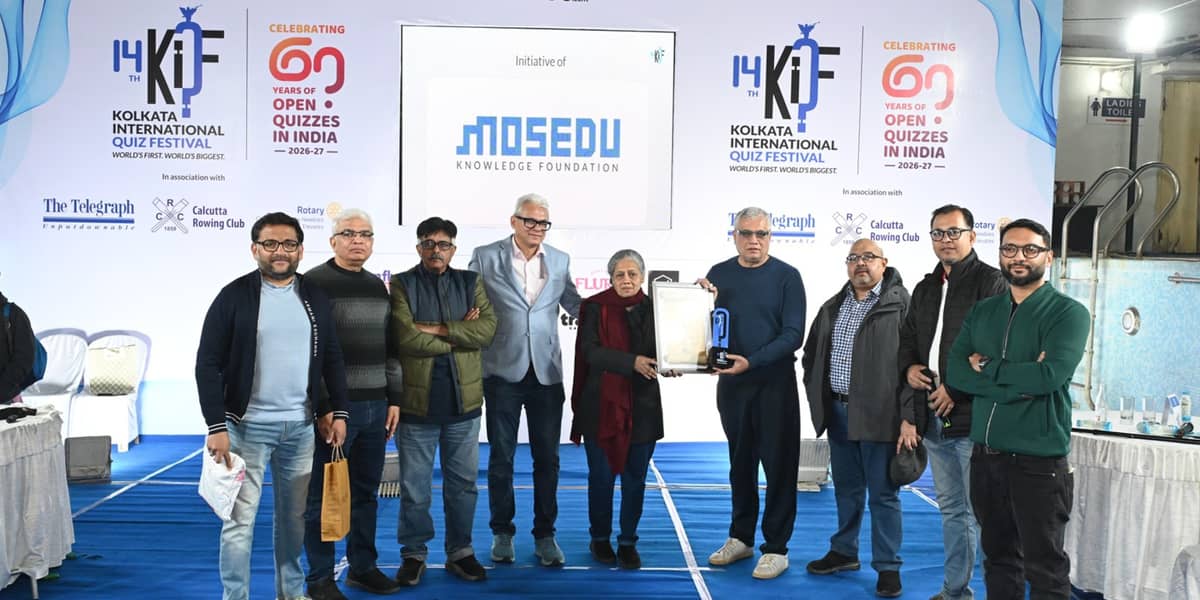
A long-running open quiz event in Kolkata has once again drawn large participation, underscoring the city’s enduring culture of public knowledge-sharing and its role in shaping inclusive urban spaces.
The gathering, hosted in a central neighbourhood, brought together students, professionals and families, reflecting how informal intellectual platforms continue to thrive alongside formal education systems.Unlike closed academic competitions, open quizzes in Kolkata have historically functioned as accessible civic spaces. Participants from diverse backgrounds engage on equal footing, contributing to a culture that values curiosity, dialogue and collective learning. Urban planners note that such events, often held in parks or community venues, create low-cost, high-impact public engagement ecosystems—an increasingly important aspect of people-first city design.The significance extends beyond recreation. Industry observers say these forums indirectly support the city’s knowledge economy by encouraging analytical thinking, awareness of current affairs and interdisciplinary learning. In a service-driven urban economy, such soft skills are becoming critical, particularly for younger populations entering competitive job markets.Organisers involved in these initiatives indicate that participation has grown steadily in recent years, driven in part by digital awareness and social media outreach. Yet, the physical format remains central. “Offline interaction builds a different kind of community,” said a senior organiser, pointing to the value of shared public experiences in an era of increasing digital isolation.
From an urban development perspective, these events also highlight the role of non-commercial public activities in maintaining vibrant city life. While large infrastructure projects often dominate planning conversations, smaller cultural ecosystems—like open quizzes—contribute to social cohesion and mental well-being. Experts argue that cities investing in such grassroots initiatives can foster more inclusive growth without significant financial outlays.There is also a spatial dimension to this trend. Regular gatherings activate underutilised public areas, improving perceived safety and encouraging footfall. This aligns with broader urban strategies focused on mixed-use spaces and pedestrian-friendly environments. In cities grappling with congestion and fragmented social interactions, such initiatives offer a model for reclaiming public spaces for community use.Kolkata’s legacy as a hub of intellectual discourse continues to evolve through these formats. While the city is expanding its infrastructure and real estate footprint, its cultural capital remains a defining feature. The persistence of open quiz events suggests that even in rapidly changing urban landscapes, citizen-led knowledge platforms can coexist with—and complement—formal development.
As Indian cities look to balance economic growth with social sustainability, Kolkata’s experience indicates that investing in cultural and intellectual commons may be as critical as building physical infrastructure. The challenge ahead lies in scaling such initiatives while preserving their openness and accessibility.
Also Read:Kolkata Temperature Drop Highlights Shifting Weather Patterns
