


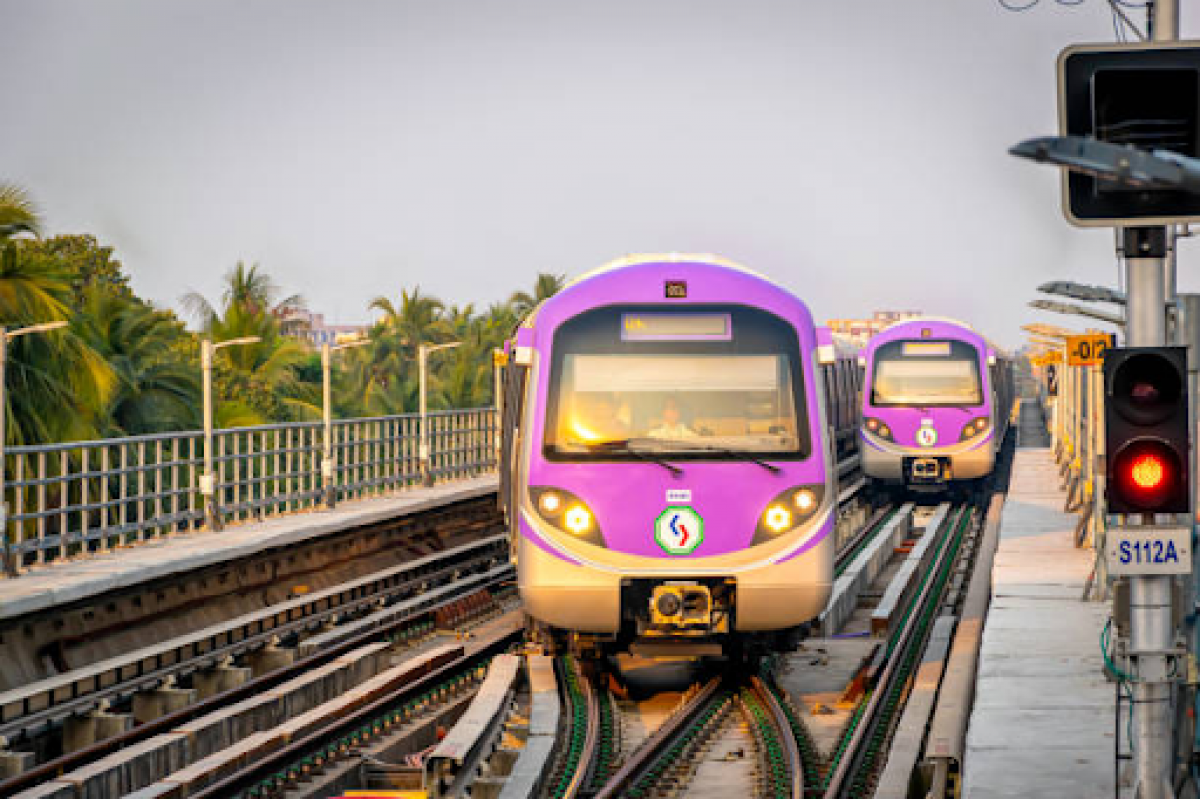
Kolkata is set for a transport revolution as three new metro corridors open to the public this week, promising faster, greener, and more affordable travel across the city. With fares ranging from just ₹5 to ₹70, the expanded metro network is poised to ease congestion, lower commuting costs, and align with the city’s vision of sustainable urban mobility.
The most anticipated addition is the final stretch of the East-West Metro, or the Green Line, now fully linking Howrah Maidan with Salt Lake Sector V. Officials confirmed that the journey between Howrah and Sealdah — a route that often took up to an hour in peak traffic — can now be completed in just 12 minutes. This line also features India’s first underwater metro tunnel beneath the Hooghly, a feat of engineering that redefines connectivity in the region. The Airport Metro, known as the Yellow Line, is also opening a 7 km stretch from Noapara to Netaji Subhash Chandra Bose International Airport. For travellers, this means avoiding unpredictable cab fares and road delays. A direct airport-to-Noapara ride has been priced at ₹20, while longer trips to central business hubs such as Esplanade and Chandni Chowk cost ₹40. The airport-to-Kavi Subhash connection is ₹45, significantly undercutting private transport options.
The Orange Line, stretching 4.4 km from Hemanta Mukhopadhyay (Ruby Crossing) to Beleghata, strengthens east Kolkata’s connectivity. Serving key areas like Science City and major hospitals, this line integrates with the wider network, offering a seamless, multi-modal travel experience. A journey from the airport to Ruby Crossing will cost ₹65, while the maximum end-to-end fare across the metro corridors remains capped at ₹70. Urban planners have highlighted that this expansion is not just about convenience but also about reshaping Kolkata into a more sustainable city. By reducing dependence on fossil-fuelled vehicles, the metro can cut carbon emissions and improve air quality. A senior urban development official stated that the expansion represents a “significant shift towards affordable and climate-resilient mobility” for the city’s growing population.
The scale of growth is noteworthy. While Kolkata took nearly three decades to build its initial 28 km of metro track, the last decade alone has added more than 45 km — a 161% increase. Experts point out that this rapid expansion aligns with national policies encouraging urban mass transit as an engine for inclusive growth. With Durga Puja around the corner, the metro is expected to be a game changer for residents navigating packed city roads during the festive season. Lower fares and reduced travel times are expected to benefit office-goers, students, and tourists alike, making the metro not just a transport solution but a symbol of Kolkata’s evolving urban future.
Also Read : State Approves Revised Rs 6,000 Crore Pune Metro Extension Till Chandni Chowk, Wagholi
