


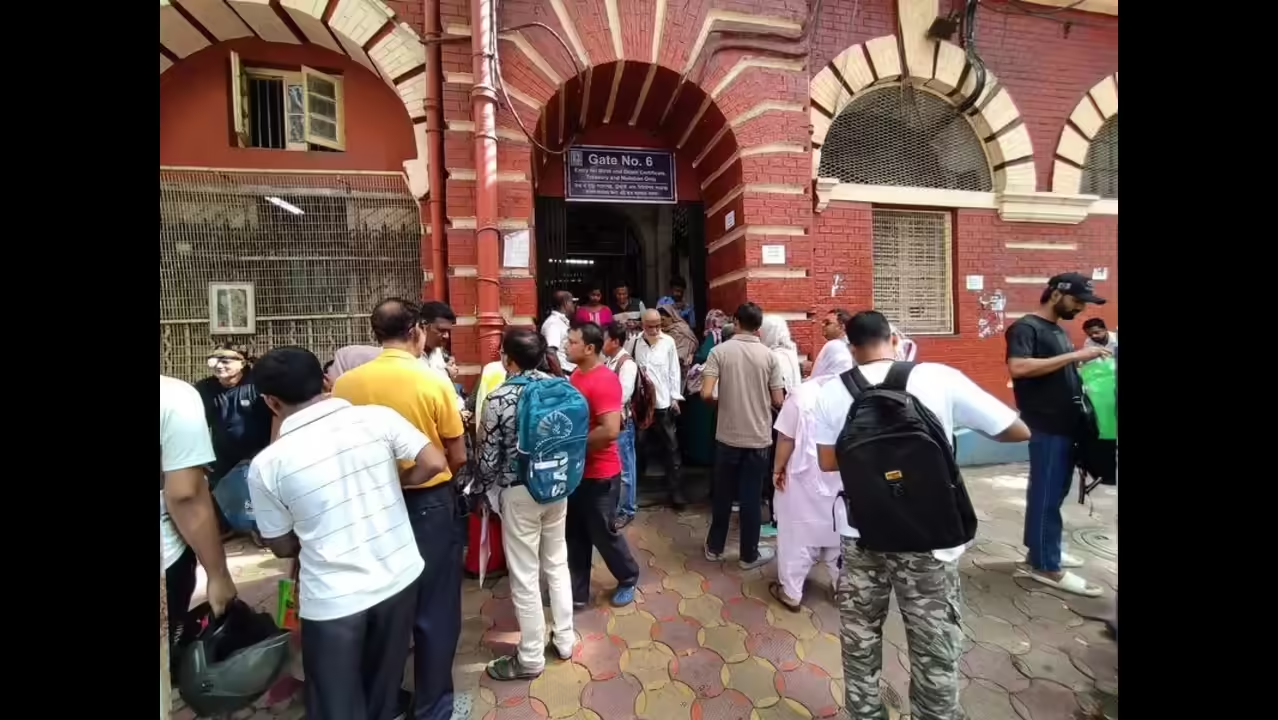
Kolkata’s civic administration has come under renewed scrutiny following allegations of irregularities in the issuance of birth certificates, raising concerns over governance standards, urban data integrity, and the credibility of municipal service delivery systems. The issue centres on claims that unofficial payments were sought for expedited or unauthorised documentation within the city’s birth registration framework — an accusation that, if substantiated, could have wide-ranging implications for urban planning, social equity, and access to public services.
Birth certificates are foundational documents in urban life, underpinning access to education, healthcare, housing, and welfare schemes. In fast-growing cities like Kolkata, where migration and informal settlements are common, the integrity of civil registration systems is critical to inclusive development. Urban policy experts note that any distortion in such records risks excluding vulnerable populations while simultaneously enabling misuse of civic databases. According to officials familiar with the matter, complaints have triggered internal reviews within the municipal administration, alongside demands from civil society groups for independent oversight. The allegations suggest that intermediaries may have exploited procedural gaps, particularly in cases involving delayed registrations or applicants lacking complete documentation. Municipal officials have publicly maintained that official fees for birth registration are nominal and clearly notified, and that any deviation warrants investigation. From an urban governance perspective, the episode highlights the pressures facing legacy municipal systems as cities digitise records while still relying on decentralised ward-level operations. Industry analysts point out that uneven digital adoption, staff shortages, and high citizen demand can create conditions where informal practices take root unless countered by transparent workflows and real-time audits.
The controversy also intersects with broader civic and economic concerns. Accurate population data informs everything from school capacity planning and public health provisioning to housing demand and infrastructure investment. Errors or manipulation in birth registration can cascade into flawed demographic projections, distorting urban policy decisions and resource allocation. For climate-resilient city planning — including disaster response and social protection — reliable citizen data is non-negotiable. Urban governance specialists argue that the situation underscores the need for end-to-end digitisation of civil registration, coupled with citizen-facing dashboards that track application status and fees. Comparable reforms in other Indian cities have reduced discretionary power at the local level, improved turnaround times, and strengthened public trust in municipal institutions.
There are also equity implications. For low-income households, informal workers, and migrant families, paying unofficial charges for essential documents can be financially debilitating and exclusionary. Gender and child-rights advocates stress that delays or barriers in birth registration disproportionately affect women and children, limiting access to nutrition schemes, schooling, and legal identity. As inquiries progress, urban planners and governance experts will be watching how swiftly corrective measures are implemented. Whether through tighter internal controls, technology upgrades, or external audits, the outcome will shape public confidence in Kolkata’s civic systems. More broadly, the episode serves as a reminder that sustainable, people-first cities depend not only on physical infrastructure, but also on transparent and trustworthy urban institutions.
Also Read: Delhi High Court Flags MCD Transparency Lapses
Kolkata Municipal Systems Scrutinised Over Birth Records
