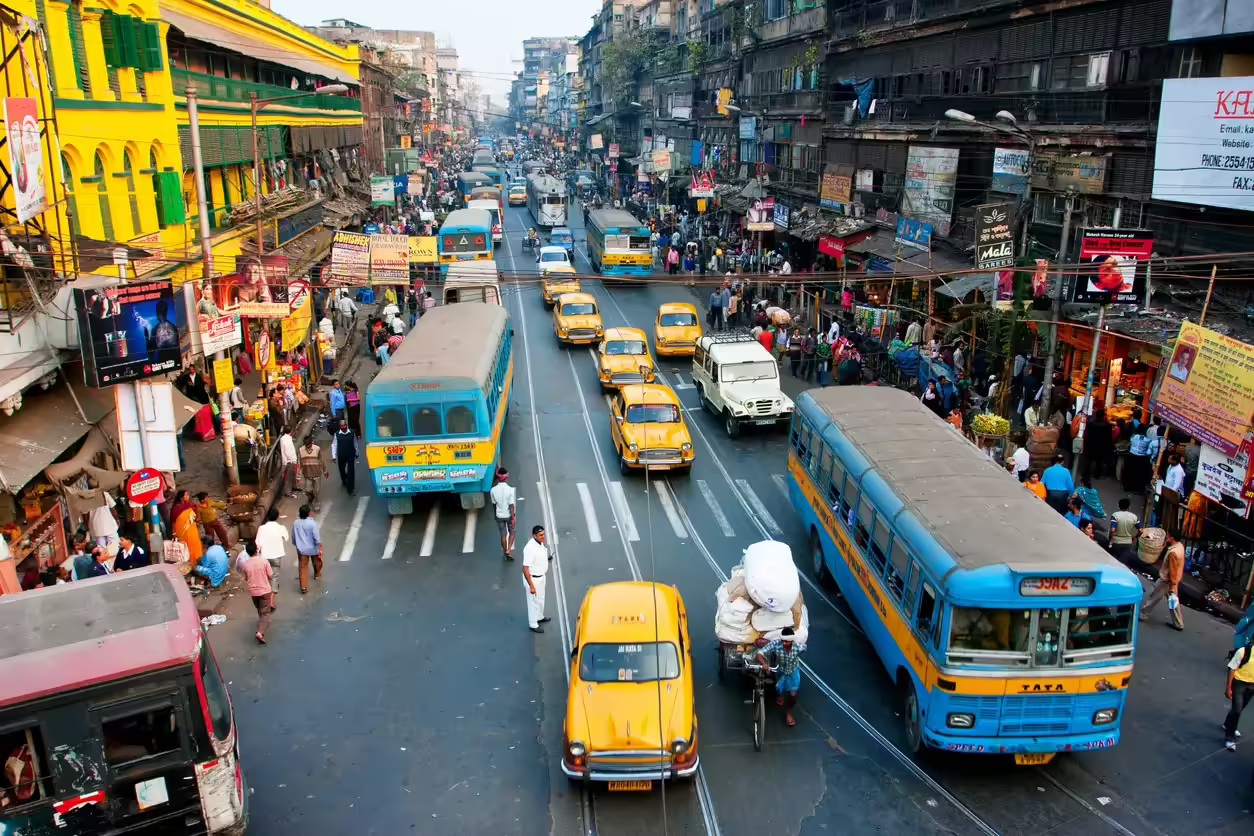
Kolkata has logged more than one lakh new vehicles this year, pushing total registrations past 2.36 million and intensifying debate over how the eastern metropolis will manage its strained road network. The sharp rise in Kolkata vehicle registrations signals economic momentum and growing household purchasing power, but it also raises urgent questions around congestion, emissions and the long-term viability of public transport.
Data from the city’s four regional transport offices show that 2025 has delivered the highest annual addition of vehicles on record, exceeding last year’s numbers. Three of the four zones reported year-on-year growth, driven largely by two-wheelers and privately owned cars. Officials point to expanding suburban housing, improved access to retail vehicle finance and a preference for personalised mobility since the pandemic as key drivers. The Beltala office, which oversees registrations in the city’s core, accounted for the largest share of additions this year and continues to hold the highest cumulative total. Behala recorded the fastest percentage growth, reflecting rapid residential expansion in the southwest. Salt Lake also maintained steady gains, in line with commercial and IT-led development patterns in the eastern corridor. Only the Kasba zone registered a marginal decline, though its long-term trajectory remains upward. Urban planners say the steady rise in Kolkata vehicle registrations reflects structural shifts in how residents navigate the city. As peripheral neighbourhoods grow and commute distances increase, households are opting for personal vehicles to reduce travel uncertainty.
However, this shift is occurring in a city with limited road capacity expansion and constrained parking infrastructure. Transport economists warn that unchecked growth in private vehicles could erode productivity through longer commute times and higher fuel consumption. Increased traffic volumes also threaten to reverse air-quality gains achieved during recent clean mobility initiatives. The environmental cost is significant for a low-lying coastal city already vulnerable to heat stress and climate risks. At the same time, declining ridership on buses and other shared modes has fiscal implications. Lower fare revenues weaken the financial sustainability of public transport operators, making it harder to invest in fleet modernisation or electrification both critical for building a low-carbon urban mobility system.
Policy responses under consideration include stronger parking regulation, congestion management tools and incentives for electric two-wheelers. Urban development experts argue that transport planning must align more closely with land-use decisions, ensuring that housing growth in peripheral areas is matched by reliable mass transit links. Early 2026 data suggests the upward trend in vehicle additions is continuing. For policymakers, the challenge is not merely accommodating more vehicles, but rebalancing Kolkata’s mobility ecosystem to remain inclusive, efficient and climate-resilient in the decades ahead.