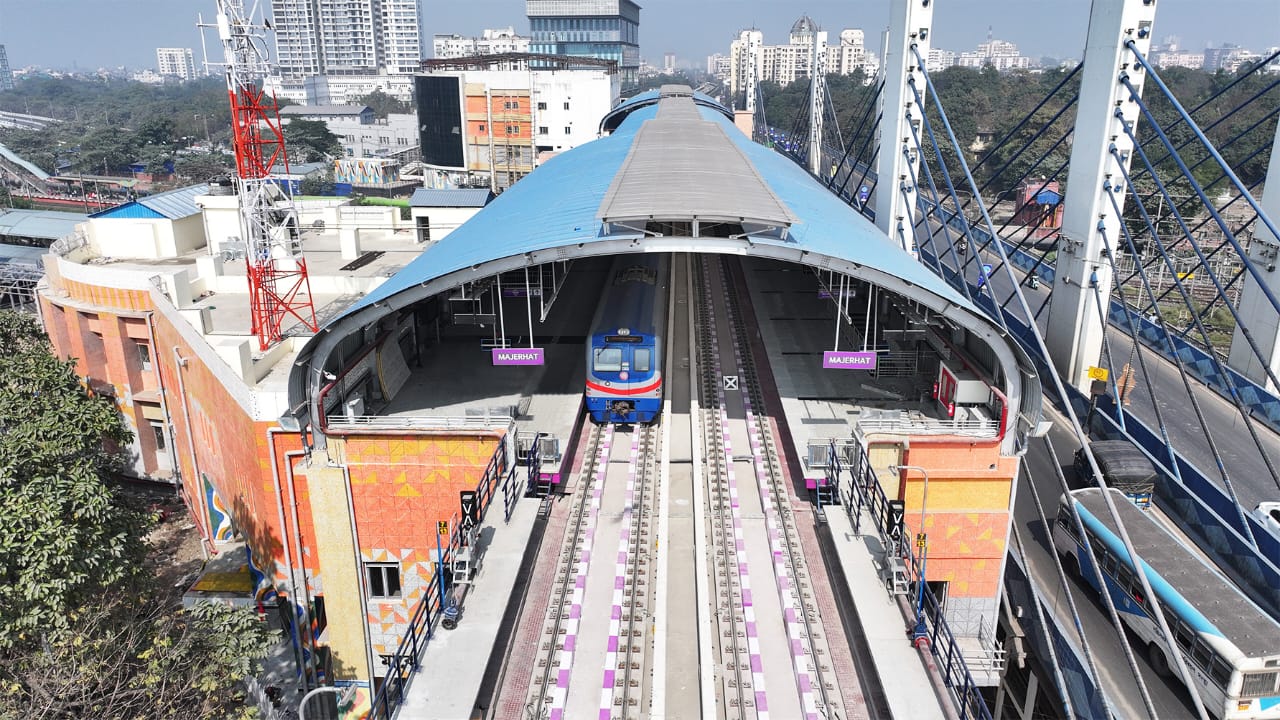
Kolkata’s mass transit backbone is preparing for one of its most significant infrastructure renewals in decades, with Metro Railway initiating a ₹345 crore programme to modernise its traction power and auxiliary electricity network along the city’s north–south corridor. The upgrade is expected to address recurring service disruptions linked to ageing third rail equipment, while strengthening operational reliability across the New Garia–Dakshineswar stretch.
The proposed overhaul centres on the Kolkata Metro third rail system and associated substations that power trains through a 750-volt direct current supply. In a third-rail configuration, trains draw electricity from an energised conductor rail running alongside the track, using contact shoes mounted on the bogies. While compact and suited for underground corridors, the system demands consistent maintenance and modern protection mechanisms to prevent faults. Officials familiar with the tender process indicate that ageing 750 V DC traction substations, legacy cabling, and auxiliary electrical installations will be replaced with upgraded 33 kV systems. The move is designed to improve load management, voltage stability and redundancy critical factors for a corridor that handles heavy daily ridership across central Kolkata. Urban transport experts say the modernisation has implications beyond smoother commutes. Reliable metro operations reduce dependency on private vehicles, cutting congestion and lowering transport-related emissions in a dense metropolitan region grappling with air quality concerns.
Strengthening the Kolkata Metro third rail infrastructure also enhances resilience against extreme weather events, which are becoming more frequent due to climate variability. The three-year project timeline signals a phased approach, aimed at limiting passenger inconvenience while major electrical assets are swapped out. Procurement will follow an open competitive bidding route, reflecting growing emphasis on transparent infrastructure delivery and lifecycle cost efficiency. The investment comes shortly after Metro authorities initiated a separate capital programme to improve air-conditioning and tunnel ventilation systems across key underground stations on the Blue Line. Together, these upgrades point to a broader asset renewal cycle within India’s oldest metro network one that first began operations in the 1980s and now requires systematic reinvestment to match contemporary safety and performance benchmarks.
For Kolkata’s urban economy, dependable rapid transit is closely linked to workforce mobility and equitable access to jobs. The north–south axis connects residential neighbourhoods with commercial hubs, educational institutions and healthcare centres. Reducing unexpected stoppages can therefore translate into measurable productivity gains and improved commuter confidence. As cities across India expand metro networks, the focus is gradually shifting from new line construction to long-term system reliability. In Kolkata, the success of this electrical upgrade could define how legacy transit infrastructure adapts to rising demand while supporting a lower-carbon urban future.