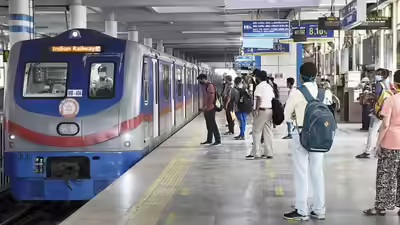
Kolkata’s underground metro network has entered a new phase of energy resilience with the commissioning of a Battery Energy Storage System on the Blue Line, a move designed to safeguard passengers during power disruptions while improving operational efficiency across one of India’s busiest transit corridors.
The installation, located at the central traction sub-station serving the 17-kilometre underground stretch between Dumdum and Mahanayak Uttam Kumar, marks a significant step in modernising legacy metro infrastructure. The broader 27-kilometre Blue Line, which also includes elevated sections towards Dakshineswar and Sahid Khudiram, is the city’s oldest rapid transit spine and carries thousands of daily commuters through dense residential and commercial districts. Metro officials said the new Battery Energy Storage System (BESS) is configured to automatically provide traction support during sudden grid failures. In such situations, the stored power can move a stalled train to the nearest station, reducing risks associated with stoppages in enclosed tunnel sections. The system also keeps tunnel ventilation operational, maintaining air circulation and mitigating safety concerns in the event of outages.
Urban transport planners note that underground systems are particularly vulnerable to cascading service disruptions during power instability. By introducing a Battery Energy Storage System at this scale rated at 6.4 megawatt-hours Kolkata Metro is effectively creating a microgrid within the transit network. The installation comprises multiple battery racks with integrated fire protection, reflecting evolving global safety standards for lithium-based storage technology. Industry experts involved in the project indicated that the current phase focuses on backup reliability, but the infrastructure is designed for future integration with regenerative braking systems. When operational, this would allow surplus energy generated by decelerating trains to be captured and reused rather than dissipated. Such optimisation could lower overall electricity demand, a significant cost factor for urban rail operators.
For a city grappling with rising energy loads and climate-related disruptions, the Battery Energy Storage System represents more than a technical upgrade. It signals a gradual shift towards decentralised, resilient power architecture in public infrastructure. Energy-efficient transit operations reduce pressure on conventional grids and contribute to long-term emissions reduction targets, particularly as Indian cities push towards electrified mobility. Transport economists observe that reliability directly influences commuter confidence and economic productivity. Minimising service interruptions on high-footfall corridors strengthens business districts connected by the Blue Line and supports equitable access to employment across north and south Kolkata. Officials indicated that the rollout is in its early stages, with scope for expansion depending on performance outcomes. If scaled effectively, similar systems could be introduced across other corridors, positioning Kolkata’s metro as a test case for energy-secure public transport in climate-vulnerable urban regions.