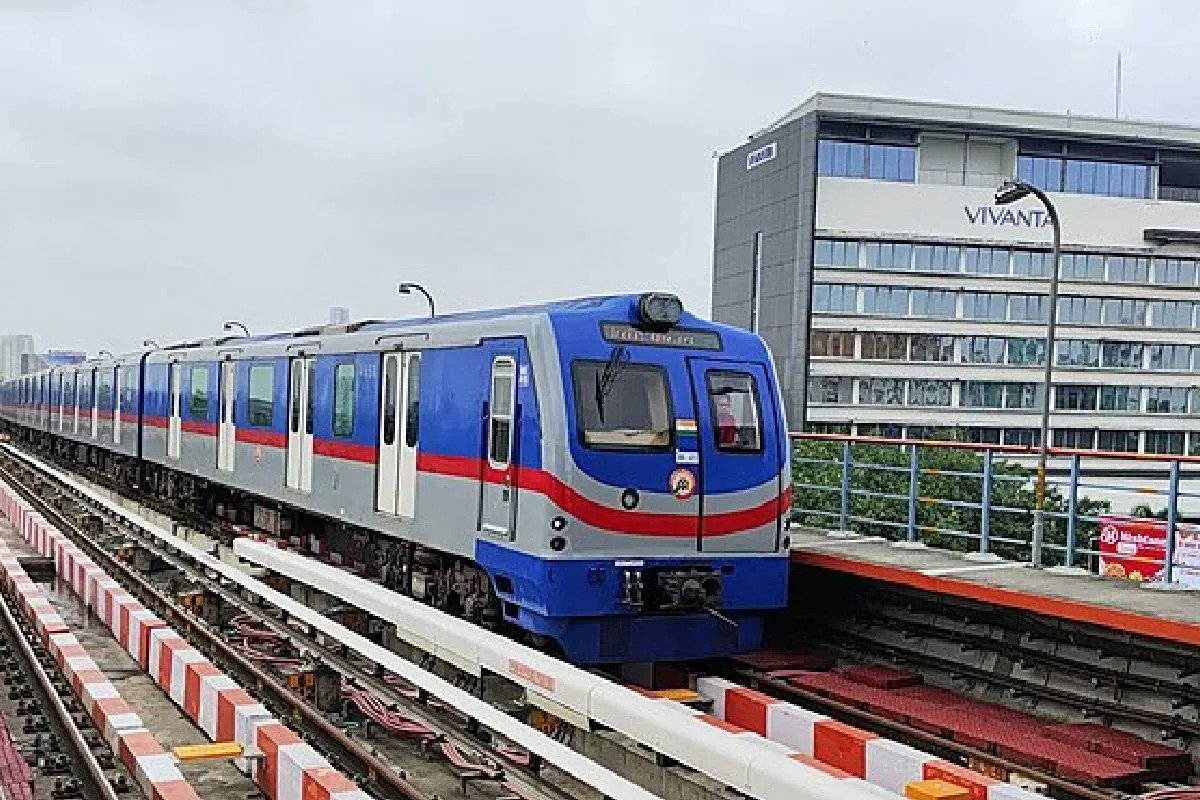
Kolkata’s mass transit network has taken a resilience-focused step with the introduction of a battery backup system on its north–south Blue Line corridor, a move aimed at keeping essential services operational during grid disruptions. The initiative positions the city among the first in India to embed large-scale onboard power contingency within an operational metro corridor, reinforcing reliability in a climate-vulnerable urban region.
The battery backup system has been integrated to support critical functions such as signalling, lighting, ventilation and communication in the event of a power failure. According to senior officials involved in the rollout, the system is designed to bridge short outages and provide controlled supply during extended interruptions, allowing trains to reach safe platforms and ensuring stations remain functional for passengers. For a dense and economically active metropolis like Kolkata, uninterrupted metro operations are more than a convenience. The Blue Line connects key commercial, residential and institutional districts, moving thousands of commuters daily.
Even brief stoppages can ripple across workplaces, retail activity and informal economies that depend on predictable mobility. Urban planners say the deployment reflects a broader shift in Indian cities toward infrastructure redundancy the ability of systems to continue functioning under stress. With climate change intensifying extreme weather events and urban power grids facing rising loads, backup energy systems are increasingly viewed as essential, not optional. In this context, the battery backup system becomes part of a wider resilience strategy rather than a standalone technical upgrade. Technical teams reportedly completed compatibility checks and live simulations before commissioning the equipment. Control room staff have been trained to manage power transitions, while maintenance protocols have been updated to incorporate battery management and safety procedures.
Performance will be monitored over the coming months to evaluate operational impact and lifecycle efficiency. Transport economists note that resilient public transit strengthens investor confidence in urban real estate and commercial districts. Reliable metro services support property markets along corridors, encourage transit-oriented development and reduce dependence on private vehicles, a crucial step toward lowering urban emissions. While the current rollout is limited to the Blue Line, officials indicated that performance data will guide decisions on expanding the battery backup system across other corridors. If scaled effectively, the measure could reduce service variability and enhance passenger confidence across the network. As Indian cities pursue zero-carbon growth pathways, ensuring that mass transit remains dependable during infrastructure stress will be central to sustainable urbanisation. Kolkata’s move signals that resilience investments are increasingly becoming embedded in the everyday mechanics of city building.