


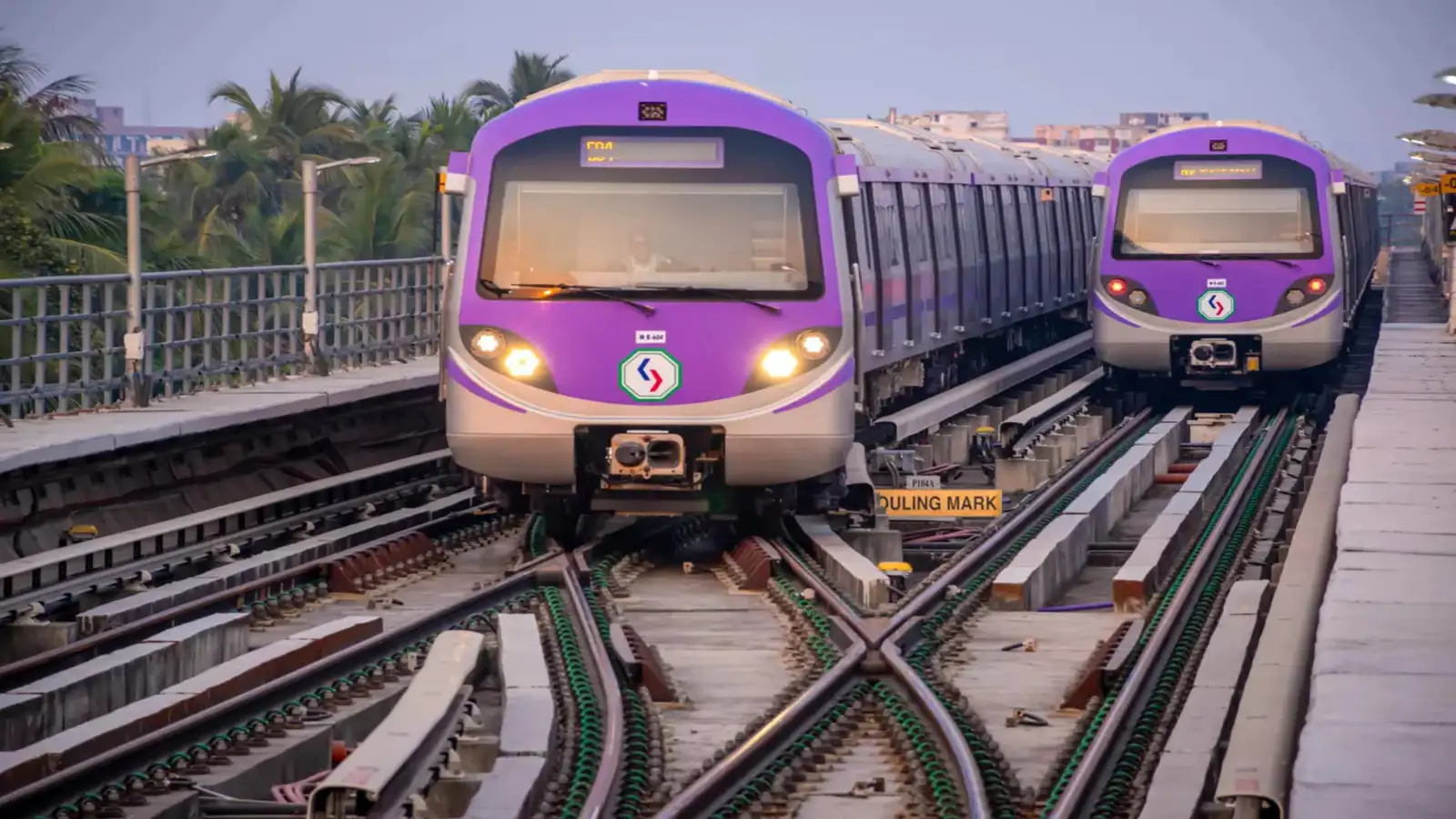
Kolkata’s metro network is poised for a significant expansion, with officials confirming the addition of 19 kilometers by the end of 2026. The announcement came during the Metro Railway’s 41st foundation day, where the general manager outlined plans to extend the network to cover 130 kilometers over the next few years, enhancing connectivity across the city and its suburbs.
The city, home to India’s first metro system, started operations in 1984 with a modest 3.5-kilometer stretch. Today, the network spans around 72 kilometers, with another 57 kilometers sanctioned for development. Currently, 29 kilometers are actively under construction. This year alone, 13 kilometers have been commissioned, signalling a rapid push to modernize the network. A key highlight of the expansion is the Orange Line, which will eventually span 32 kilometers. By December 2026, the full 32 km corridor connecting New Garia to Metropolitan is expected to be operational. The line’s current 10 km stretch will be extended, including the completion of the Chingrighata gap, a critical 366-meter section, which will be bridged over two weekends in November.
The metro network currently comprises multiple corridors: the North-South (Blue) Line from New Garia to Dakshineswar (31 km), the East-West (Green) Line from Sector V to Howrah Maidan (16.6 km), the Joka-Majerhat (Purple) Line (8 km), the New Garia-Metropolitan (Orange) Line (10 km), and the Noapara to Airport (Yellow) Line (6.7 km). Upon completion of ongoing projects, the Blue, Orange, and Green lines will effectively ring the city, easing travel across central business districts, eastern Kolkata, and peripheral areas including North and South 24-Parganas, Howrah, and Hooghly. Officials also confirmed that Kavi Subhash station on the Blue Line, closed since July due to structural cracks, will be rebuilt in the next eight months. This redevelopment is crucial for maintaining operational safety and passenger confidence.
Recent milestones include the commissioning of 13 kilometers of new metro lines in August, including the East-West Metro — India’s first under-river metro — marking a historic achievement in urban transport. Officials emphasised that the ongoing expansions are designed to integrate advanced planning technologies, including AI-assisted approvals, and are aligned with the city’s goals for sustainable, eco-friendly transit solutions. With these developments, Kolkata Metro is not only expanding its physical network but also strengthening its role as a zero-carbon, high-efficiency public transport lifeline for millions of commuters, connecting diverse regions while reducing reliance on private vehicles and contributing to sustainable urban mobility.
Also Read :Pune Begins Massive Road Upgrades Ahead January 2026 Cycling Event
