


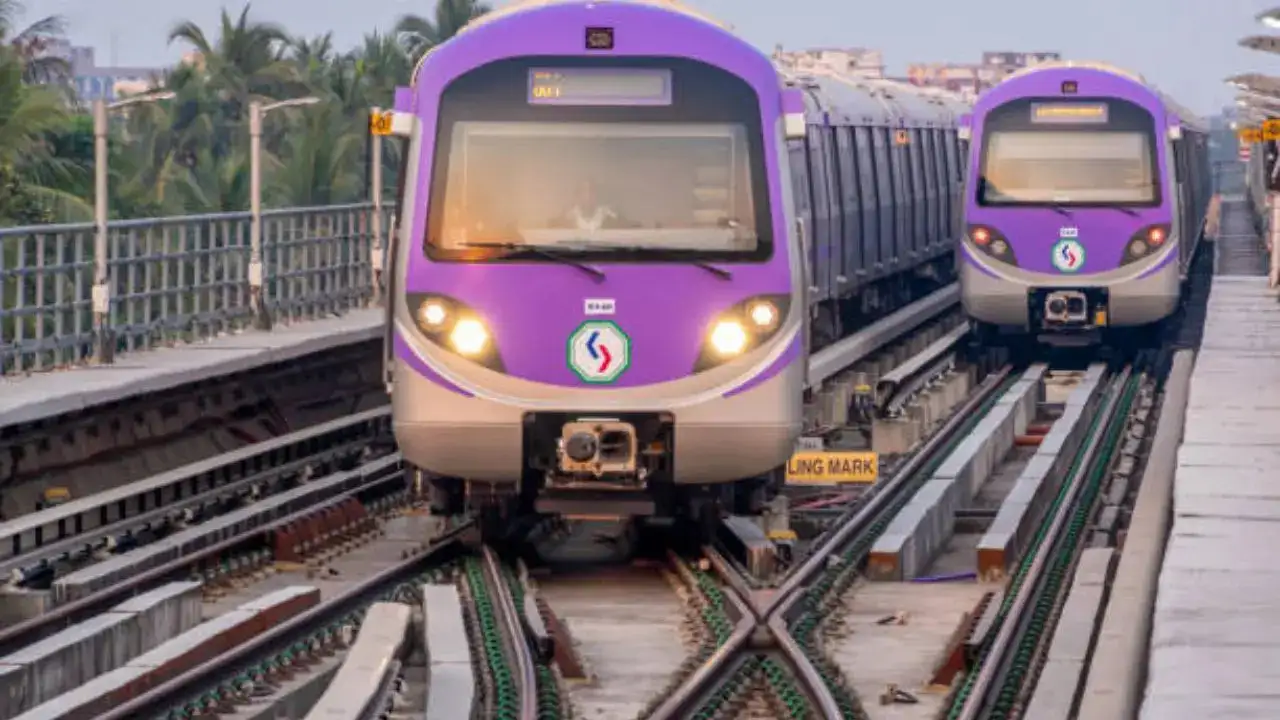
Kolkata, Metro services along the crucial Howrah Maidan to Esplanade stretch of the East-West corridor will be temporarily suspended on August 3rd for essential Automatic Train Operation (ATO) testing. This brief halt is a critical step towards enhancing the efficiency and safety of the city’s burgeoning metro network, signalling a proactive commitment to modernising urban transport infrastructure. While impacting daily commutes, these upgrades are vital for ensuring a seamless, eco-friendly, and sustainable mobility future for Kolkata’s growing populace.
The suspension is specifically for the Howrah Maidan to Esplanade section, allowing engineers to conduct comprehensive ATO testing, a crucial procedure for integrating advanced signalling systems. Normal train services will, however, continue uninterrupted on the North-South corridor, running between Dakshineswar and Shahid Khudiram stations on the same day. This targeted approach aims to minimise overall disruption while ensuring the rigorous testing required for the metro’s sophisticated operational capabilities.
A significant development preceding this testing is the clearance granted by the Commissioner of Railway Safety (CRS) for the Sealdah-Esplanade section. This segment had been severely impacted by earth subsidence due to an aquifer burst during tunnelling work at Bowbazar in 2019, a setback that significantly delayed the full opening of the Howrah Maidan-Sector V corridor. The CRS clearance marks a pivotal recovery, allowing for the eventual completion of this vital East-West link, which is fundamental to Kolkata’s urban mobility.
Trial runs along the Esplanade-Sealdah section have been conducted multiple times since January this year, with “traffic blocks” enforced twice on the Sealdah to Sector V stretch to verify the efficacy of the signalling system. These meticulous tests are paramount for ensuring the operational integrity and safety of the entire corridor before it is fully opened to the public. The ongoing efforts reflect a commitment to delivering a world-class metro experience that adheres to the highest safety standards.
The modernisation and expansion of Kolkata’s metro network are integral to the city’s vision for sustainable urban development. By providing efficient, high-capacity public transport, the metro significantly reduces reliance on private vehicles, thereby alleviating traffic congestion, lowering vehicular emissions, and contributing to zero-net-carbon goals. While temporary service adjustments for testing may cause inconvenience, they are essential for building a resilient and eco-friendly transport system that ensures equitable access to mobility for all citizens, fostering a healthier and more productive urban environment.
Also Read: Chennai Secures In‑Principle Approval For MRTS Integration Into Metro Network
