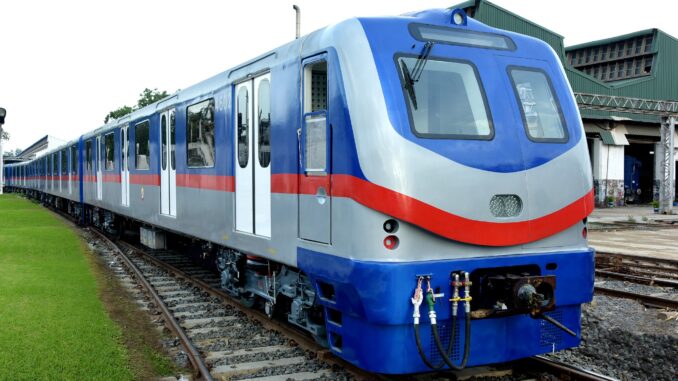
Kolkata’s underground metro corridor has gained an additional safety net. Kolkata Metro Railway has commissioned a large-scale Battery Energy Storage System (BESS) on its Blue Line, enabling trains to continue moving during grid disruptions. The installation is designed to prevent mid-tunnel stoppages and allow stranded services to reach the next station, reinforcing commuter safety and operational continuity in one of India’s busiest transit networks.
The 4 MW/6.4 MWh system has been deployed along the underground stretch of the corridor that connects key commercial and residential districts. In the event of a power failure, stored energy can propel trains at speeds of up to 55 kmph to the nearest platform. For a system that carries hundreds of thousands of passengers daily, even brief interruptions can create cascading delays, crowding, and safety concerns. The new Kolkata Metro Battery Backup reduces that risk. Urban transport planners say such storage systems are increasingly critical as Indian cities expand their electric rail networks. Metro systems depend entirely on uninterrupted traction power. When supply fails, trains can halt between stations, complicating evacuation and straining emergency response. By ensuring forward movement to a controlled station environment, battery storage adds resilience without relying solely on diesel generators or manual recovery procedures.
Beyond reliability, the move signals a shift in how public infrastructure is preparing for climate and grid volatility. Extreme weather events, rising energy demand, and ageing distribution systems have heightened the risk of power fluctuations in dense urban areas. A Battery Energy Storage System acts as a buffer, absorbing and releasing energy as required. Industry experts note that integrating storage at transit substations could also open pathways for renewable energy integration in the future, aligning rail operations with low-carbon urban mobility goals. For commuters, the implications are practical. Reduced service interruptions translate into predictable travel times and improved passenger confidence. For businesses clustered along the corridor, operational certainty supports economic productivity. Reliable public transport is closely linked to urban competitiveness, particularly in cities balancing rapid growth with infrastructure constraints.
Officials indicate that the project was designed after technical studies assessed load patterns and emergency scenarios specific to underground operations. While the current deployment focuses on traction continuity, further phases could examine grid optimisation and energy cost management. As Indian metros expand across tier-one and tier-two cities, resilience measures such as the Kolkata Metro Battery Backup may become standard practice rather than innovation. The development positions Kolkata’s legacy network at the forefront of operational preparedness, underscoring how legacy infrastructure can be modernised to meet contemporary urban risks without disruptive overhauls.