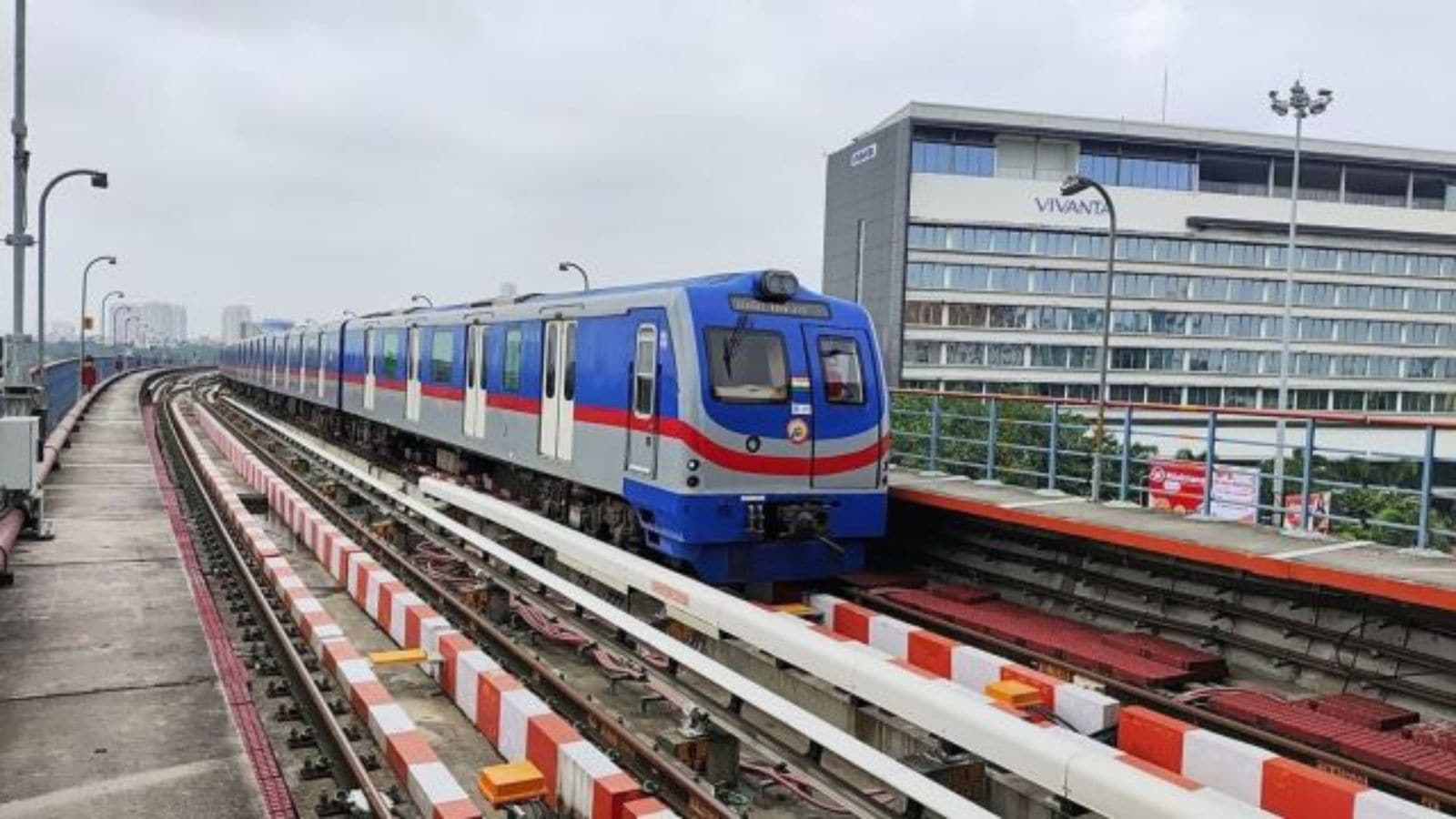
Kolkata’s rapid transit network will operate on a sharply reduced schedule during Dol Jatra, with services across major corridors beginning only in the afternoon and total train movements cut significantly. The temporary scale-down reflects lower commuter demand on the festival day, but also underscores how essential public transport systems must recalibrate operations during peak cultural events in dense urban regions.
According to metro authorities, the Blue Line, the city’s busiest north–south spine connecting Dakshineswar and Kavi Subhash, will run only 60 services compared to its usual 272. Trains on this corridor will commence around mid-afternoon rather than early morning, although the final departures will remain unchanged. Selected late-evening services have also been withdrawn for the day. The Green Line linking Howrah Maidan and Salt Lake Sector V will similarly operate at reduced frequency, with 45 services instead of its regular schedule of over 200 daily trips. Operations on this corridor are set to begin around 3 pm. The Yellow Line, connecting Noapara and the airport corridor at Jai Hind Bimanbandar, will see 44 services, down from approximately 120 on a typical weekday, with first departures scheduled in the afternoon. Other emerging corridors, including the Purple and Orange Lines, will also follow curtailed timetables, though last-train timings across routes are expected to remain intact to support evening travel.
The festival-linked adjustments highlight a recurring operational challenge for metropolitan transit systems: balancing financial prudence with accessibility. On major public holidays, ridership patterns shift dramatically, often concentrated in the latter half of the day when people travel for social visits or cultural gatherings. Running full-scale early morning services in such conditions can lead to underutilised capacity and higher operational costs. Urban mobility analysts say flexible scheduling is increasingly vital for climate-conscious transport networks. Reduced services during predictable low-demand windows help optimise energy use and lower carbon intensity per passenger kilometre. At the same time, ensuring reliable evening connectivity maintains inclusivity for workers in essential services and informal sectors who do not observe public holidays.
For a city like Kolkata where metro expansion is central to decongesting roads and reducing vehicular emissions, operational efficiency remains as important as network growth. With multiple new corridors under phased development, holiday scheduling strategies are likely to become more data-driven, relying on ridership analytics and demand forecasting. As the network expands and integrates with suburban rail and bus systems, transport planners will need to further refine adaptive service models. Festival-day scheduling may appear routine, but it offers a snapshot of how urban infrastructure systems evolve to balance cultural rhythms, fiscal responsibility, and sustainability goals in one of India’s most densely populated metropolitan regions.