


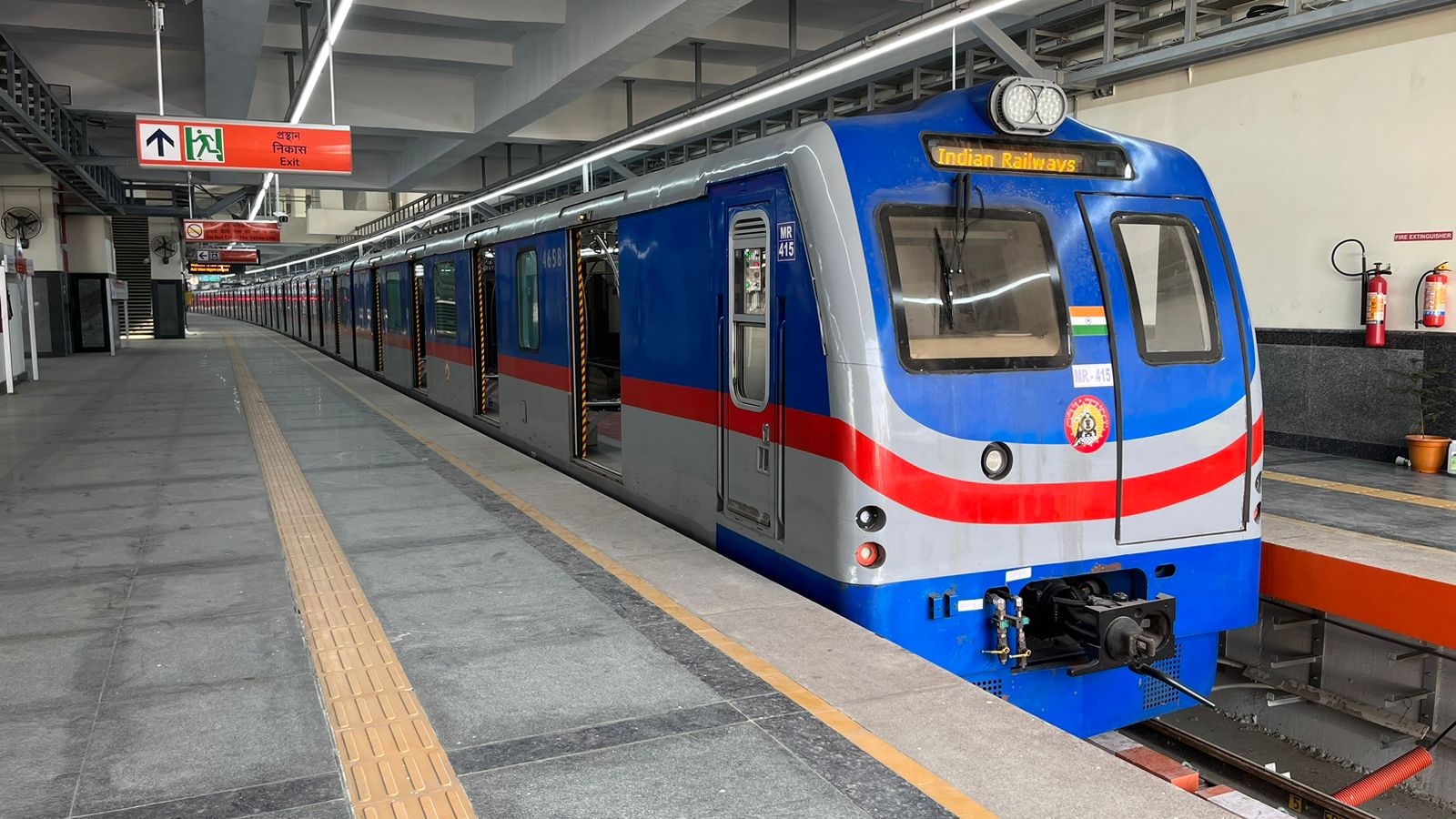
Kolkata Metro Railway is set to operate special night services along the Blue Line on October 20, providing enhanced connectivity for thousands of devotees attending Kali Puja at the iconic Kalighat and Dakshineswar temples. The last train from Sahid Khudiram will now depart at 11 pm for Dakshineswar, while the final service from Dakshineswar will leave at 10:51 pm instead of regular timings, officials confirmed.
The adjustment comes as part of Metro Railway’s plan to balance operational efficiency with the city’s cultural and religious requirements. On the festival day, 144 services will be operational along the Dakshineswar–Sahid Khudiram corridor, a reduction from 272 services typically run on Mondays. The initiative ensures devotees can attend puja rituals safely while maintaining a sustainable transport model, reducing reliance on private vehicles and mitigating traffic congestion in central Kolkata. Experts highlight that such measures reflect a growing trend in Indian urban transport planning, where public transit systems are increasingly calibrated to meet city-wide social, cultural, and environmental needs. By extending service hours temporarily, Metro Railway enables high-volume passenger movement without resorting to additional road traffic, aligning with sustainable city mobility goals.
Officials explained that the special services on the Blue Line have been carefully scheduled to maintain energy efficiency and operational safety. The adjustments also allow for staff deployment optimization and ensure essential maintenance windows are preserved outside peak festival hours. Transport analysts noted that festival-specific service extensions could serve as a model for other Indian cities to integrate public transit with major religious and cultural events, reducing carbon footprints while improving commuter experience. The initiative also underscores Metro Railway’s commitment to equitable access. With first- and last-mile connectivity, extended night services ensure that all segments of the population, including elderly and differently-abled devotees, can safely reach heritage temple sites. This aligns with broader urban policies prioritizing gender-neutral, accessible, and eco-friendly city transport infrastructure.
By integrating cultural considerations with operational planning, Kolkata Metro Railway demonstrates a model of adaptive urban transport that balances public demand with environmental responsibility. Experts suggest that such strategic interventions not only ease congestion but also contribute to the city’s long-term goal of sustainable mobility. As Kolkata celebrates Kali Puja, the city’s iconic Metro system will play a pivotal role in ensuring smooth transit for residents and visitors, while setting an example of efficient, eco-conscious urban planning.
Also Read : BMRCL Confirms Bengaluru Metro Fare Revision Averages 51.55 Percent After Rationalisation
