


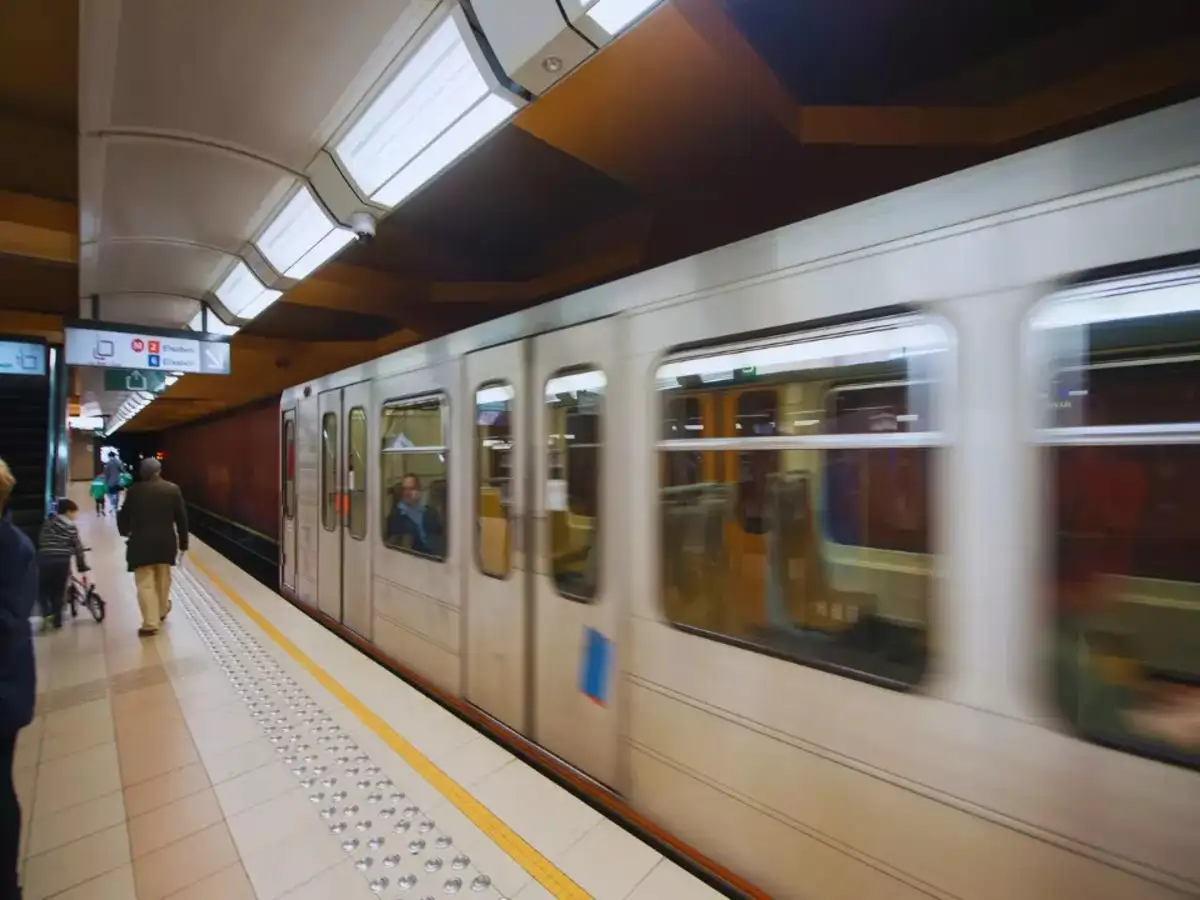
Kolkata’s venerable Metro system, a lifeline for millions, is implementing a stringent new safety measure starting June 1, 2025, that directly impacts commuter behaviour.
Passengers found crossing the designated yellow safety line on station platforms will face a penalty of Rs 250. This decisive move by the Kolkata Metro Railway Corporation (KMRC) is not merely an exercise in rule enforcement; it is a critical step towards enhancing passenger safety, fostering responsible conduct, and ultimately contributing to the creation of more secure and efficient public transport systems vital for sustainable and gender-neutral urban environments.
The official announcement from metro authorities underscores a growing concern over a segment of commuters who, despite repeated advisories, habitually disregard the safety boundary. This seemingly innocuous act, stepping beyond the yellow line even when no train is present, poses significant risks, potentially leading to grievous accidents and operational disruptions. By classifying this behaviour as “creating nuisance,” a punishable offence under existing metro regulations, authorities aim to instill a stronger sense of discipline and self-preservation among the travelling public. Dedicated monitoring teams will be deployed across all stations to ensure consistent enforcement, signalling a zero-tolerance approach to unsafe practices. The yellow line, prominently marked along the edge of every metro platform, serves as a fundamental safety barrier, designed to keep passengers at a safe distance from the tracks. Its importance is paramount in preventing accidental falls, collisions with approaching trains, and other platform-related hazards. However, the persistent disregard for this crucial safety demarcation by a minority of travellers has necessitated this stricter intervention. The Metro’s commitment to passenger welfare is paramount, and this measure, while seemingly punitive, is a direct response to a clear and present danger to public safety within a high-density urban transit system.
Public sentiment regarding the new fine has been notably divided. While a substantial portion of daily commuters has welcomed the measure, viewing it as a necessary deterrent to unsafe behaviour, others express reservations, deeming the Rs 250 penalty excessive for what might appear to be a minor transgression. Priya Sharma, a regular commuter on the North-South corridor, articulated this sentiment, stating that while the need for safety is understood, the fine feels substantial for merely stepping over a line. Conversely, Rajesh Das, another frequent passenger, echoed a common perspective: “People don’t take warnings seriously unless there’s a consequence. This fine might finally make them follow the rules,” highlighting the human tendency to respond more effectively to tangible repercussions. In anticipation of the new rule’s implementation, the Kolkata Metro has launched a comprehensive public awareness campaign. This includes increased audio announcements at stations, reiterating the importance of staying behind the yellow line. Visual aids, such as posters and digital screens, are being extensively utilised to disseminate the message. Furthermore, metro staff are actively engaging with passengers, providing direct explanations about the rationale behind the new rule and emphasising its role in preventing dangerous accidents. This multi-pronged communication strategy aims to ensure that all commuters are fully apprised of the updated regulation and its significance for collective safety.
Kolkata Metro, India’s pioneering underground railway system inaugurated in 1984, continues to be an indispensable component of the city’s public transport infrastructure. With a network spanning over 30 kilometres, including both underground and elevated sections, it serves millions of passengers daily. Operated by the Kolkata Metro Railway Corporation (KMRC), the system connects vital areas such as Salt Lake, Howrah, and New Garia. Its continuous expansion, exemplified by the East-West Metro and the country’s first underwater metro tunnel beneath the Hooghly River, underscores its integral role in the city’s sustainable urban development. By rigorously enforcing safety protocols, the Metro not only protects lives but also enhances the reliability and efficiency of public transport, crucial for nurturing truly equitable and environmentally conscious urban hubs. This commitment to stringent safety standards ensures that the Metro remains a trustworthy and sustainable mode of transit for a city striving towards a greener, more organised future.
Also Read: Delhi Water Cuts Essential Pipeline Work Impacts Residents
