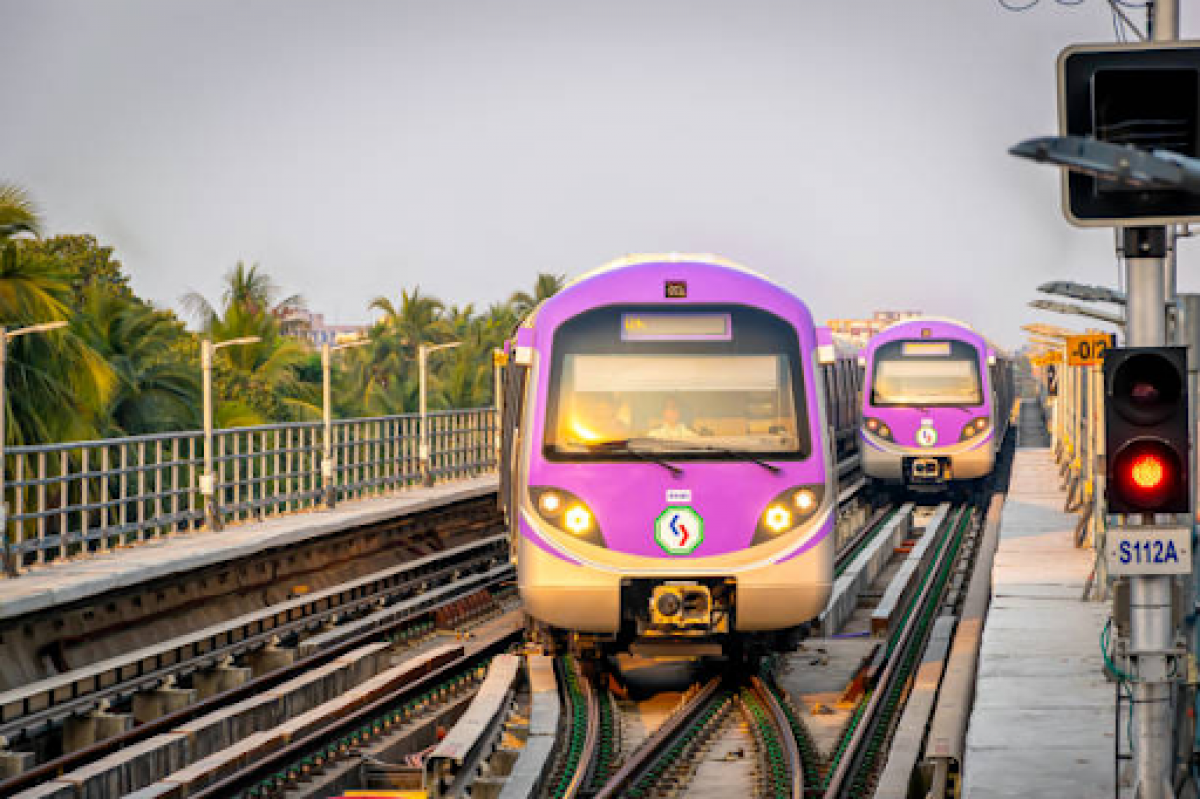
The much-anticipated East-West Metro corridor in Kolkata has taken a significant step forward, with the final stretch between Esplanade and Sealdah recently passing a crucial inspection.
This 2.6 km section, part of the 16.55 km East-West Metro corridor, has now moved one step closer to operationalisation. The inspection, led by a senior official from the Commissioner of Railway Safety (CRS), covered all critical systems essential for the metro’s safe and efficient operation. The comprehensive review included assessments of the tracks, tunnels, ventilation systems, signalling mechanisms, metro rakes, and emergency response systems. The inspection team also conducted speed trials with metro trains running at 80 kmph, ensuring the full safety and readiness of the stretch.
The final 2.6 km stretch links two previously disjointed segments of the East-West Metro. On one side, the operational section from Salt Lake Sector V to Sealdah spans 9.2 km, while on the other, Howrah Maidan to Esplanade covers 4.8 km. These segments were previously separated, but once this critical stretch becomes operational, it will connect the entire corridor, providing seamless connectivity between Howrah and Salt Lake. This major milestone comes after years of delays, primarily caused by incidents such as land subsidence and water ingress in the Bowbazar area. Since construction began, there have been multiple setbacks, with four major disruptions between 2019 and 2023 halting progress. Despite these challenges, the civil construction work was completed by December 2024, followed by the installation of advanced systems such as the Communication-Based Train Control (CBTC). This anti-collision system is expected to enhance the safety and efficiency of the metro service, particularly in a dense urban environment like Kolkata.
Metro authorities, including officials from Kolkata Metro Rail Corporation (KMRCL), were present during the inspection to ensure that the new stretch is ready for service. According to reports, the CRS expressed satisfaction with the progress and indicated that final approval for the corridor’s operation could be granted soon. With this approval, metro officials plan to start operations, significantly reducing travel time for daily commuters. One of the most impactful benefits of this new metro section is its potential to drastically cut commute times for Kolkata residents. The entire East-West Metro corridor, once fully operational, will reduce travel time between Howrah and Salt Lake by up to 90 minutes, a game-changer for thousands of daily commuters. The full commissioning of the East-West Metro will connect two of Eastern Railway’s busiest hubs, Howrah and Sealdah, making it one of the most important urban transport corridors in Kolkata.
The new stretch will also link up with India’s first underwater metro tunnel beneath the Hooghly River, another remarkable engineering achievement. This underwater tunnel, an essential part of the East-West Metro project, is expected to revolutionise urban mobility in the region, creating a more sustainable, eco-friendly transport option that reduces congestion and pollution. While the full commissioning of the metro line nears, Metro Railway authorities have already taken steps to ensure that the service is up to the mark. In preparation for the launch, the Green Line-1 (Sector V–Sealdah) services were adjusted, with a reduced number of trains operating on April 29. Only 90 trains were operational instead of the usual 106, with a 20-minute interval between services. These changes are part of the final checks to ensure smooth operations across the entire stretch.
However, even as the metro prepares for its full commercial launch, Metro Railway officials have not announced a definitive date for when services on the Esplanade-Sealdah stretch will begin. While the infrastructure is ready, some minor finishing work remains, but authorities are optimistic that the launch will occur soon. The operational readiness of this final stretch marks the culmination of years of planning and construction. The East-West Metro corridor is set to be a transformative project for Kolkata, enhancing connectivity across the city and facilitating faster, more sustainable commuting. For commuters, this represents a much-needed upgrade to the city’s public transport infrastructure, which has long been plagued by overcrowding and inefficiencies.
The development also underscores the importance of urban infrastructure projects in creating sustainable, zero-net carbon cities. Kolkata’s East-West Metro project, with its focus on reduced travel times, enhanced safety, and improved air quality, aligns with broader environmental goals of creating eco-friendly, efficient public transport systems. These systems are integral to reducing urban congestion, cutting emissions, and promoting sustainable growth, all of which contribute to making Kolkata a more equitable and gender-neutral city. As Kolkata’s metro network expands, the East-West Metro is poised to set a benchmark for future transport projects in India, showcasing how urban planning and infrastructure development can be leveraged to create greener, more sustainable cities.
The completion of the final inspection and the near-launch of the East-West Metro is an exciting moment for Kolkata. It not only promises to change the way people travel across the city but also reinforces the city’s commitment to sustainable urban development. The metro, once operational, will serve as a testament to Kolkata’s potential to meet the growing demands of urbanisation while also taking steps to mitigate its environmental impact.
Kolkata Metro East-West Corridor Nears Completion