


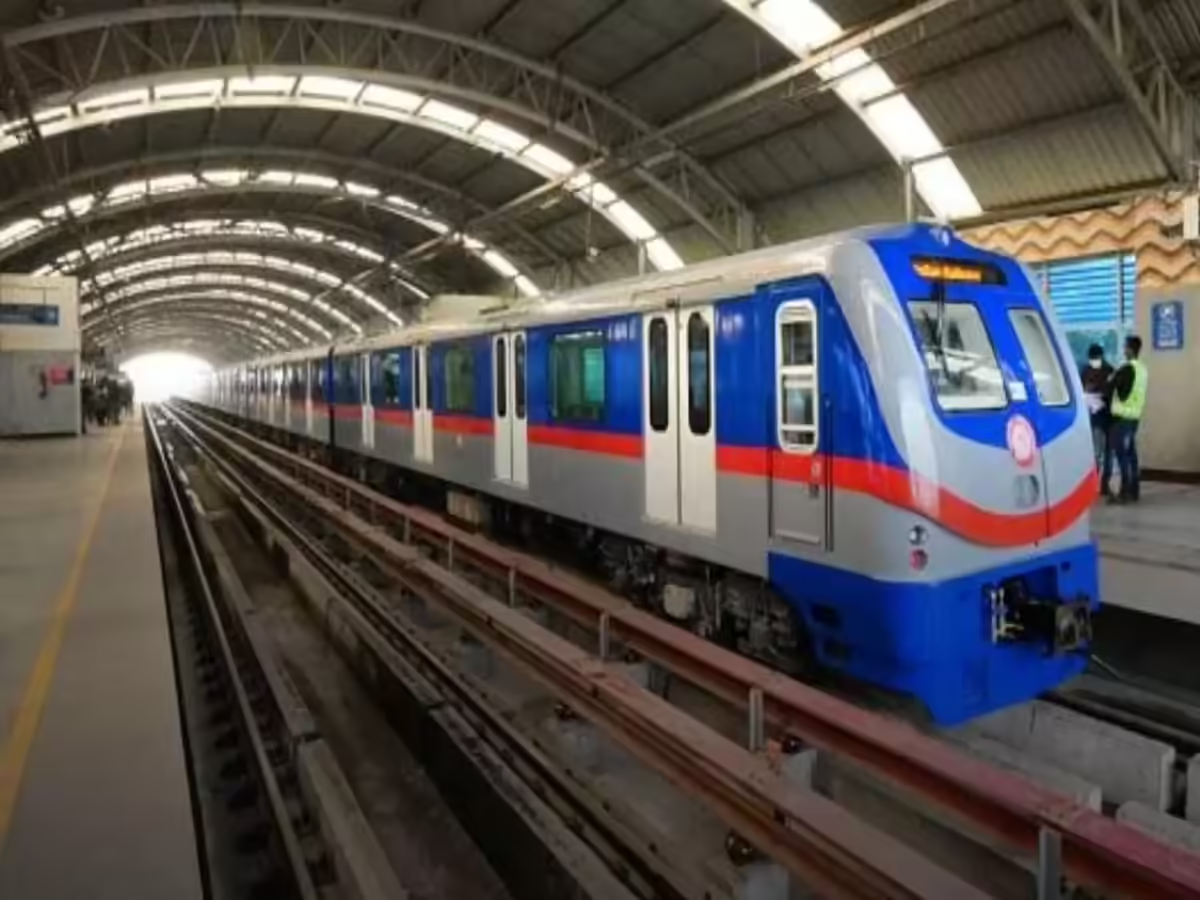
A delay in a key metro corridor in Kolkata has drawn judicial scrutiny, raising broader concerns about governance, project continuity, and the long-term planning of urban transit systems in fast-growing cities.
The issue centres on the prolonged halt of work on a major metro stretch in Kolkata, where construction was reportedly paused during periods linked to local events and administrative priorities. The intervention from the country’s highest court signals growing impatience with disruptions to critical infrastructure, especially in cities where mobility gaps continue to affect productivity and quality of life.Urban transport experts note that metro rail systems are not merely engineering projects but foundational assets for sustainable urban growth. Interruptions in execution can significantly inflate costs, delay economic returns, and undermine commuter confidence. In Kolkata’s case, the Orange Line delay has amplified concerns about how governance decisions intersect with infrastructure delivery timelines.Officials familiar with the matter indicate that large infrastructure projects require consistent execution windows, particularly in dense urban environments where land availability, traffic diversions, and contractor mobilisation are tightly coordinated. Any pause—especially for non-technical reasons—can trigger cascading delays across procurement, labour scheduling, and financing arrangements.
The Kolkata metro delay also reflects a wider challenge facing Indian cities: balancing civic events, political cycles, and infrastructure commitments. While festivals and elections are integral to urban life, planners argue that essential public works must be insulated from frequent stoppages to ensure long-term urban resilience.From a climate and sustainability perspective, the stakes are even higher. Metro systems are central to reducing reliance on private vehicles, lowering emissions, and improving air quality. A delay in expanding such networks slows progress toward low-carbon urban mobility, particularly in legacy cities like Kolkata that are already grappling with congestion and pollution.There are also economic implications. Delayed transit infrastructure affects real estate development, especially in emerging corridors where connectivity drives housing demand and commercial investment. Industry observers point out that uncertainty around project timelines can deter private sector participation and slow down transit-oriented development.The judicial push for accountability may set a precedent for how infrastructure delays are addressed in the future. Analysts suggest that clearer project governance frameworks, contractual safeguards, and institutional coordination mechanisms are needed to prevent similar disruptions.
As Kolkata continues to expand its metro network, the focus is likely to shift toward ensuring that infrastructure delivery aligns with the city’s long-term mobility and sustainability goals. For residents, the outcome will determine not just travel times, but the pace at which the city transitions toward a more efficient and climate-resilient urban future.
Also Read:Kolkata adopts DNA taxonomy for species identification
