


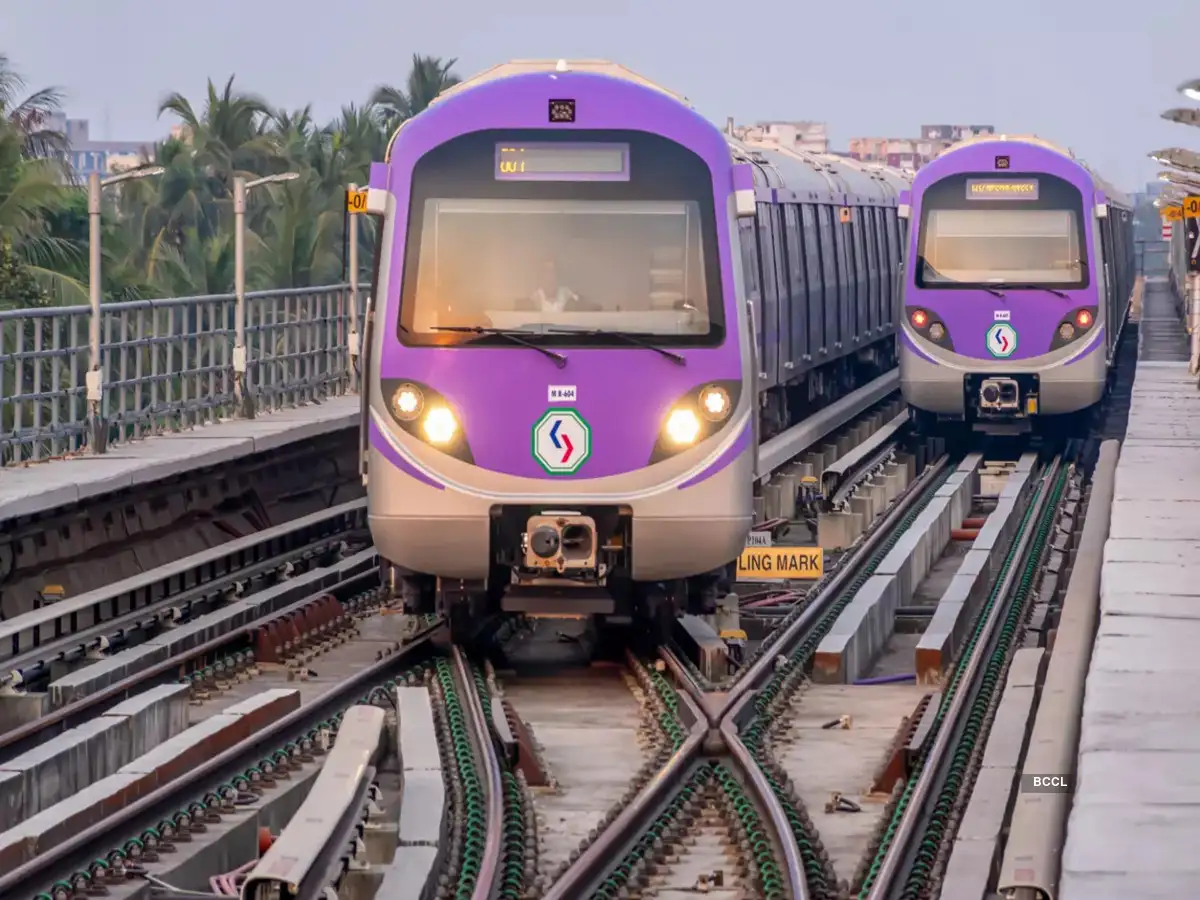
Kolkata Metro Railway has equipped its newly introduced rakes with regenerative braking technology to reduce carbon emissions and operational energy expenses. This eco-conscious development forms part of a broader transition aimed at transforming India’s public transport into a climate-resilient and energy-efficient system.
At a time when urban transport networks across the globe are under pressure to align with net-zero carbon commitments, this move marks an important milestone for the country’s oldest metro service. According to officials from Metro Railway Kolkata, all new train sets being inducted into daily service will now be fitted with regenerative braking systems that enable energy recovery during deceleration. This braking system works by reversing the function of the train’s electric motors when the train slows down. Instead of drawing power from the grid, the motors generate electricity, which is then fed back into the system. In traditional braking mechanisms, the energy created during deceleration is lost as heat. The new approach, however, captures this otherwise wasted energy and converts it into usable electricity, reducing overall energy demand.
An official from Metro Railway Kolkata stated that the adoption of regenerative braking is in direct alignment with Indian Railways’ vision to reduce its carbon footprint while optimising efficiency. The official noted that when the motor functions as a generator during braking, it not only contributes to energy conservation but also eases strain on mechanical braking components, thereby reducing maintenance needs and extending equipment lifespan. India’s broader climate commitments, including a national net-zero emissions goal by 2070, have placed added responsibility on urban centres to lead in low-emission infrastructure. Metro systems in cities such as Delhi, Bengaluru, and Hyderabad have already started integrating similar technologies, positioning urban transit as a central pillar in the climate mitigation agenda.
Sustainability experts estimate that regenerative braking systems can reduce electricity consumption in metro operations by up to 30%, depending on factors like route gradient, stop frequency, and passenger load. Such figures are crucial for a network like Kolkata Metro, which transports lakhs of commuters daily. Every percentage point of savings translates into measurable reductions in energy bills and carbon emissions. This technology upgrade is part of a wider range of sustainability-focused reforms in the Indian railway sector. The Ministry of Railways is moving towards full electrification of broad-gauge routes, and has begun installing solar infrastructure at station premises and on select rolling stock. These measures are intended to replace fossil fuel-based systems with clean, renewable alternatives while enhancing service quality and resilience.
Metro Railway Kolkata’s daily ridership means that even minor energy savings can have outsized effects. With newer trains continuing to join the operational fleet and older rakes gradually being phased out, the cumulative environmental and economic benefits of regenerative braking are expected to grow substantially in the coming years. Urban mobility experts emphasise that although technological solutions alone cannot resolve climate challenges, their intelligent integration into public systems can accelerate progress. Regenerative braking, in particular, is seen not just as a tool for energy saving, but as a key component of sustainable and smart city planning.
On the global stage, cities like London, Berlin, and Tokyo have already embraced this technology as a standard part of metro infrastructure. The system’s ability to reduce both emissions and costs makes it a compelling investment, especially in the face of rising urban populations and energy prices. Experts suggest that Indian cities adopting such measures stand to benefit not only from improved operational efficiency but also from new streams of climate finance, such as carbon credits and green bonds. The shift in Kolkata underscores how legacy transport systems can also embrace modern solutions. While there are inevitable challenges in retrofitting older infrastructure, the successful deployment of regenerative braking on new rolling stock demonstrates the feasibility and effectiveness of such upgrades. It also sets a precedent for similar action across other metros in the country.
Climate adaptation has become a pressing priority for coastal cities like Kolkata, which face risks from sea-level rise, flooding, and extreme weather. Greening public transport is not only a step towards reducing emissions but also an investment in long-term urban resilience. Reducing the transport sector’s reliance on fossil fuels, improving energy security, and delivering more efficient services are all part of this transformation. Officials from Metro Railway Kolkata indicate that additional sustainability initiatives are on the horizon. These may include lightweight rolling stock, smart energy grids, and integration with solar and wind power. All of these are aimed at ensuring that the city’s transit system can meet the demands of the future without compromising the environment.
As Kolkata Metro leads by example, it reinforces the critical role that sustainable transit infrastructure plays in achieving low-carbon, inclusive urban growth. The successful rollout of regenerative braking stands not just as a technological enhancement, but as a statement of intent — that Indian cities are ready to modernise sustainably.
Also Read : Telangana Sends New Metro Plan for Approval
