


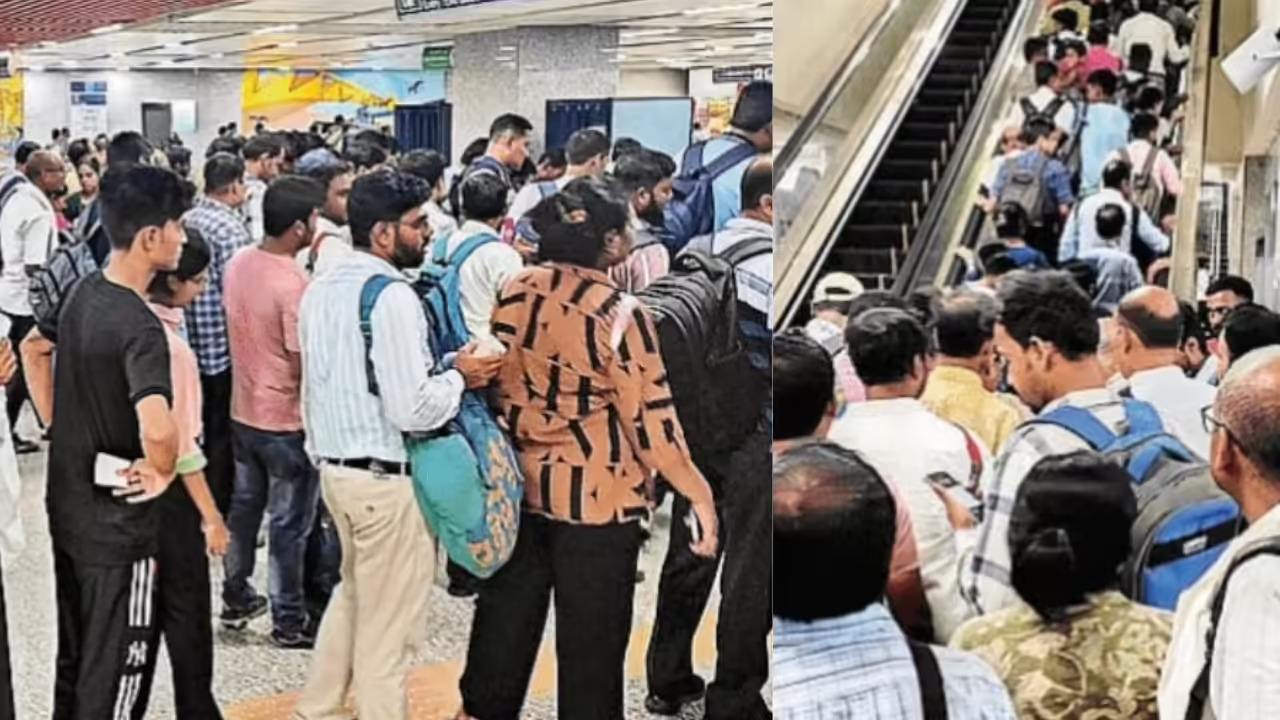
Kolkata witnessed a defining moment in its urban transport story this week as Metro Railway carried more than eight lakh passengers in a single day, the highest ridership in the city’s four-decade-old metro operations. The milestone coincided with a record daily revenue collection of ₹1.6 crore, signalling the transformative role of recent metro extensions in reshaping mobility for the city.
The ridership spike followed the inauguration of three new metro sections that added 14 kilometres to the city’s metro network. With this, the East-West Green Line achieved its first ever two lakh daily passengers, underlining the appetite for seamless east–west connectivity across the urban stretch. Officials noted that the impact was immediate — ridership rose from 6.2 lakh on the day before the extension to 8.1 lakh commuters the next day, a jump of over 30 per cent. The North–South Blue Line, Kolkata’s backbone for nearly four decades, continued to dominate with 5.8 lakh daily passengers. Dum Dum station emerged as the busiest, clocking 66,000 commuters, followed by Esplanade, which served 57,000 riders as a crucial interchange between Blue and Green Lines. Sealdah and Howrah, both part of the Green Line, ranked next with 49,000 and 48,000 passengers respectively, reflecting how the new corridor is redistributing travel demand across the city.
In terms of earnings, the Blue Line contributed the largest share at ₹1.1 crore. The Green Line added ₹38 lakh, while the newer Yellow, Purple, and Orange corridors collectively brought in nearly ₹4 lakh. The extension of the Orange Line from Ruby to Metropolitan spurred 5,443 daily passengers, signalling gradual adoption of newly built routes. Equally significant was the adoption of digital ticketing. Nearly 40 per cent of transactions were completed through mobile-based QR codes and digital platforms, reducing queue times and lowering the dependency on paper tickets. Transport experts said the growing shift towards contactless ticketing not only improves commuter convenience but also aligns with the city’s broader goals of sustainability and carbon neutrality.
The city’s expanding metro grid has proved crucial in easing road congestion and cutting vehicular emissions, especially at a time when Kolkata is grappling with rising pollution levels. Urban mobility planners emphasise that such milestones highlight the importance of sustained investments in public transport infrastructure, which provide both environmental and economic dividends for the city. For residents, the surge in metro services and passenger numbers represents more than just convenience. It symbolises a shift towards a greener, more efficient, and equitable public transport system — one that is central to building a sustainable urban future for Kolkata.
Also Read : Central Railway Adds 52 Trains With New Halts At 22 Stations
