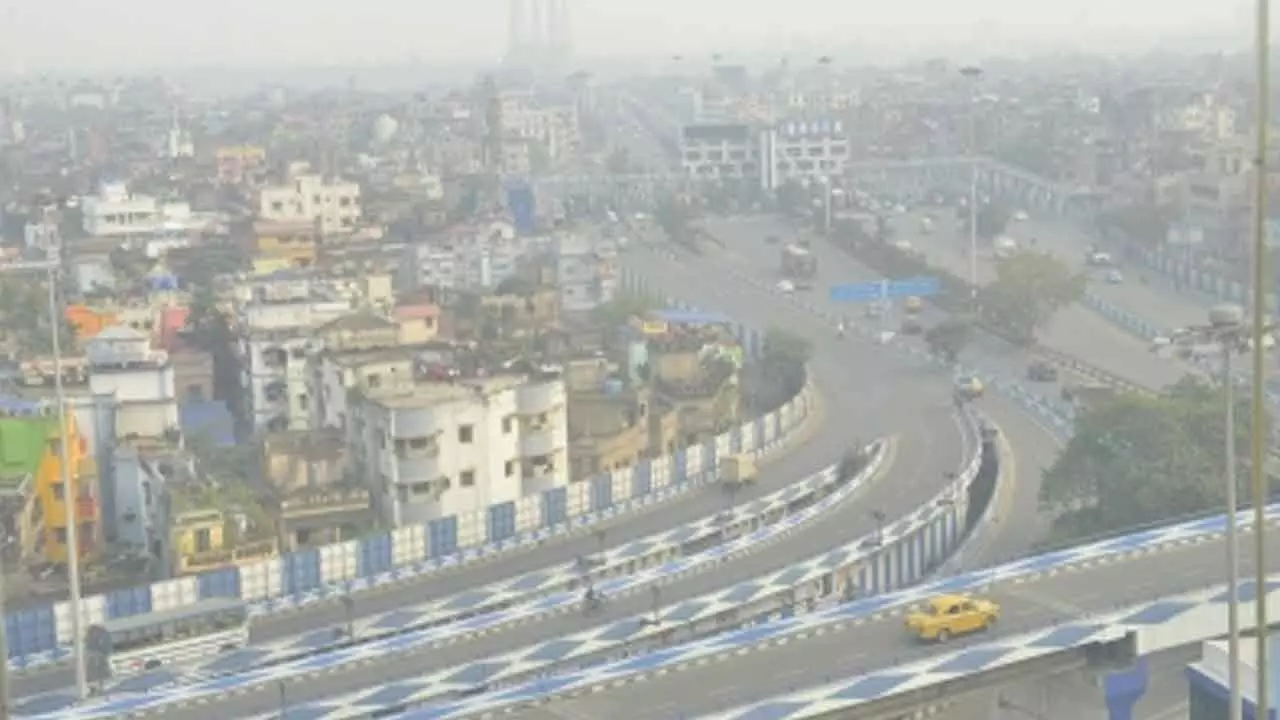
Kolkata’s air quality has entered a worrying phase, with pollution levels in the Maidan and Victoria Memorial areas triggering fresh concerns among environmental experts and urban planners. The city’s central green expanse, often described as its ecological lung, has recently recorded air quality readings in the “very poor” to “hazardous” range, raising questions about the cumulative impact of infrastructure construction, traffic congestion and unregulated local emissions in heritage and eco-sensitive zones.
Recent monitoring data shows that the Air Quality Index in parts of central Kolkata crossed 300 on multiple days this week, with readings at the Victoria Memorial area exceeding 350 during late evening hours. Several southern and central neighbourhoods, including Ballygunge, Jadavpur and Fort William, also reported similarly high pollution levels. Urban health specialists warn that sustained exposure to such conditions significantly increases respiratory and cardiovascular risks, particularly for children, elderly residents and outdoor workers.
An environmental campaigner, who has written to both central and state authorities, flagged the Maidan’s declining air quality as a systemic failure of urban environmental management. According to the representation, ongoing metro rail construction near Victoria Memorial has intensified dust pollution due to excavation, uncovered soil movement and inadequate mitigation measures. Combined with biomass burning, roadside cooking using coal or firewood, and rising vehicular emissions, these activities are contributing to elevated concentrations of fine particulate matter.
Urban transport and infrastructure experts acknowledge that large-scale construction projects can temporarily degrade local air quality if not managed carefully. They point to the absence of consistent dust suppression, poor handling of construction debris and traffic diversions that lead to prolonged congestion as key contributors to particulate pollution. In dense cities like Kolkata, such impacts are magnified when projects intersect with already stressed public spaces. Environmental planners have suggested a series of corrective measures, including mandatory water sprinkling around construction zones, stricter enforcement of covered material transport, and the adoption of cleaner construction technologies. Restrictions on older diesel vehicles in sensitive corridors and tighter controls on informal fuel use near major transit hubs have also been proposed as immediate interventions.
The situation has reignited a broader debate on how Indian cities balance rapid infrastructure expansion with environmental protection. While metro projects are critical for long-term sustainable mobility and reduced vehicular dependence, experts argue that short-term environmental safeguards must be strengthened to ensure these benefits are not undermined during construction. As winter conditions continue to trap pollutants closer to ground level, authorities face mounting pressure to act decisively. For Kolkata, safeguarding the Maidan’s air quality is not only about public health but also about preserving the ecological and cultural value of a space that anchors the city’s urban identity. The episode underscores the need for climate-responsive planning that aligns development ambitions with environmental resilience.
Kolkata Maidan Air Pollution Spikes As Metro Construction Pushes AQI Past Hazardous