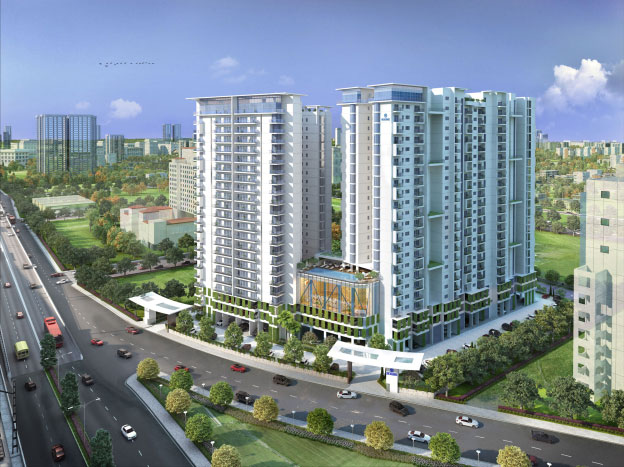
Apeejay Surrendra Park Hotels Ltd has unveiled plans for a mixed-use hospitality and residential development along Kolkata’s Eastern Metropolitan Bypass, signalling a strategic shift in how large urban land parcels are being leveraged to fund capital-intensive hotel projects. The proposal combines serviced residences with a luxury hotel, with revenues from the residential component intended to underwrite part of the hospitality investment.
The 3.35-acre site, owned by the hospitality group, will be split between a 218-key hotel and 69 serviced residences. Company executives indicated that the serviced housing segment could generate around ₹350 crore, easing funding pressures associated with building high-end hotel assets in established urban corridors. Both components are scheduled for completion by 2030. The project marks the first collaboration between the hotel operator and a Kolkata-based real estate developer known for large-scale projects in eastern India. The residential section, branded separately, will comprise two blocks with a built-up area of roughly 7.52 lakh sq ft, of which nearly half is dedicated to serviced residences. Early bookings in the first phase suggest demand for premium, managed living formats along the EM Bypass, a corridor that has evolved into a critical spine for healthcare, hospitality and high-density housing.
Executives familiar with the plan say monetising the serviced apartments before the hotel becomes operational will reduce balance sheet strain and lower exposure to construction cost volatility. Luxury hotels typically require longer gestation periods and are sensitive to financing cycles. By contrast, branded serviced residences offer faster sales realisation, particularly in markets where business travel and long-stay demand intersect. Urban economists observe that such structures reflect a broader recalibration in real estate finance. Integrated hospitality projects allow developers to unlock land value while maintaining asset ownership in high-yield segments like hotels. In cities like Kolkata, where infrastructure investments along the EM Bypass have attracted medical, IT and institutional uses, hybrid formats are increasingly viable.
The EM Bypass corridor, once peripheral, now anchors some of the city’s most significant urban growth. Its proximity to major hospitals, business districts and arterial roads makes it attractive for both transient and extended-stay accommodation. However, planners caution that intensified development must be aligned with mobility planning, drainage resilience and energy efficiency benchmarks, particularly in low-lying zones vulnerable to flooding. If executed with sustainable design standards and efficient transport integration, the project could strengthen the EM Bypass as a mixed-use district while demonstrating how hospitality-led real estate can be structured to manage risk. As construction costs remain elevated and climate resilience becomes central to urban investment decisions, such blended development models may become more common in India’s metropolitan markets.