


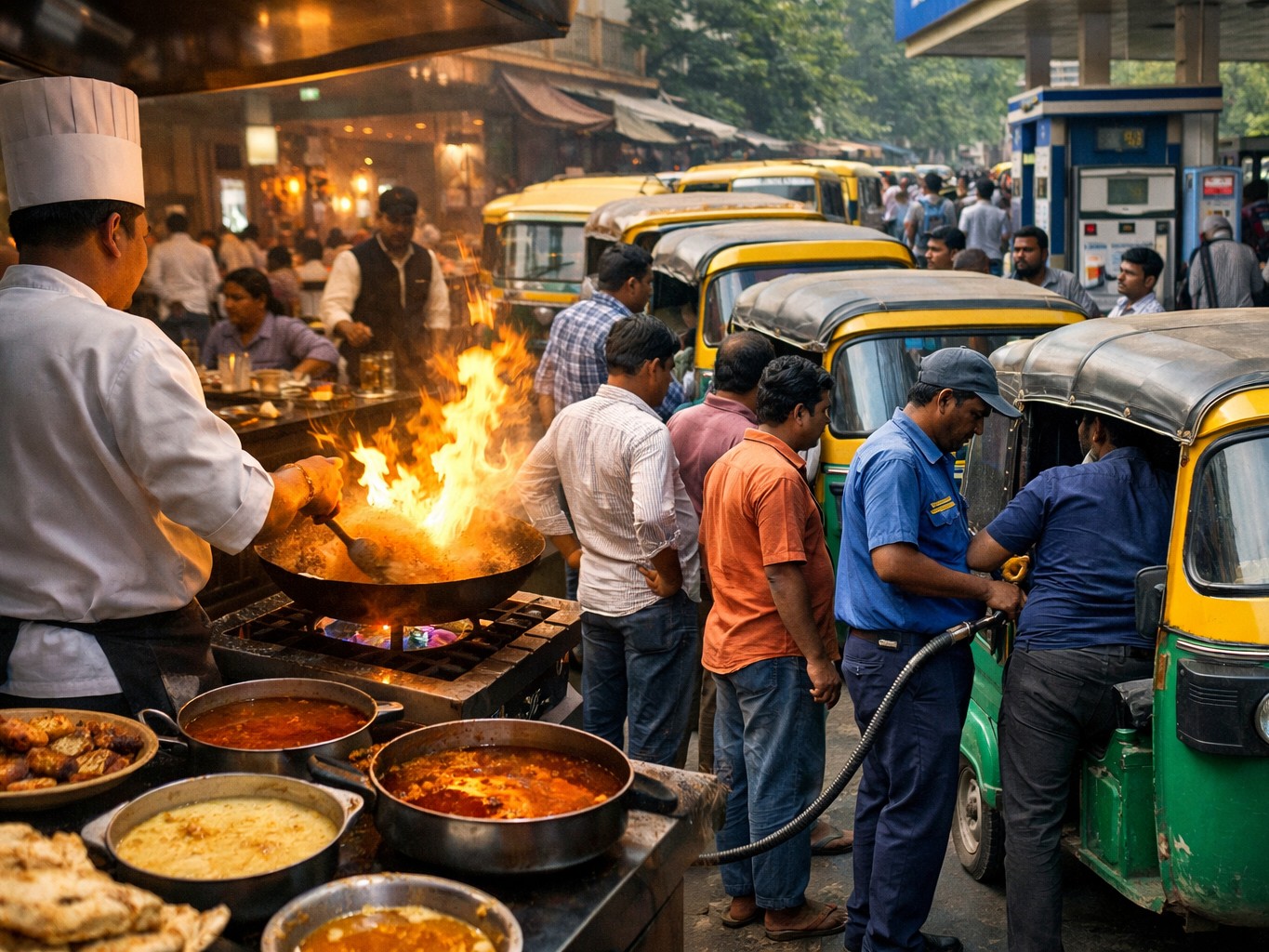
Kolkata LPG Supply Crunch Pressures City Restaurants
Restaurants across Kolkata are facing operational challenges as a Kolkata LPG supply crunch disrupts access to commercial cooking fuel, forcing many food businesses to rethink kitchen operations and manage rising costs.
Industry representatives say irregular cylinder availability and longer delivery cycles have begun affecting small eateries and mid-sized restaurants, highlighting vulnerabilities in urban energy distribution systems.
Liquefied petroleum gas remains the primary cooking fuel for much of the city’s hospitality sector. Commercial kitchens depend on regular supply chains to operate high-volume stoves, tandoors and cooking equipment that require steady fuel availability throughout the day. When supply slows, restaurants often struggle to maintain normal service schedules.Restaurant operators say the Kolkata LPG supply crunch has created uncertainty in daily operations, particularly for establishments that depend heavily on commercial cylinders. Many businesses rely on timely deliveries to avoid interruptions during peak dining hours, especially in neighbourhood clusters where food services operate continuously.Industry groups representing food service businesses note that restaurants typically maintain limited storage capacity due to safety regulations and space constraints in dense urban areas. This means that delays in fuel deliveries can quickly translate into operational disruptions.Energy distribution in large metropolitan areas like Kolkata is closely tied to broader logistics networks. LPG cylinders move through supply chains involving bottling plants, distributors and local delivery agents before reaching restaurants and households. Even minor disruptions at any stage can affect downstream supply.
Urban planners say the situation underscores the importance of resilient urban energy systems as cities expand. Large hospitality sectors depend on predictable fuel supplies not only for economic activity but also for employment generation. Kolkata’s restaurant ecosystem supports thousands of workers, including chefs, kitchen staff, delivery workers and service personnel.Experts note that the Kolkata LPG supply crunch may also encourage some businesses to explore alternative energy options such as piped natural gas connections where available. However, infrastructure expansion remains uneven across the city, and many commercial kitchens continue to rely on LPG due to accessibility and lower upfront costs.Authorities overseeing fuel distribution say supply adjustments are periodically made to balance demand across domestic and commercial consumers. In cities with dense populations, household LPG requirements can sometimes place additional pressure on distribution networks.From an urban sustainability perspective, analysts argue that diversifying commercial energy systems could improve long-term resilience. Expanding cleaner energy infrastructure, including piped gas networks and energy-efficient cooking technologies, may help reduce dependence on cylinder-based supply chains.The hospitality sector also plays an important role in urban economies by supporting tourism, local entrepreneurship and neighbourhood commerce. Prolonged supply disruptions can affect both business revenues and customer access to affordable food services.
As stakeholders monitor the Kolkata LPG supply crunch, industry representatives are calling for improved coordination between distributors, city authorities and hospitality associations to ensure smoother fuel distribution. In the longer term, the situation may accelerate discussions on strengthening urban energy infrastructure to support the evolving needs of growing metropolitan economies.
Also Read:Kolkata Electoral Roll Revision Moves To Clear Backlog
