


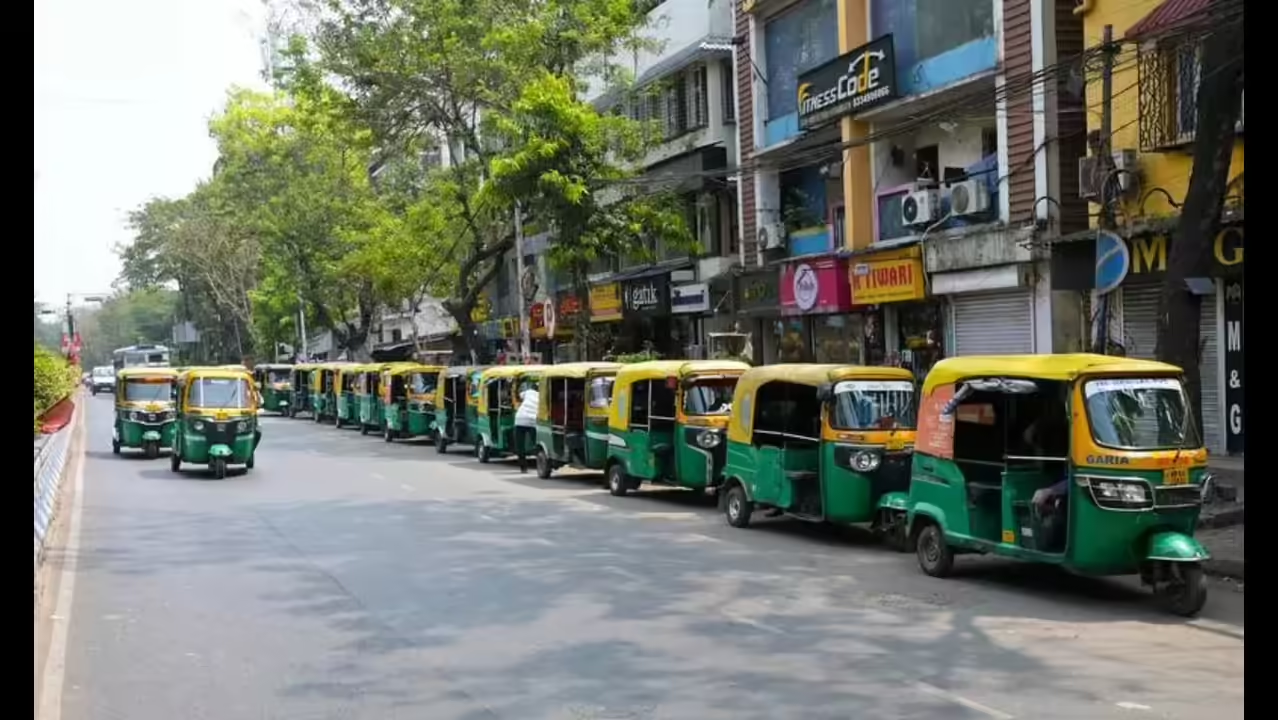
Kolkata LPG Queue Crisis Disrupts Urban Transport Systems
Persistent queues at fuel stations across Kolkata are affecting public transport services, as auto-rickshaw operators struggle with irregular liquefied petroleum gas supplies.
The ongoing Kolkata LPG queue crisis has slowed the return of shared mobility services, creating ripple effects for daily commuters and informal sector workers who depend on affordable transport options.
Auto-rickshaws form a critical component of Kolkata’s urban mobility network, particularly for last-mile connectivity. However, supply disruptions at LPG dispensing units have forced many drivers to spend extended hours waiting for fuel, reducing their operational time and earnings. Transport officials monitoring the situation indicate that inconsistent LPG availability has disrupted service schedules. As a result, commuters in several parts of the city are facing longer waiting times and higher dependence on alternative modes such as buses and app-based transport services.The Kolkata LPG queue crisis is also exposing vulnerabilities in urban fuel distribution systems. LPG, commonly used as an alternative to petrol and diesel in auto-rickshaws, is considered a relatively cleaner fuel option. Any disruption in its supply directly affects both mobility efficiency and environmental outcomes.Urban mobility experts highlight that reliable fuel access is essential for maintaining stable transport services in large cities. Inconsistent supply not only impacts driver. The Kolkata LPG queue crisis has economic implications as well. Auto-rickshaw drivers, many of whom operate on daily earnings, are facing income losses due to reduced working hours.
This, in turn, affects household finances and local economic activity, particularly in neighbourhoods reliant on informal transport networks.From a commuter perspective, the situation is contributing to congestion and travel delays. When auto availability declines, passengers often shift to already crowded public transport systems, placing additional pressure on buses and suburban rail services.Energy analysts point out that such disruptions can also slow the transition toward lower-emission transport systems. Cities encouraging the use of LPG and other cleaner fuels must ensure consistent supply chains to sustain adoption and public confidence.Authorities are reportedly assessing measures to stabilise LPG distribution, including improving supply logistics and monitoring demand patterns more closely. Industry observers suggest that digital tracking systems and better coordination between suppliers and distributors could help address bottlenecks.The Kolkata LPG queue crisis underscores a broader challenge facing rapidly growing cities: balancing energy supply with rising urban demand. As populations expand and mobility needs increase, fuel infrastructure must evolve to support reliable and efficient services.Looking ahead, experts emphasise the need for diversified urban mobility strategies that reduce dependence on a single fuel source. Expanding electric mobility options, strengthening public transport networks and improving fuel distribution systems could collectively enhance resilience.
For Kolkata, resolving the current disruption will be crucial not only for restoring transport services but also for ensuring that future urban mobility systems remain accessible, sustainable and responsive to the needs of its residents.
Also Read:Kolkata Motorsports Events Plan Signals Urban Growth Potential
