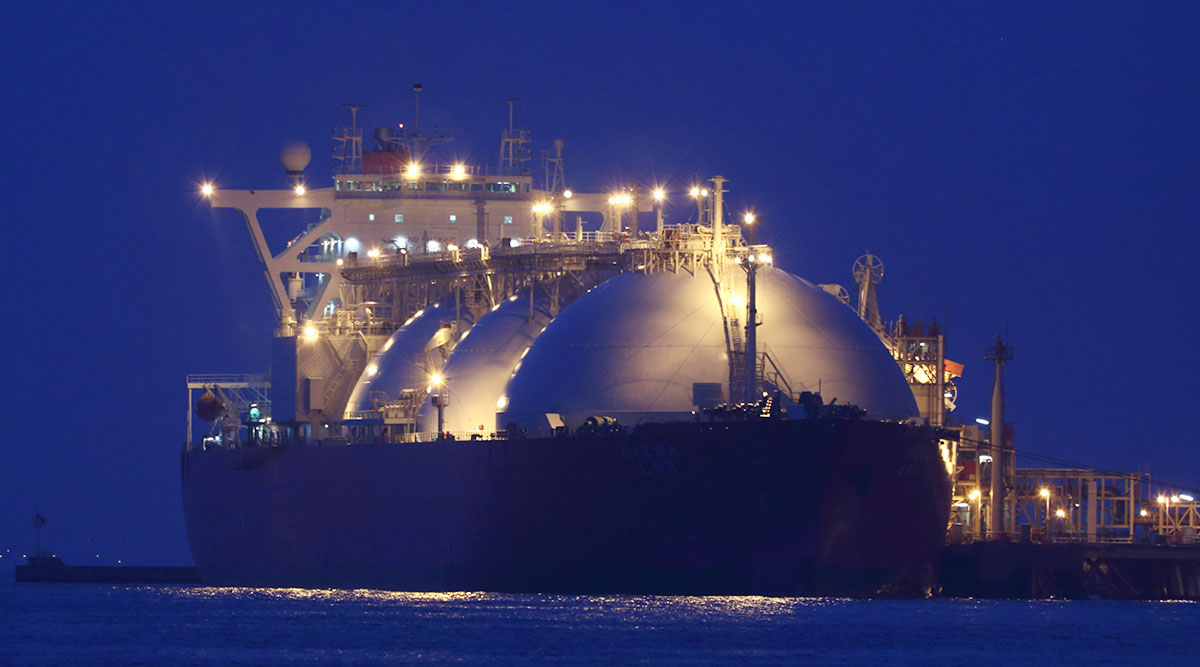
Kolkata’s maritime infrastructure is set to gain a major boost as authorities move forward with plans to establish a floating facility for liquefied natural gas at Haldia.
The project, valued at approximately ₹260 crore, is expected to enhance regional energy logistics and strengthen eastern India’s natural gas supply chain while supporting the gradual transition toward cleaner fuels in industrial clusters.The proposed facility will operate as a Floating Storage and Regasification Unit (FSRU), a specialised offshore platform designed to receive liquefied natural gas transported by tankers, store it in cryogenic form, and convert it back into natural gas before feeding it into pipeline networks on land. Such infrastructure allows ports to expand energy capacity without requiring extensive onshore terminals, making it a flexible solution for emerging gas markets.According to port authorities, the initiative forms part of broader efforts to modernise logistics and energy infrastructure around the Haldia Dock Complex. The development is expected to improve the port’s capability to handle LNG shipments and enable more reliable access to natural gas for industries located across eastern India’s manufacturing corridors.
Industry analysts note that expanding Kolkata LNG infrastructure could have significant implications for regional economic growth. The eastern region has historically lagged behind western and southern India in gas-based infrastructure, despite growing demand from power plants, refineries and chemical industries.Establishing LNG handling facilities closer to industrial hubs could reduce transportation bottlenecks and improve fuel availability for energy-intensive sectors.Natural gas is widely regarded as a transition fuel in India’s long-term energy strategy, offering lower carbon emissions compared to coal and conventional liquid fuels. Policymakers have been working to increase the share of natural gas in the national energy mix, with LNG import infrastructure playing a critical role in achieving that objective. Strengthening Kolkata LNG infrastructure therefore aligns with wider national efforts to diversify energy sources while improving supply reliability.Urban economists suggest that port-led energy infrastructure can also influence broader development patterns in coastal cities. Efficient fuel supply networks help attract new industries, logistics parks and manufacturing investments, which in turn generate employment opportunities and stimulate urban expansion in surrounding regions. For cities such as Kolkata and its neighbouring industrial zones, improved LNG infrastructure may support both economic competitiveness and environmental improvements by enabling cleaner industrial fuel use.Port officials say the floating terminal model provides operational flexibility, allowing the facility to scale capacity based on future demand growth. While detailed technical specifications have not yet been publicly disclosed, the project is expected to support LNG import, storage and regasification operations once operational.
As India continues to modernise its port systems and diversify its energy supply networks, projects such as the Haldia FSRU could play an important role in shaping sustainable industrial growth along the eastern seaboard. Observers believe the success of such initiatives will depend on timely infrastructure integration with pipeline networks and regional industrial demand.
Kolkata Port Advances LNG Energy Infrastructure Project