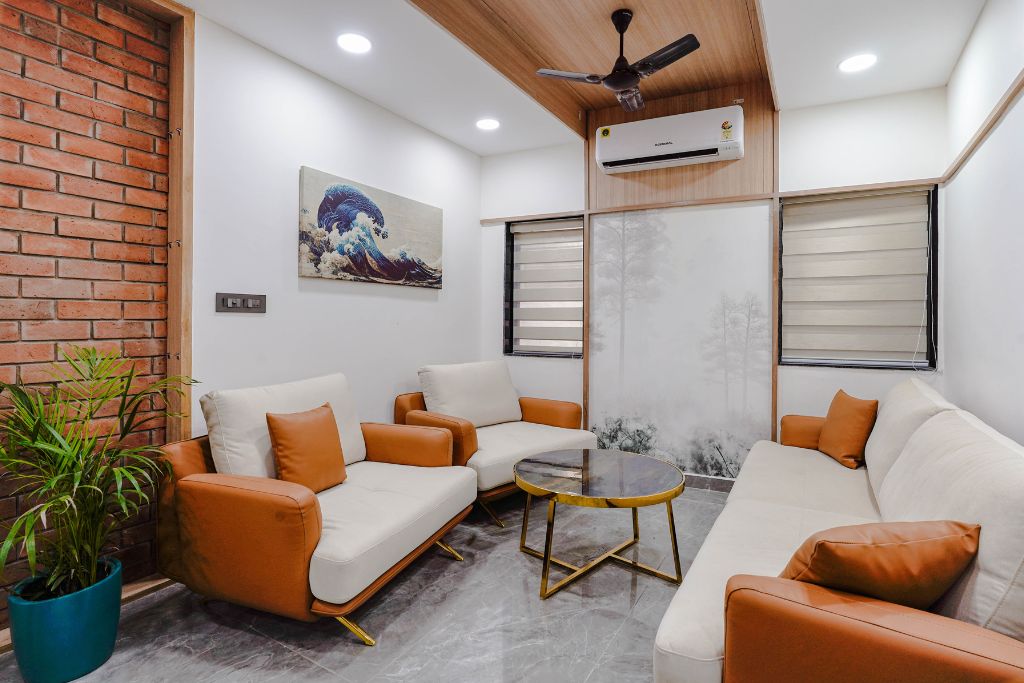
Kolkata Interior Sector Expands Rapidly With Premium Demand
Kolkata’s interior design market has experienced a dramatic expansion over the past two decades, growing from ₹583 crore in 2005 to nearly ₹6,500 crore in 2025. Analysts attribute this surge not only to increased residential and commercial construction but also to the emergence of a design-conscious, specification-driven clientele demanding higher quality and personalised solutions. Projections indicate that if current growth trends continue, the market could approach ₹12,000 crore by 2030.
Industry observers note that buyer preferences are increasingly segmented by budget and lifestyle. Apartments under ₹1 crore typically favour ready-to-move-in interiors, featuring pre-installed flooring, standardised kitchen fittings, and bathroom fixtures. Convenience, predictable costs, and rapid handovers drive this segment. In contrast, premium homes—valued above ₹2.5 crore—are witnessing a rise in “bare shell” handovers, allowing homeowners to commission bespoke interior solutions. This shift has strengthened the role of interior architects in Kolkata, with design increasingly treated as a personalised process rather than a standard offering.Emerging trends in premium projects emphasise spatial optimisation, material performance, and integrated detailing. Kitchens are evolving into modular, engineered systems with taller units, improved hardware, and workflow-focused layouts. Lighting design now combines ambient, task, and accent elements, often with concealed profiles to reduce visual clutter. Acoustic comfort in bedrooms, media rooms, and home offices has gained prominence, while storage engineering and multi-functional furniture are becoming essential in high-end interiors.
Technological integration is reshaping client experience and execution. Virtual reality (VR) walkthroughs and immersive 3D visualisation enable buyers to preview layouts, lighting moods, and material combinations before construction. Augmented reality (AR) tools allow homeowners to visualise furniture, finishes, and colour palettes within their actual spaces. Smart home systems—including voice-controlled lighting, automated blinds, and IoT-enabled appliances—are becoming a standard expectation in premium projects and are gradually being incorporated in mid-market homes.Modular and prefabricated elements, such as factory-finished kitchens and wardrobes, are improving construction efficiency, while AI-assisted design tools offer layout and style options tailored to budget, lifestyle, and spatial constraints. Sustainability is increasingly measurable through digital reporting of embodied carbon and lifecycle impacts. Additionally, 3D printing is poised to democratise custom fixtures and décor, making them accessible to a broader segment of buyers.
Industry experts suggest that Kolkata’s interior design sector is maturing rapidly, with a growing emphasis on durable, low-maintenance materials, precise execution standards, and responsive, comfort-led spaces. “IoT-driven space optimisation, combined with VR and AI tools, is positioning Kolkata as a technologically advanced and design-conscious market,” said a senior architect coordinating ABID exhibitions.As the city balances its heritage architecture with contemporary lifestyles, interior design in Kolkata is evolving into a high-value, technologically enabled sector, driving not only aesthetic refinement but also long-term sustainability and efficiency in urban living spaces.