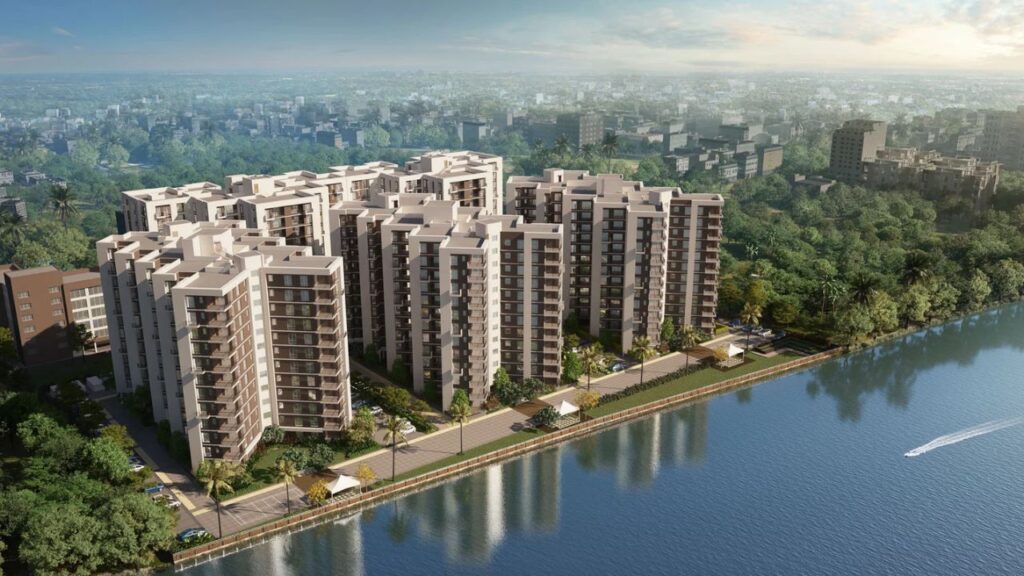
Kolkata is witnessing a fresh shift in urban residential trends with the launch of a high-end riverside development along the Ganga, signalling growing investor interest in premium waterfront living. The new township, planned by a leading real estate group, integrates residential towers with hospitality infrastructure, aiming to redefine how urban residents interact with riverfront spaces while highlighting environmental and social considerations.
Urban planners and sustainability experts note that riverside developments in Indian cities are increasingly viewed as opportunities to blend high-density living with ecological design. By incorporating green buffers, landscaped terraces, and public-access promenades, such projects attempt to offer climate-responsive urban experiences without compromising on density. A senior planner involved in riverfront projects observed that Kolkata’s Ganga corridor presents a rare chance to combine economic vitality with natural amenity access, a challenge many South Asian cities continue to navigate.
The development proposes a mix of luxury apartments and a five-star hospitality component, emphasising uninterrupted river views. Architectural features such as elevated terraces, infinity pools, and culturally inspired riverfront access points aim to enhance both residential and public engagement with the riverfront. While such amenities are designed to attract high-net-worth buyers, urban development analysts caution that inclusive access and long-term ecological safeguards are critical for sustainable integration. Economically, the project forms part of a broader investment strategy in Kolkata’s urban infrastructure, signalling confidence in the city’s residential and hospitality markets. The infusion of capital is expected to create construction jobs, stimulate local supply chains, and influence property valuation in adjacent neighbourhoods. Experts suggest that while high-end riverfront developments contribute to city branding and urban tourism, municipal oversight will be essential to ensure equitable growth and manage potential environmental trade-offs such as waterway pollution or floodplain encroachment.
From a civic perspective, the development highlights the increasing importance of climate-responsive urban design in Indian metros. Features like green terraces, public open spaces, and river-access points contribute to social cohesion while promoting adaptive resilience to rising temperatures and erratic monsoon patterns. Sustainable urbanists emphasise that integrating such considerations early in high-value projects can serve as a model for future riverfront development along major Indian waterways. Looking ahead, Kolkata’s urban trajectory will be shaped by the balance between economic opportunity, environmental stewardship, and equitable public access. Developments along the Ganga illustrate the city’s potential to harmonise luxury urban living with sustainable riverfront management, offering lessons for other Indian metros seeking climate-resilient and inclusive waterfront projects.