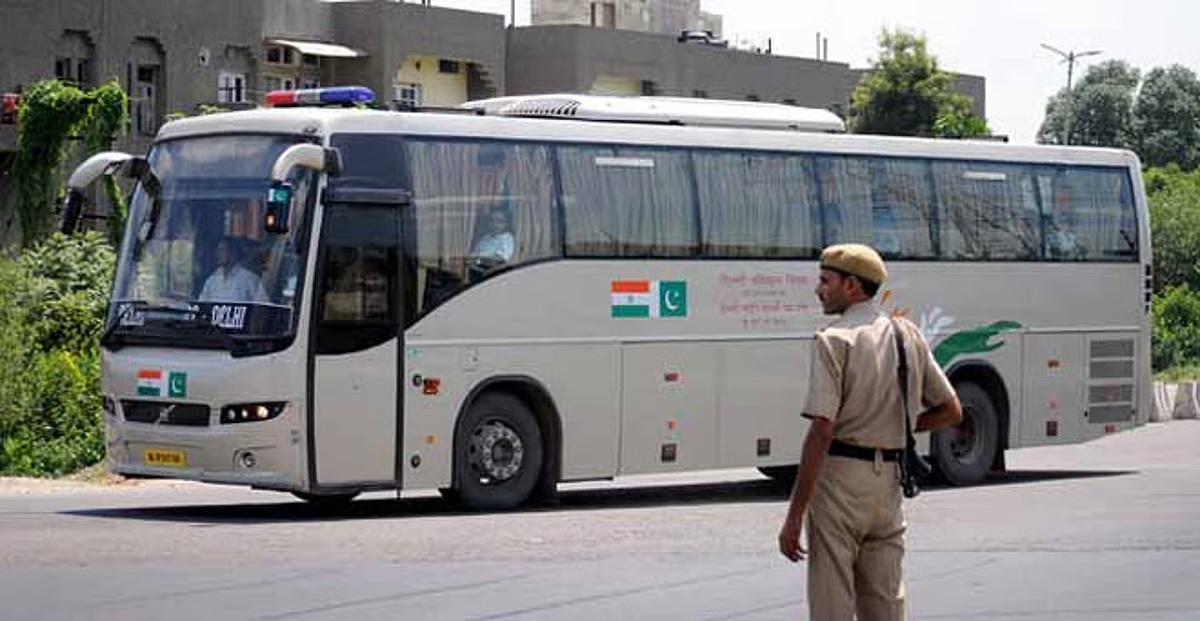
Cross-border road connectivity in India’s Northeast is set for revival as the Agartala–Dhaka–Kolkata bus service prepares to resume operations after more than a year of suspension. A trial movement of the vehicle this week signals the possible reopening of a strategic passenger corridor linking Tripura with Bangladesh and eastern India, a route considered crucial for trade, mobility and regional integration.
The service, operated jointly by a state-run transport undertaking in Tripura and a Bangladeshi partner, had been halted amid disruptions to visa issuance and a sharp drop in passenger demand. Officials associated with the operations confirmed that procedural bottlenecks around travel documentation are now easing, clearing the path for the Agartala Dhaka Kolkata bus service to restart regular trips in the coming weeks. For landlocked Tripura, the corridor offers far more than a passenger connection. By providing overland access through Bangladesh, the route reduces travel time and logistics costs to Kolkata, Tripura’s principal commercial gateway. Urban economists note that such connectivity supports small traders, students and medical travellers who rely on affordable cross-border transit rather than air travel.
Transport planners say restoring the Agartala Dhaka Kolkata bus service also aligns with India’s broader Act East policy, which seeks to integrate the Northeast with neighbouring economies. Improved road-based public transport across borders can ease pressure on aviation, lower per capita emissions and promote more equitable access to mobility especially for lower-income households. A senior transport department official indicated that staff and operational logistics are in place, with crews prepared to scale up services once passenger volumes stabilise. Authorities on both sides of the border are understood to be coordinating on immigration procedures and scheduling to ensure smoother movement through land ports.
Urban development experts view the corridor as a test case for sustainable regional mobility. Bus-based international transport, when efficiently managed, offers a lower-carbon alternative to short-haul flights while supporting transit-oriented development around border towns. In Agartala and Dhaka alike, improved passenger flows could stimulate demand for hospitality, retail and small-scale logistics services clustered near transport hubs. However, analysts caution that long-term viability will depend on consistent visa processing, predictable schedules and passenger confidence. Infrastructure at land check posts must also keep pace with rising volumes to avoid congestion and delays. If regular operations resume as anticipated, the revival of this cross-border bus route could reinforce Tripura’s economic resilience and strengthen people-to-people ties across the eastern subcontinent demonstrating how modest transport links can quietly reshape regional urban networks.