


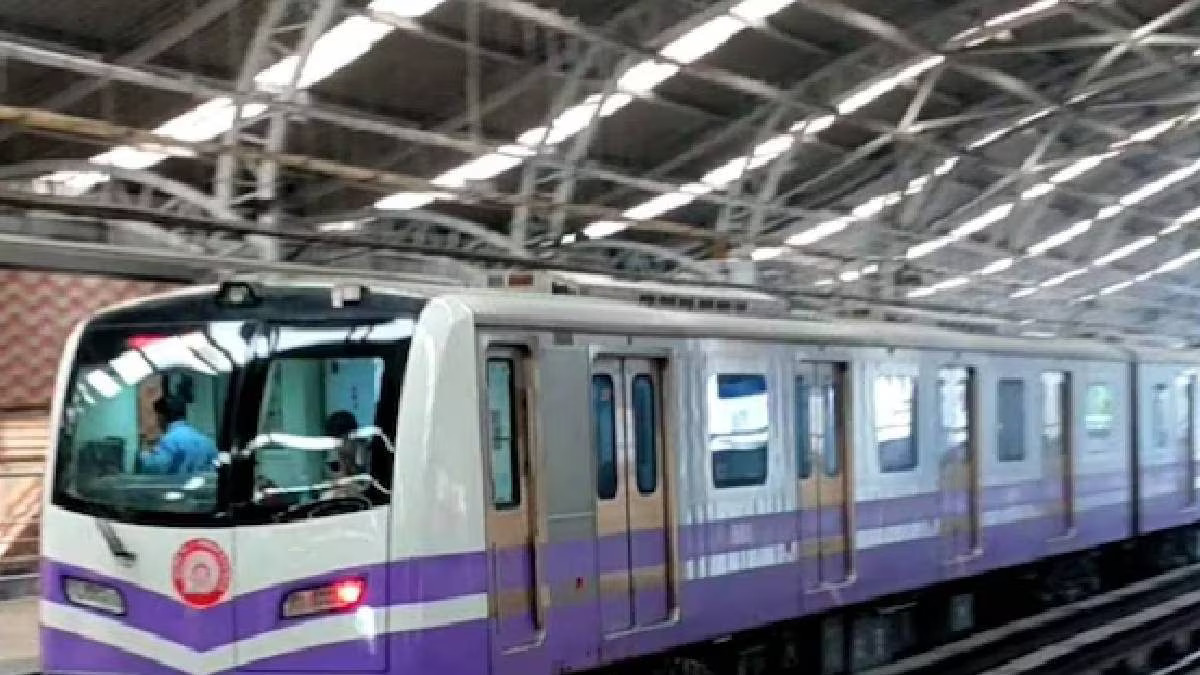
Kolkata’s urban transportation landscape is on the cusp of a significant transformation with the successful trial run on a crucial stretch of the under-construction Line 4, also known as the Yellow Line. This advancement, specifically on the 7.03-kilometre segment connecting Jai Hind Bimanbandar (Airport) to Noapara metro stations, marks a pivotal step towards enhancing sustainable urban mobility. The expansion of the metro network is set to revolutionise daily commutes, offering a more eco-friendly and efficient transit option for the city’s diverse population.
The trial run, conducted with Rake No. MR 413, covered four key stations: Noapara, Dum Dum Cantt, Jessore Road, and Biman Bandar. This successful test signifies a major engineering and operational achievement, bringing the 16.876-kilometre Yellow Line, which will ultimately connect Noapara to Barasat across 10 stations, closer to public commissioning. Such infrastructure projects are vital for reducing the city’s carbon footprint by encouraging a shift from private vehicles to mass transit, thereby contributing to a zero net carbon urban environment.
The commissioning of this stretch is anticipated to be a revolutionary development for the residents of Kolkata and its surrounding suburbs, particularly in providing a modern and direct transport system to the airport. This enhanced connectivity is not merely about convenience; it is about fostering equitable access to economic opportunities and social amenities, ensuring that all citizens, regardless of their location within the metropolitan area, can participate fully in urban life. Improved public transport is a cornerstone of creating gender-neutral and inclusive cities.
The successful trial follows an earlier test conducted in January 2025, indicating a systematic and thorough approach to project development and safety. The consistent progress on the Yellow Line reflects a strong commitment to expanding Kolkata’s metro infrastructure, which is essential for managing the demands of a growing urban population. By investing in efficient and sustainable public transport, the city is building resilience against future challenges such as traffic congestion and air pollution.
The ongoing expansion of Kolkata’s metro network exemplifies a forward-thinking approach to urban planning. It underscores the critical role of modern public transport in shaping sustainable cities that are both economically vibrant and environmentally responsible. As the Yellow Line moves closer to full operation, it promises to significantly improve the quality of life for millions, making Kolkata a more connected, accessible, and greener metropolis for generations to come.
Also Read :New Delhi Streamlines Emergency Train Bookings To Aid Passengers
