


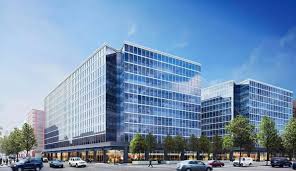
Kolkata’s commercial real estate market has recorded a significant ownership shift, with one of India’s largest listed developers agreeing to divest an operational IT and ITeS special economic zone along with a sizeable adjoining land parcel in the eastern city. Valued at around Rs 670 crore, the transaction reflects an ongoing recalibration of large developer portfolios and renewed interest from regional players in established urban assets.
The transaction comprises two distinct components. The first involves the transfer of a fully operational IT and ITeS SEZ undertaking, including a technology park and an associated freehold land parcel of just over eight acres. The asset offers more than one million sq ft of leasable office space and has been generating steady rental and maintenance income. The second component is the outright sale of nearly 18 acres of vacant land in the same metropolitan area, providing scope for future commercial or mixed-use development. From a financial perspective, the divested SEZ business represents a relatively small share of the seller’s consolidated revenues, contributing less than two per cent in the most recent financial year. Urban economists say this highlights a broader trend among national developers: monetising non-core or geographically peripheral assets to redeploy capital into priority markets and higher-yield projects. The deal is structured through a business transfer arrangement for the SEZ, using a slump sale mechanism that allows for the seamless handover of operations, leases, and infrastructure. Completion is expected within the next few months, subject to customary regulatory and contractual clearances. Such structures are increasingly common in commercial real estate transactions, particularly where continuity of tenancy and services is critical.
For the acquiring entities, the transaction offers immediate scale in Kolkata’s office market alongside long-term development optionality. The operational SEZ provides an income-generating asset with established occupiers, while the vacant land parcel creates flexibility to respond to evolving demand for offices, residential, or integrated urban formats. Market participants note that regional developers with strong local knowledge are often better positioned to unlock value in mature but under-invested city markets. Kolkata’s commercial real estate sector has seen moderate but steady activity compared to larger office hubs such as Bengaluru or Hyderabad. However, demand from IT services, back-office operations, and knowledge-based industries has remained resilient, supported by competitive rentals and a large skilled workforce. Well-located SEZ assets continue to attract interest due to their infrastructure readiness and regulatory clarity. From an urban development standpoint, the transaction underscores the importance of adaptive reuse and reinvestment in existing city footprints. As Indian cities seek to balance growth with sustainability, reinvigorating established commercial zones can reduce pressure on peripheral land and leverage existing transport and utility networks.
Looking ahead, the deal signals confidence in Kolkata’s long-term urban and economic fundamentals. While national developers streamline portfolios, the entry of focused regional players may lead to more context-sensitive development, potentially shaping the next phase of commercial and mixed-use growth in the city.
Also Read: India real estate sites expand worker wellbeing focus
Kolkata commercial assets see major portfolio churn
