


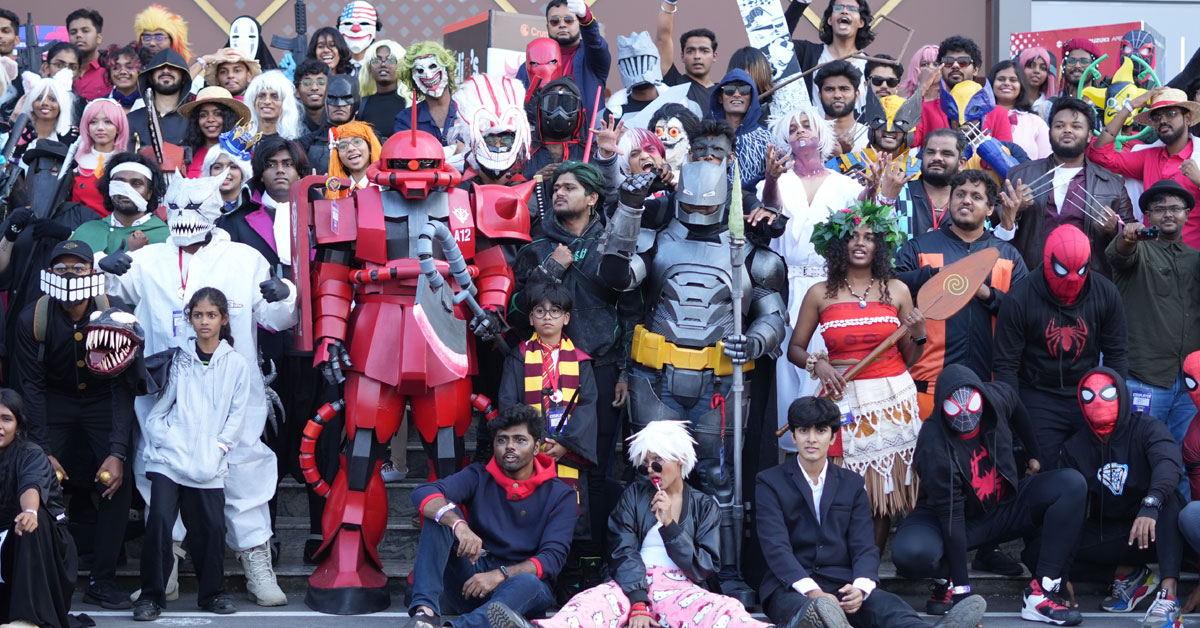
The growing scale of Kolkata Comic Con is signalling a shift in how Indian cities leverage pop culture events to activate urban spaces, drive local economies, and engage younger demographics.
The latest edition, hosted in the city, saw a surge in participation from cosplayers, artists, and fans, underlining the expanding footprint of creative industries within Kolkata’s urban ecosystem.Unlike traditional cultural gatherings, Kolkata Comic Con reflects a hybrid urban experience where digital culture intersects with physical public spaces. Large-format venues are being repurposed into immersive environments that accommodate exhibitions, performances, retail stalls, and fan interactions. Urban planners highlight that such events demonstrate the adaptability of city infrastructure to support emerging cultural formats beyond conventional use cases.The economic implications are notable.Pop culture conventions are increasingly contributing to short-term revenue generation across sectors including hospitality, transport, retail, and informal vending. Industry observers note that the clustering of such events within metropolitan hubs like Kolkata strengthens the city’s positioning as a regional cultural and commercial centre, attracting both local and outstation visitors.More significantly, Kolkata Comic Con showcases the rise of a creator-led economy.Independent illustrators, designers, and small businesses are finding new platforms to monetise their work, often bypassing traditional distribution channels.
This democratisation of creative production aligns with broader trends in urban economies, where gig-based and freelance industries are becoming central to employment generation.However, the increasing scale of such events also raises operational challenges. Large crowds and temporary installations can strain urban infrastructure, particularly in areas related to mobility, waste management, and energy use.Experts suggest that integrating sustainability protocols — such as waste segregation, reusable materials, and energy-efficient lighting — will be critical as cities continue to host high-footfall events.From an urban design perspective, events like Kolkata Comic Con are redefining the role of public and semi-public spaces. They transform static venues into dynamic cultural hubs, encouraging social interaction and community participation. Importantly, these environments tend to be more inclusive, with participation cutting across gender, age, and socio-economic groups, reflecting a more equitable model of urban engagement.Real estate analysts also point to the growing importance of event-ready infrastructure. Convention centres, exhibition halls, and mixed-use developments that can accommodate large-scale cultural programming are becoming valuable assets in city planning strategies.Such infrastructure not only supports recurring events but also enhances the long-term viability of surrounding commercial districts.
As Indian cities compete to attract cultural and creative capital, the evolution of events like Kolkata Comic Con underscores a broader transition towards experience-driven urban economies. The challenge ahead will lie in scaling these platforms sustainably while ensuring they remain accessible, inclusive, and integrated within the city’s long-term development goals.
Also Read:Kolkata Cultural Spaces Shape Urban Identity Growth
